Bleu d'Auvergne vs Roquefort
Bleu d'Auvergne is made from cow's milk. Roquefort is made from sheep's milk.
Bleu d'Auvergne is also used for melting.
Roquefort can stand in for Bleu d'Auvergne. Roquefort supplies a salty blue flavor for the same dressings and boards, though the paste is usually drier and sharper.
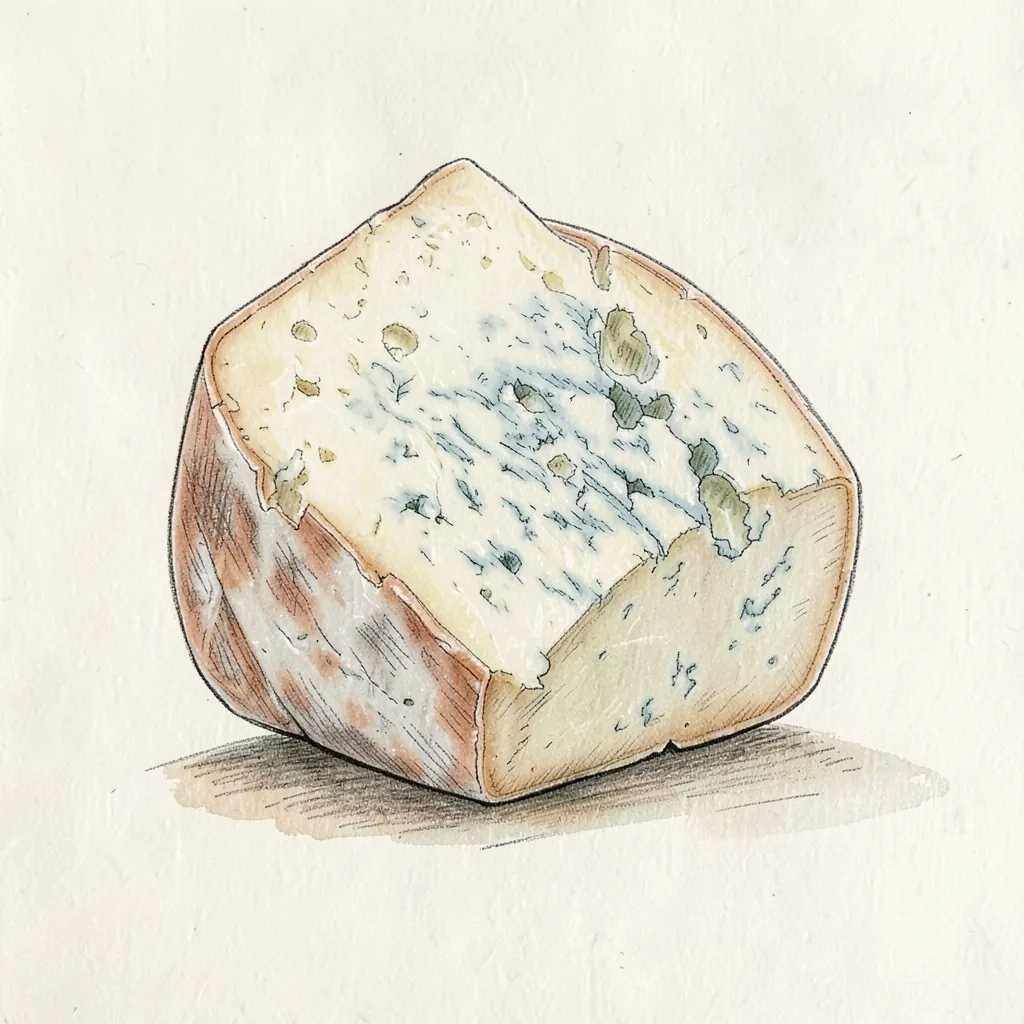
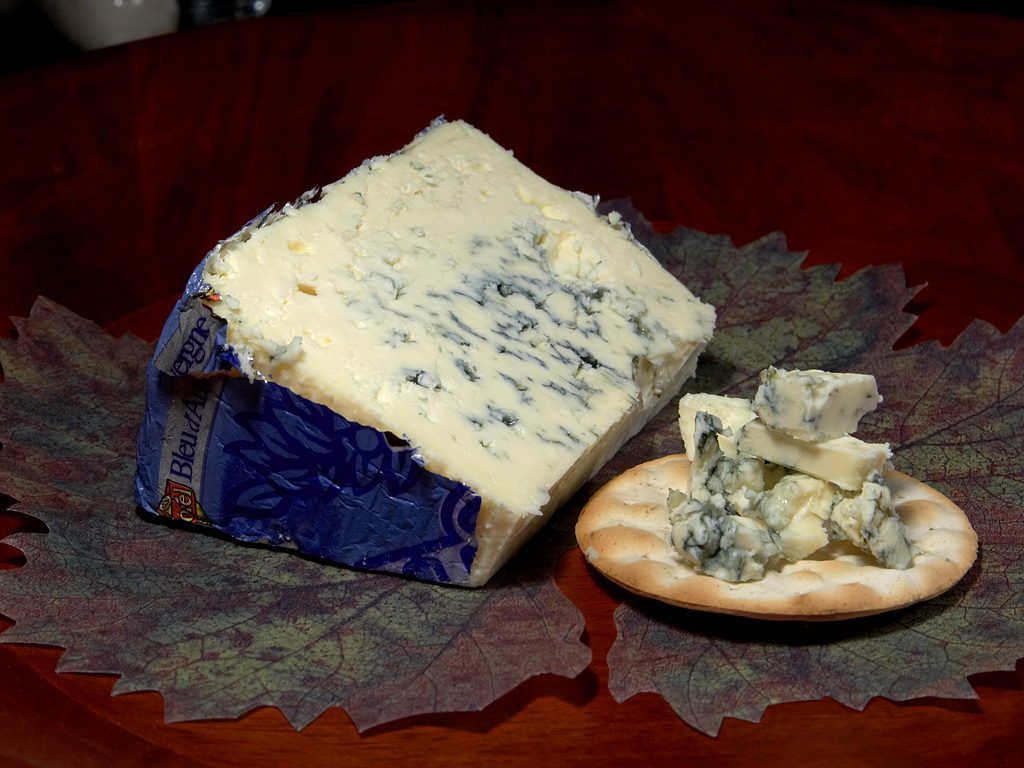
Bleu d'Auvergne
Facts
- Milk
- Cow
- Texture
- Semi-soft
- Type
- Blue
- Rind
- Natural rind
- Country
- France
- Place
- Auvergne
Bleu d'Auvergne is a cow's milk blue cheese from Auvergne, in central France. The wheels are flat cylinders, and the ivory paste is cut by blue-green veins. Dairies add a blue mold and pierce the young cheese so air can reach the interior. The paste stays moist and creamy, with a pungent aroma that is strong but usually less salty than a drier sheep's milk blue. It is a cellar cheese for the board, the salad, and the sauce pan.
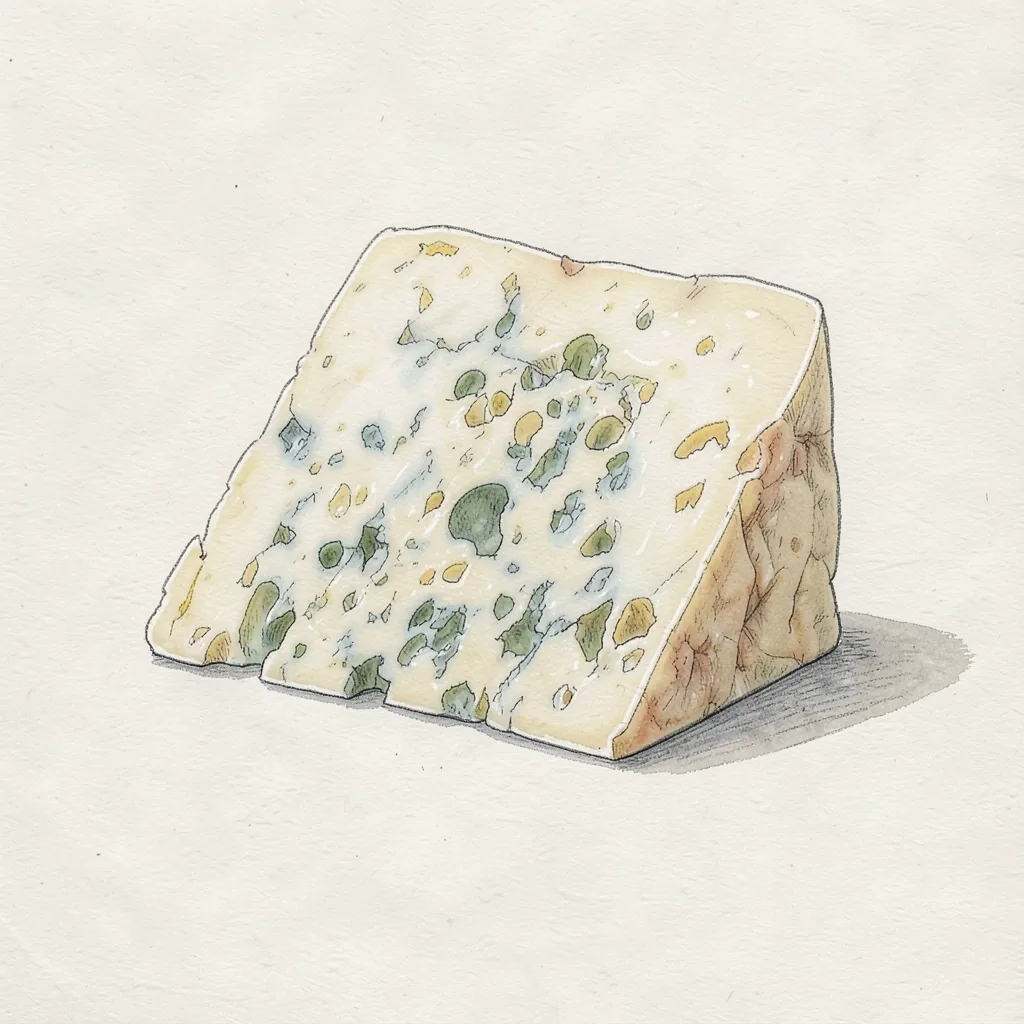
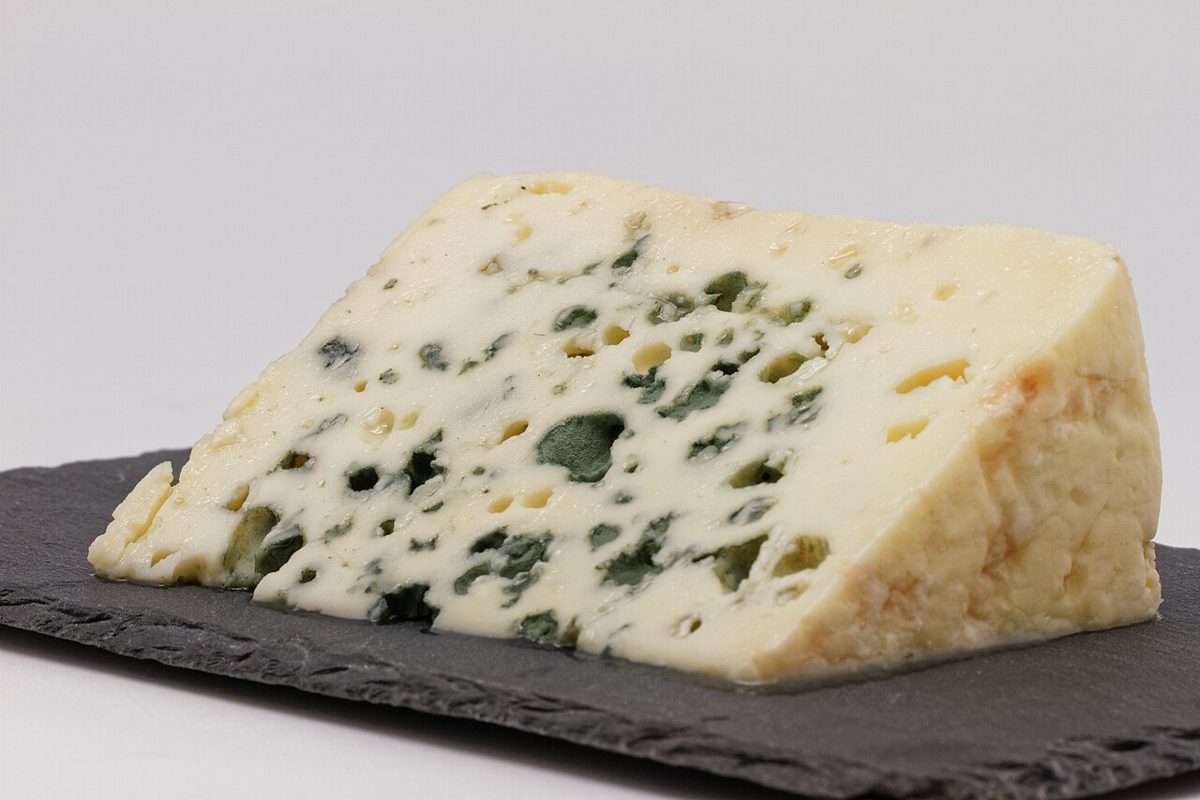
Roquefort
Facts
- Milk
- Sheep
- Texture
- Semi-soft
- Type
- Blue
- Rind
- Natural rind
- Country
- France
- Place
- Roquefort-sur-Soulzon
- Status
- PDO
Roquefort is a blue sheep's-milk cheese ripened in the caves at Roquefort-sur-Soulzon, in southern France. The protected cheese uses milk from a defined area, and the ripening happens in those caves.