Cow
What it is
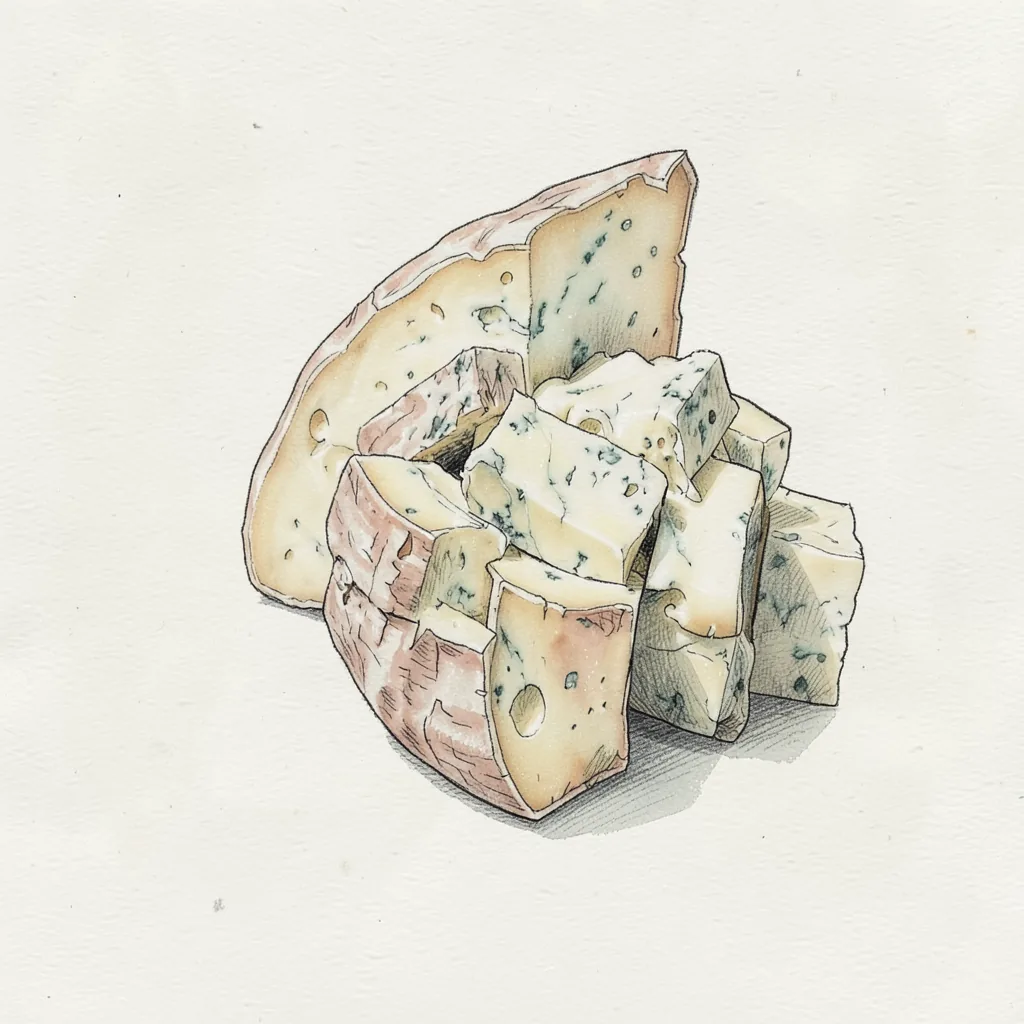
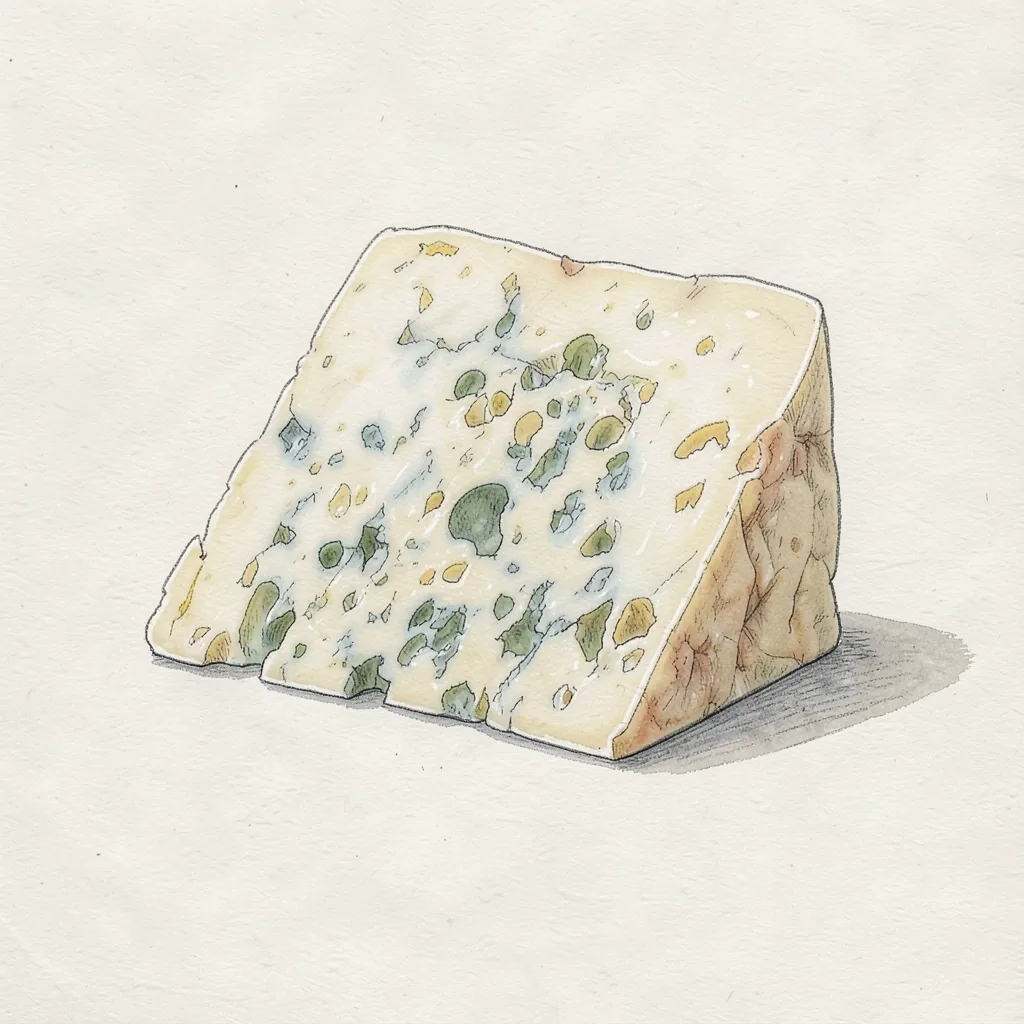
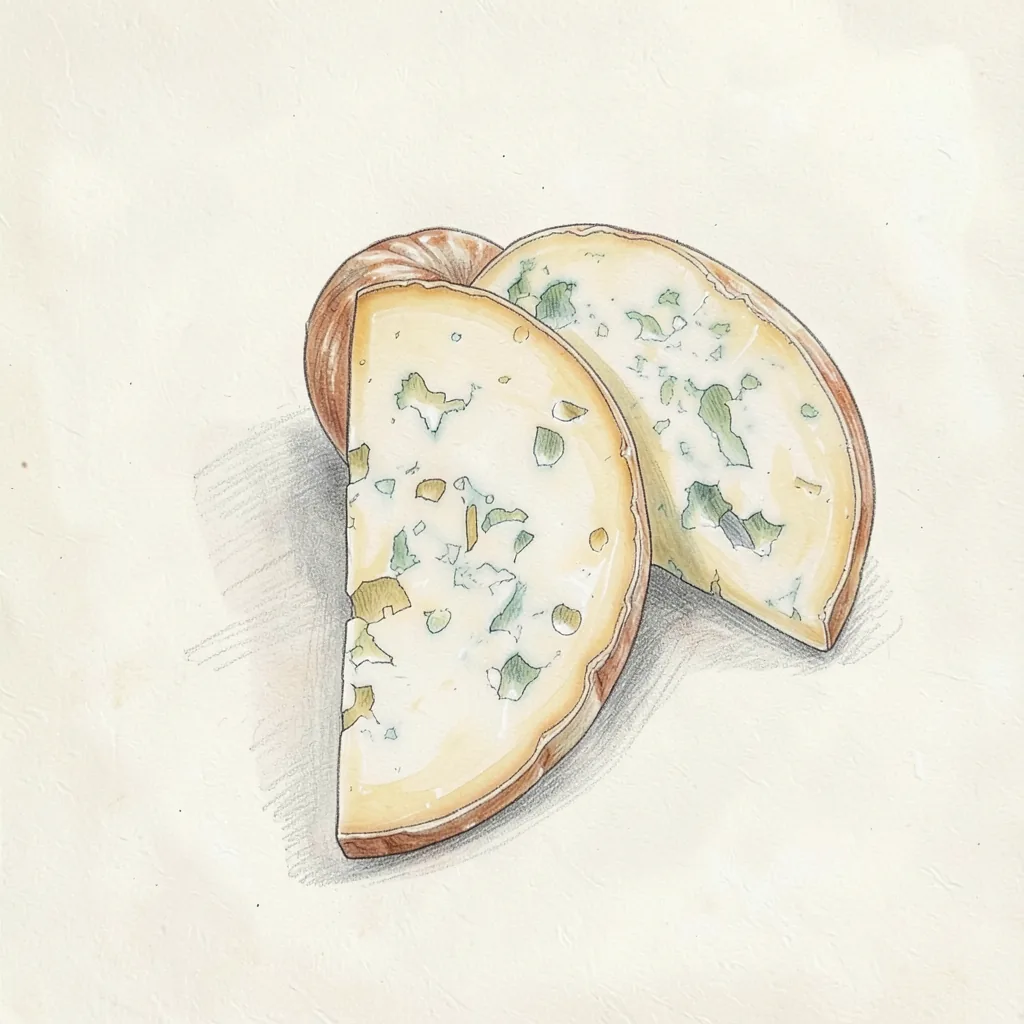
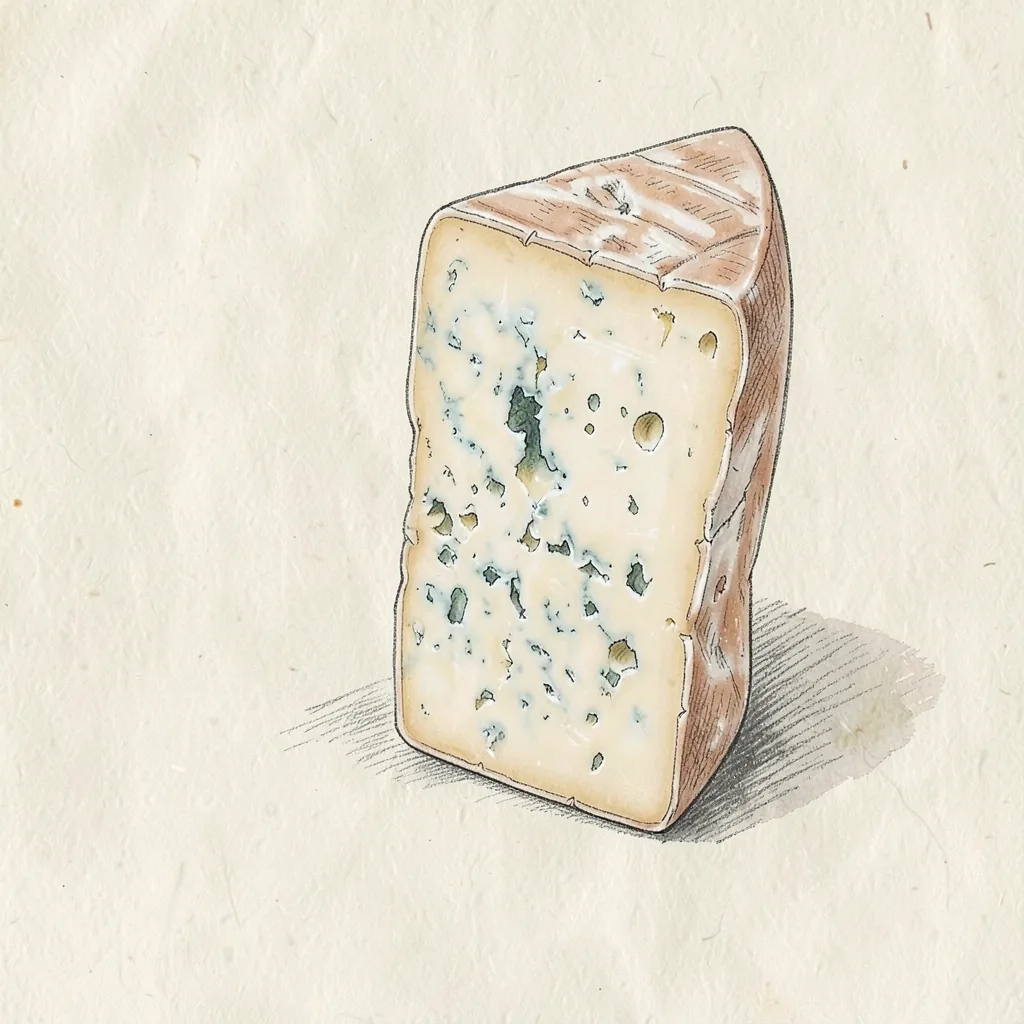
The wheels are flat cylinders, and the ivory paste is cut by blue-green veins. Dairies add a blue mold and pierce the young cheese so air can reach the interior. The paste stays moist and creamy, with a pungent aroma that is strong but usually less salty than a drier sheep's milk blue. It is a cellar cheese for the board, the salad, and the sauce pan.
A piece at cool room temperature softens at the edge and still crumbles. Open pockets show where the mold followed the paths made by piercing. Salt is clear, but a buttery note sits under the spice. Wheels that stay longer in the cellar grow sharper and more forceful on the nose. Buyers should expect a cheese that declares itself in the room before the first bite.
History
Blue veined cheeses were already known in central France when Auvergne dairies began to seek an even blue on purpose. The aim was to carry mold through the paste, rather than to leave veins to chance. Piercing each wheel with needles became the step that let air in. The habit moved from small farm batches into larger dairies across the region. The name stayed tied to Auvergne even as creamery work grew.
The cheese sits near other blues of the high central mountains, but it is not the same wheel as Fourme d'Ambert. Fourme is typically taller, milder, and more regular in its veins. Bleu d'Auvergne is moister, with a louder aroma and a more broken pattern of blue. Both are cow's milk cheeses of the same broad country, which is why a label deserves a careful look. Shoppers abroad meet a named French blue, not a generic crumble.
How it is made
Production starts with cow's milk, and the dairy may use it raw or pasteurized. A blue mold culture is mixed in, and rennet sets the curd. The curd is cut, stirred gently, and drained without a heavy press, so the paste stays open. Salt is rubbed on the young wheels. Needles, or a mechanical piercer in larger dairies, then open paths for air, and the mold follows those paths into blue-green veins.
Cellar time is cool and damp, and it is shorter than the rest given to many hard mountain cheeses. High moisture keeps the texture creamy rather than chalky. The rind stays thin and may carry a light surface mold without becoming a thick coat. Wheels are turned until the veins are well developed and the paste yields to a knife. Most cheese of this name now comes from dairies, while farmhouse batches are few.
Taste
The flavor is bold, salty, and a little spicy, with a mushroom note from the blue mold. Butter and fresh milk sit underneath, so the cheese feels richer than the aroma first suggests. Acidity keeps the finish lively. A piece that has lost its chill tastes softer and rounder than a cold slice. The smell can fill a room, yet many eaters find the taste gentler than that first breath promised.
Texture does as much work as flavor on the plate. The paste is moist, slightly sticky, and open, and it crumbles when cold but smooths as it warms. Veins taste sharper than the ivory paste around them. A thin rind is pleasant for people who like a faint bitter edge, and others trim it away. Next to Roquefort, this blue is usually creamier and less harsh on the salt.
In the kitchen
Crumble it over a green salad, warm potatoes, or a plain steak when you want salt and aroma without a long list of ingredients. It melts into cream for a quick pan sauce, and the blue note stays clear if the sauce never boils hard. On a board, bread, walnuts, and a ripe pear are enough company. The cheese is forceful, so a modest piece feeds one person. Let the chill leave before you slice.
It is a poor choice when a dish needs a mild melt and no blue flavor, because the mold will lead. Add it late in cooking rather than in a long bake that dries the paste. A sandwich can take a thin layer beside roast beef or a plain firm bread. For a hard grate over pasta, choose another cheese and keep this one for sauces and salads. Wrap the cut face, because the smell travels in a shared fridge.
Around the world
Outside France, the cheese appears in shops that keep a French blue selection, often near Roquefort, Gorgonzola, and Stilton. A label that only says blue cheese is not this product. Cooks abroad use it as they use other creamy blues, in dressings, on baked potatoes, and in a burger. Export wheels are usually the creamery style, packed to travel. The Auvergne name on the label is the fact that matters.
People sometimes treat every French blue as one cheese, which leads to the wrong wheel. Fourme d'Ambert, Bleu des Causses, and Bleu de Gex can sit in the same case, and each has its own salt and texture. If this name is missing, a creamy Gorgonzola can cover a sauce or a salad. Roquefort is saltier and more brittle, so that swap changes the dish. Ask for the Auvergne cheese when the recipe needs a moist, pungent cow's milk blue.