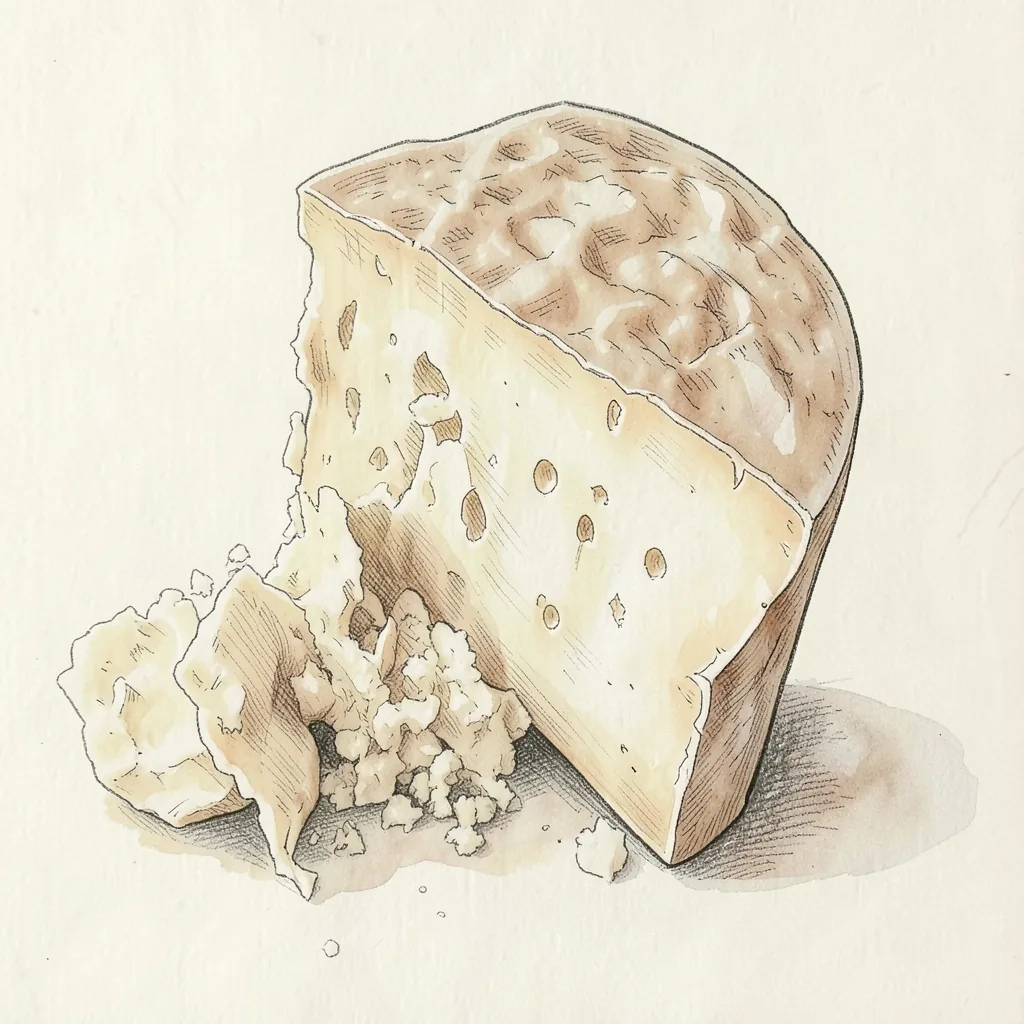
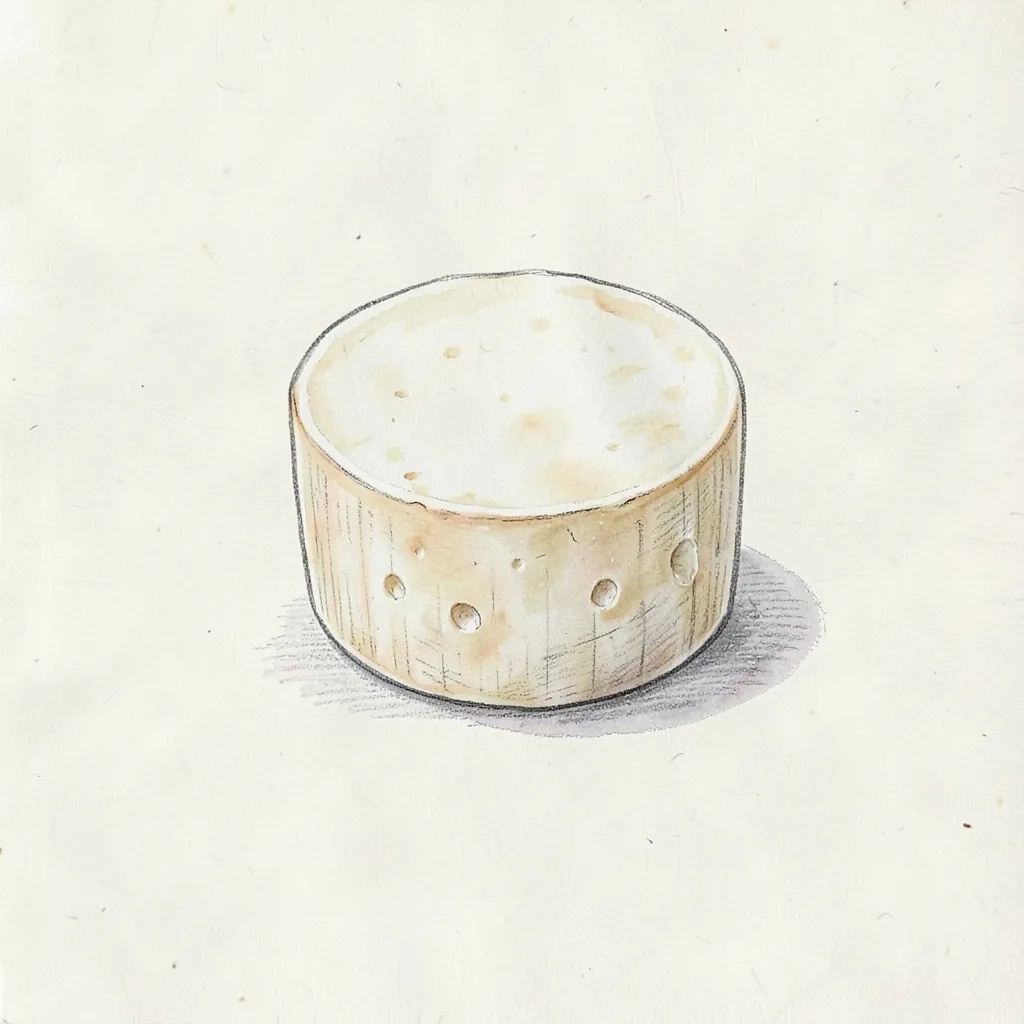
What it is
Fresh ricotta is salted and left to ripen until it becomes a dense, spreadable paste with a fierce smell. The result is not a mild scoop from a fresh tub. It is sharp, spicy, and a little bitter, and cooks use it as a seasoning more than as a main cheese. Jars and small tubs are the usual form, because the paste has no rind to hold a wheel.
The color runs from off-white to pale cream, and the body is soft enough to stir into a warm sauce. A small amount is enough on bread, pasta, or a fried turnover. In Apulia the same food may be called ricotta scanta, or a close dialect name that points to a burning taste. That heat is the ferment, not chili pepper. People who expect sweet fresh ricotta are often surprised, and many either welcome it or leave it on the plate.
History
Apulian kitchens kept ricotta forte as a way to use whey cheese that would not stay mild and fresh. Salt and time turned a gentle curd into a seasoning for other food. The habit belongs to Apulia, and a related paste is also known in neighboring Basilicata. It was a farm and household product before it was a labeled jar. The idea was simple: keep the ricotta, work it, and let it become strong enough to flavor a meal.
Dialect names such as scanta and ascuante describe the prickle on the tongue. They do not mean the cheese is smoked. Makers salt the ricotta, hold it in a crock or another vessel, and stir the paste so the ferment stays even. A spoonful can lift tomato, anchovy, or fried dough, which is why it stayed in local cooking. It is still a regional food, sold where people already know the smell.
How it is made
The start is ricotta, the soft cheese taken from whey after another cheese is made. That ricotta is salted and put into a container that can be stirred. Over a long rest, bacteria and yeasts ferment the paste. Makers mix it from time to time so the flavor moves through the whole mass, not only the surface. Moisture leaves, and the body turns thicker, sharper, and more savory.
There is no mold rind and no press into a wheel. The finished food is a cream you can spread, sometimes slightly grainy where it has dried. Older accounts mention a cloth or fig leaves over the vessel, while shop cheese usually comes in a jar. A batch that still smells only sweet and fresh is not the finished cheese. A batch that smells rotten, rather than sharply fermented, should be refused.
Taste
Expect salt, acid, and a peppery prickle, then a bitter edge that settles into something savory. The aroma is loud, closer to a very old grating cheese than to fresh ricotta. Some people think of a pungent blue at the first bite, even though there are no blue veins. The burn is real, and it stays on the tongue after the cream is gone. A small taste on bread is the fair test.
Under the heat a mild dairy sweetness is still there, but it is buried. The texture is silky when the paste was stirred well, or slightly coarse if it dried at the edges. Cold from the fridge, it feels tighter and saltier, and on warm toast the prickle feels rounder. It should not taste of soap or of moldy bread. Clean heat and a long savory finish mark a good jar.
In the kitchen
Stir a small spoon into tomato sauce for orecchiette or another pasta shape from Apulia. The paste dissolves into the sauce and adds salt and bite, so taste before you add more salt. It is also spread on bread with anchovy, or tucked into a fried panzerotto. Fried dough and this sharp cream are a traditional pair in the region. Use less than you would of fresh ricotta, because the flavor does not fade into the dish.
On a board, give it a separate knife and a plain cracker. It will cover up a mild soft cheese if they share a plate. Tomatoes, bitter greens, and a thread of oil can stand next to it. Keep the heat short, because a long boil can make the sharp notes harsh. Close the jar and keep it cold, or the smell will move into other foods nearby.
Around the world
Outside Apulia, ricotta forte is a specialty, not a standard tub in every market. Italian grocers and makers who ship southern foods are the likely places to find it. Look for the words ricotta forte or ricotta scanta, not for plain ricotta alone. Fresh ricotta, baked ricotta, and dry ricotta for grating are different foods. If a shop offers a taste, take it, because the smell answers the question at once.
Kopanisti, from Greece, is the closest cheese in spirit. It is also fermented until sharp and spreadable, and cooks also use it in small amounts. It will not taste the same, but it can season a sauce when this jar is missing. Plain ricotta cannot do that job. It is too mild, and using more of it will not create the prickle.