Cow
What it is
One of Switzerland's oldest cheese traditions, it has documented roots in the 16th century. Long maturation gives it a firm, crystalline texture and a deep, savory flavor with nutty and spicy notes.
Its AOP designation ties the milk, cheesemaking, and maturation to a defined area of origin. Local valley and alpine dairies make the cheese using traditional methods, with skilled cheesemakers overseeing production and tending the wheels as they mature.
History
Sbrinz appears in historical records in 1530. Its story is closely linked to trade across the Alps: cheese gathered in Brienz traveled by mule to Italy, where it became known as ‘lo sbrinzo’. That export history helps explain the name, while the cheese's origin and production remain Swiss.
How it is made
Fresh raw cow's milk comes from regional farms, with grass and hay forming the basis of the cows' diet and silage prohibited. Cheesemakers work in traditional copper vats, using raw milk, cultures, rennet, and salt. The curd is cut, stirred, heated, shaped, and pressed into large wheels.
After cheesemaking, the wheels spend at least 15 days in brine, then undergo a drying and sweating stage in a slightly warmed cellar. They mature on silver fir supports and are cared for by hand. Sbrinz is aged for at least 18 months; longer maturation produces a more pronounced flavor.
AOP production follows defined origin, method, and quality requirements, with compliance monitored by independent certification bodies. The protected designation preserves the connection between the cheese, its regional milk, and the craft of its makers.
Flavor and texture
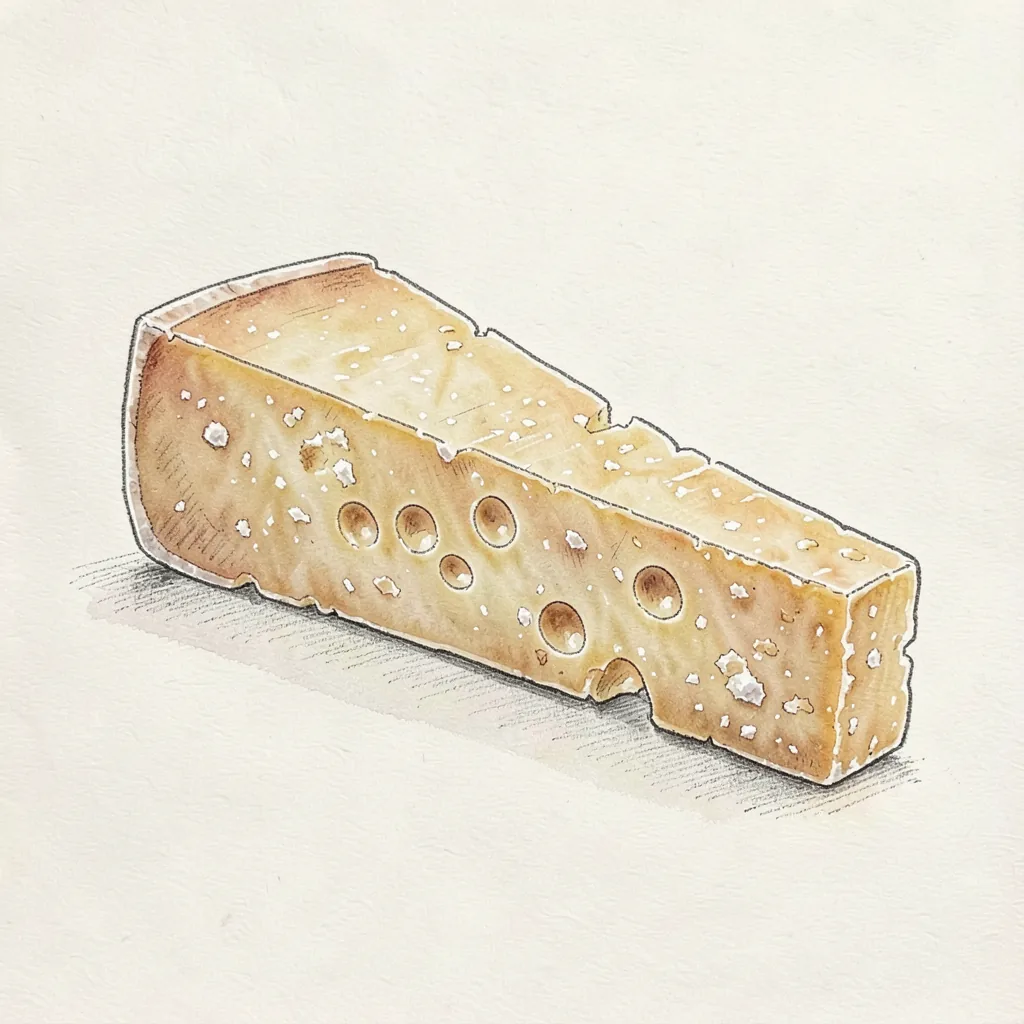
The paste is dense and extra hard, with a crystalline texture that lends itself to breaking into small pieces. Its savory, nutty character becomes more aromatic and spicy with age. At around 18 months it can be shaved into thin curls; the producer describes full flavor developing from about 22 months.
In the kitchen
Serve Sbrinz as wafer-thin curls or break mature cheese into small chunks for an aperitif. Grated Sbrinz adds a savory finish to pasta, risotto, vegetables, and gratins. Taste before adding extra salt, since even a small amount brings concentrated flavor.