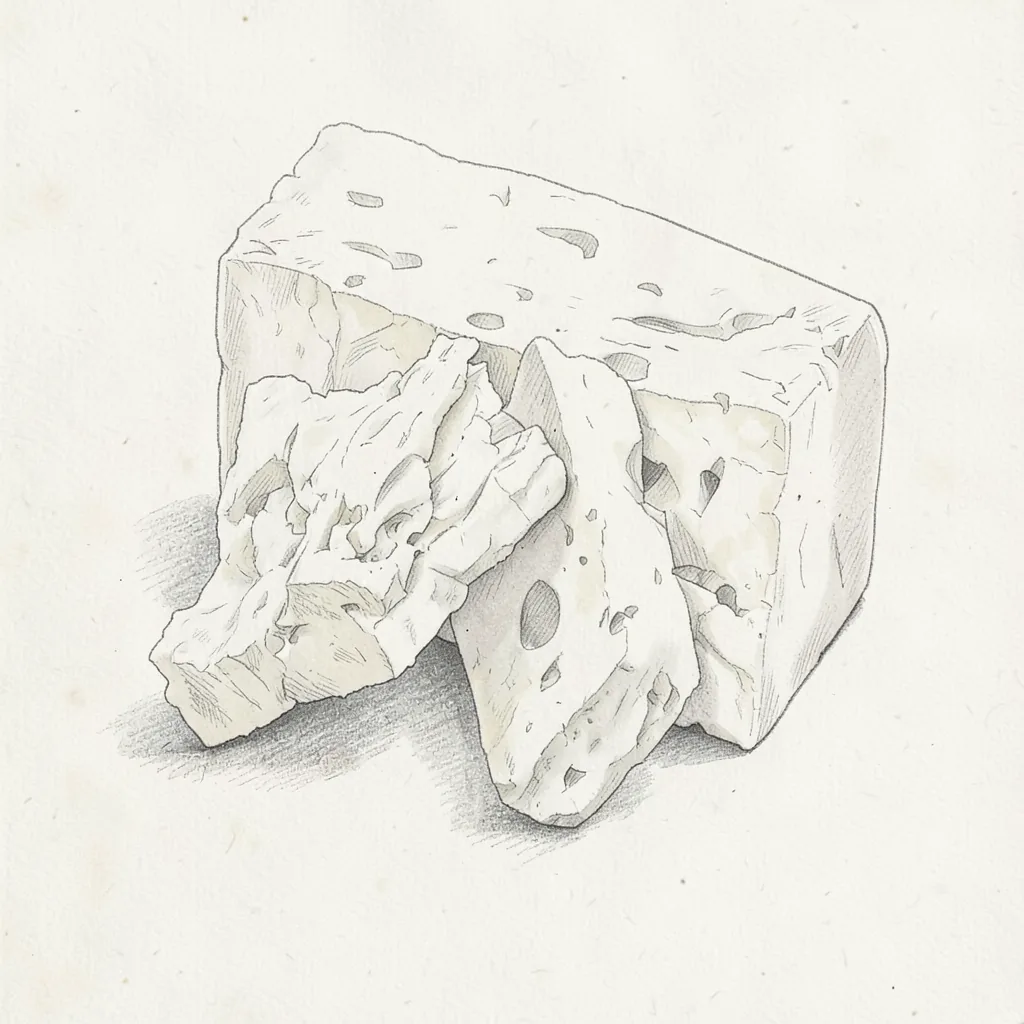
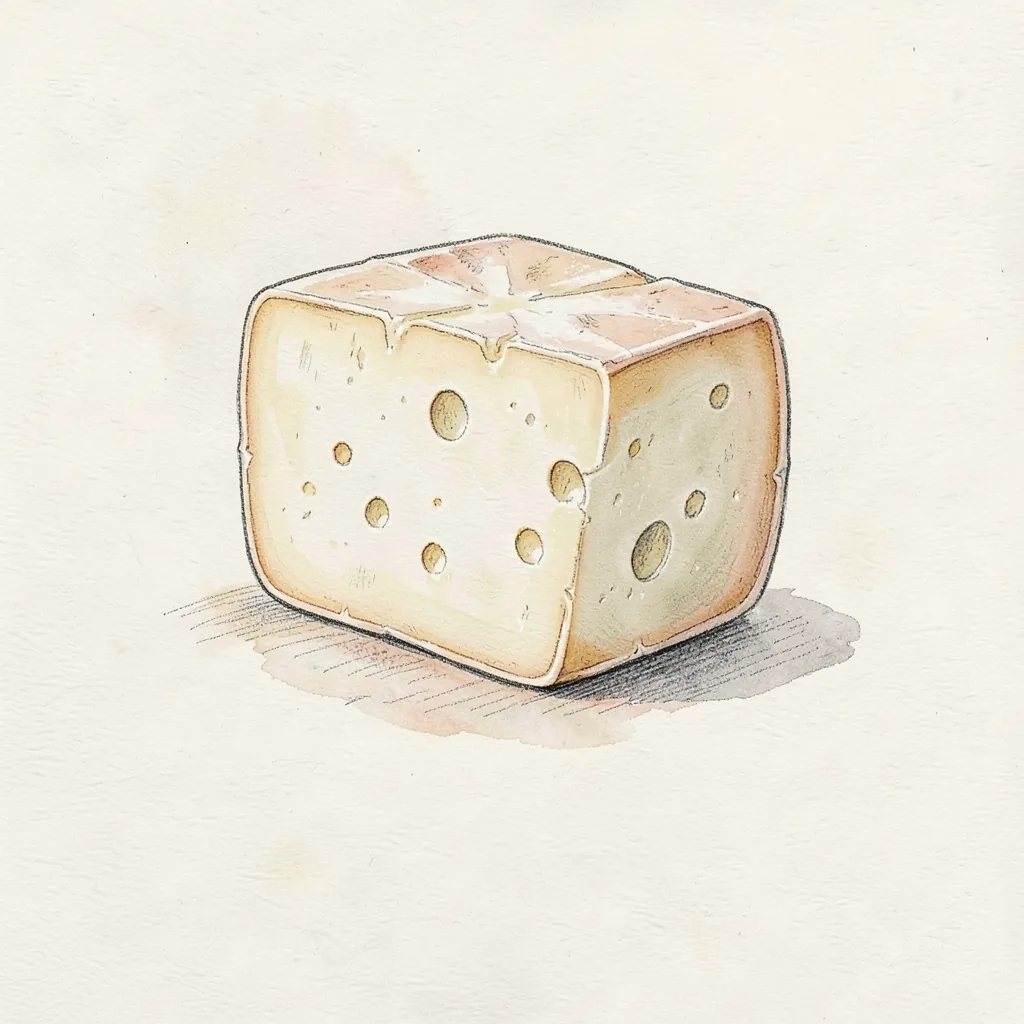
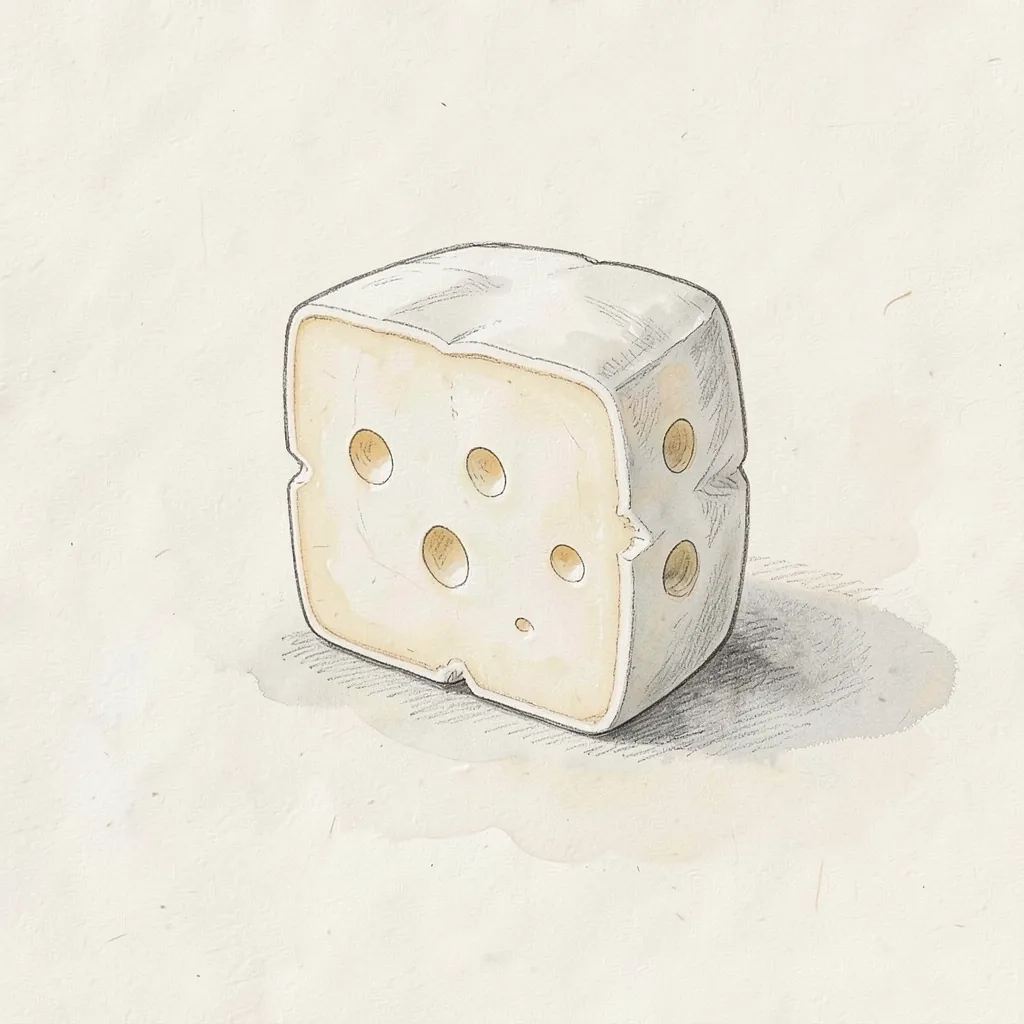
What it is
It begins as a fresh curd cheese that is packed into a brine of salted milk or buttermilk with spices and left to ferment. The ripe cheese turns yellowish brown and tastes pungent, with a heat from pepper and a strong salty edge. Rural households have long used it as a staple with bread, and many people also serve a little of it as an appetizer. It is an aged pickled cheese, not a fresh white cheese.
The flavor is built from salt, fermentation, and spices such as fenugreek, cumin, chili, and black pepper. Some batches also take sesame cake or the browned bits left from clarifying butter. A little older mish may be added to start the new batch and keep the character steady. The cheese can be firm enough to cube or soft enough to spoon, and the liquid around it is part of the food. Shop cheese and a jar kept a very long time at home are not the same strength.
History
Mish is an old way to keep fresh Egyptian curd cheese in a hot climate. Salt, spices, and a closed pot let the cheese ferment instead of spoiling, and the sharp taste became part of rural cooking. Farmers ate it with bread and green onion as everyday food, not only as a rare delicacy. The same name now covers cheese from homes and cheese from small makers who sell at markets. The idea is preservation first, and flavor comes with that wait.
Details change from one house to another, and even from one part of Egypt to another. The fresh cheese, the spice list, and the length of the wait are the usual differences. Areesh, the fresh curd, is the common starting point, though other Egyptian cheeses are sometimes pickled in a similar way. A commercial jar may be milder and more even than a family pot. That range is why two people can describe mish in very different words and both be right.
How it is made
The usual path starts with areesh, a fresh drained curd. Pieces of that cheese go into a clean earthenware pot, and the gaps are filled with salted milk, skimmed milk, or buttermilk. Spices such as fenugreek, chili, cumin, and pepper go in with the liquid. Sesame cake and the residue from clarified butter appear in many family recipes. A spoon of older mish can seed the pot, and this account is a description of the tradition, not a set of steps to copy at home.
The pot is closed so the contents ripen with little air. Time, warmth, salt, and the spices do the work, and the fresh white curd darkens and sharpens. There is no rennet rind and no pressing into a wheel. When the cheese is ready, it is yellowish brown, very salty, and strongly aromatic. Market versions are the sensible choice for most buyers, because a home pot can vary from pleasant to harsh, and an unknown old jar is not ordinary table cheese.
Taste
Ripe mish is salty first, then sharp, spicy, and deeply savory. Fenugreek and chili are often easy to pick out, and cumin or pepper may follow. The color is yellow brown rather than white, which is a sign of the long pickle. Texture runs from a moist cube to a softer scoop, depending on the pot. The brine itself tastes like a concentrated version of the cheese, and a little goes far on bread.
Compared with fresh areesh, mish is darker, saltier, and much more pungent. Compared with domiati, the common white Egyptian cheese, it is sharper and less milky. A mild market mish can still be strong to someone who expects feta. A very old homemade cheese can taste harsh, ammoniated, or simply too salty to enjoy. If it smells spoiled rather than fermented, do not eat it, because salt and spice should be bold but the cheese should not smell rotten.
In the kitchen
Egyptians eat mish in small pieces with bread, often with onion, leek, tomato, or a little oil. It is an appetizer and a side, not the mild cheese in a large salad. The salt means you need only a cube or a spoon of the soft part. Crumble a mild piece over beans, eggs, or a chopped salad if you want a sharp salty note. Taste before you add any extra salt to the plate.
Do not expect it to melt into a smooth sauce or to grate like a hard cheese. Heat will soften it, but the salt and spice will dominate the pan. Pair it with plain starches and fresh vegetables so there is something cool and mild on the plate. Feta can fill a salad if mish is too strong, and domiati is the milder Egyptian choice. If the cheese tastes unpleasant, choose another piece rather than trying to cook the flavor away.
Around the world
Outside Egypt, mish is uncommon in ordinary supermarkets. Middle Eastern markets and Egyptian grocers are the places to look, and some restaurants serve it as a small side. Ask whether the jar is a market cheese or a very old home ferment, and choose the market cheese if you are new to it. Areesh in the same shop is the fresh starting cheese, white and mild, and it is not a substitute for the pickled one. Domiati is the white brined cheese you are more likely to see.
Feta is the practical substitute on bread or in a salad when you want salt without the fermented heat. It tastes cleaner and milder. Domiati is closer in origin and still much gentler. Rumi is Egyptian too, but it is firm and aged differently, so it will not copy the spoonable pickle. If a recipe calls for mish, a salty white cheese changes the dish, and it is better to say so.