Cow
What it is
Makers use cow's milk, unlike Roquefort, which is made from sheep's milk. The name echoes Roquefort and Poland, and the paste is pierced so blue mold can grow in veins. The taste is salty, pungent, and moderately sharp. It is a shop blue for the board and for cooking, not a fresh white cheese.
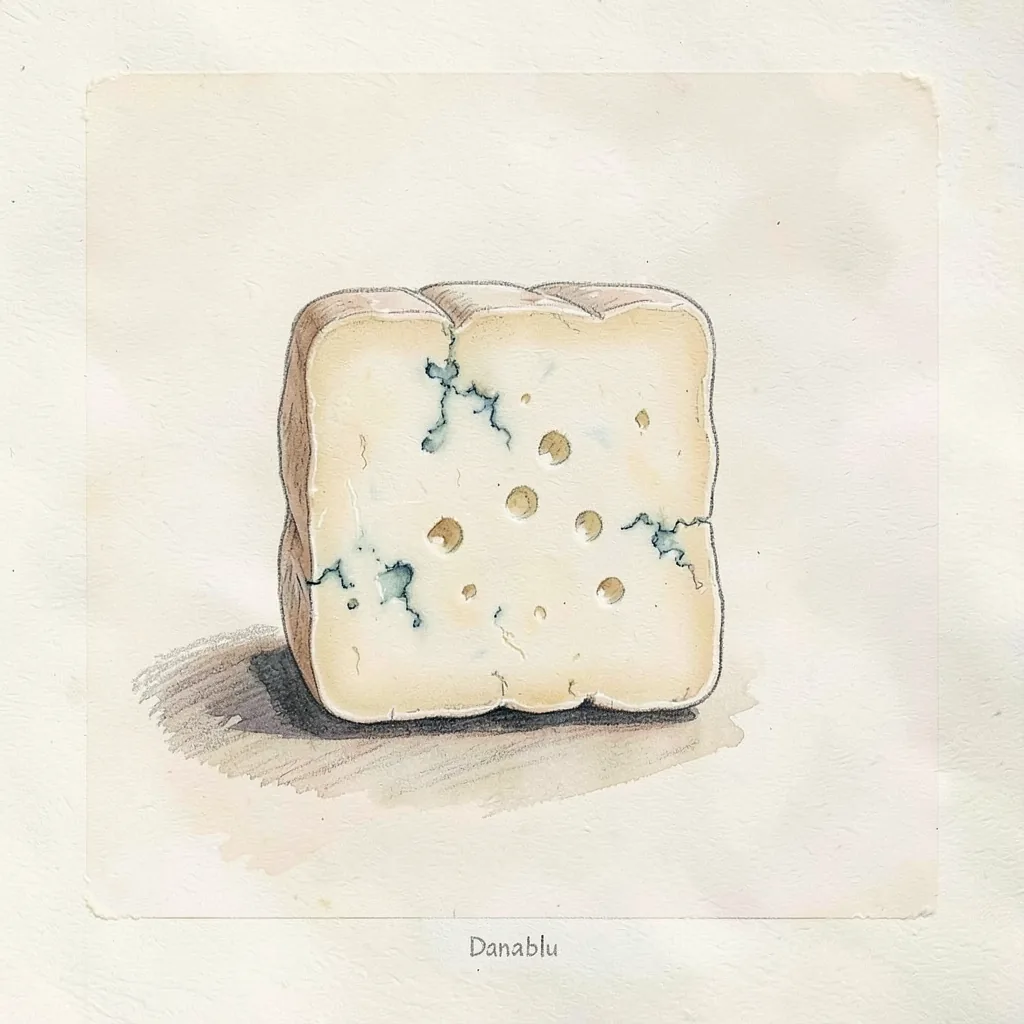
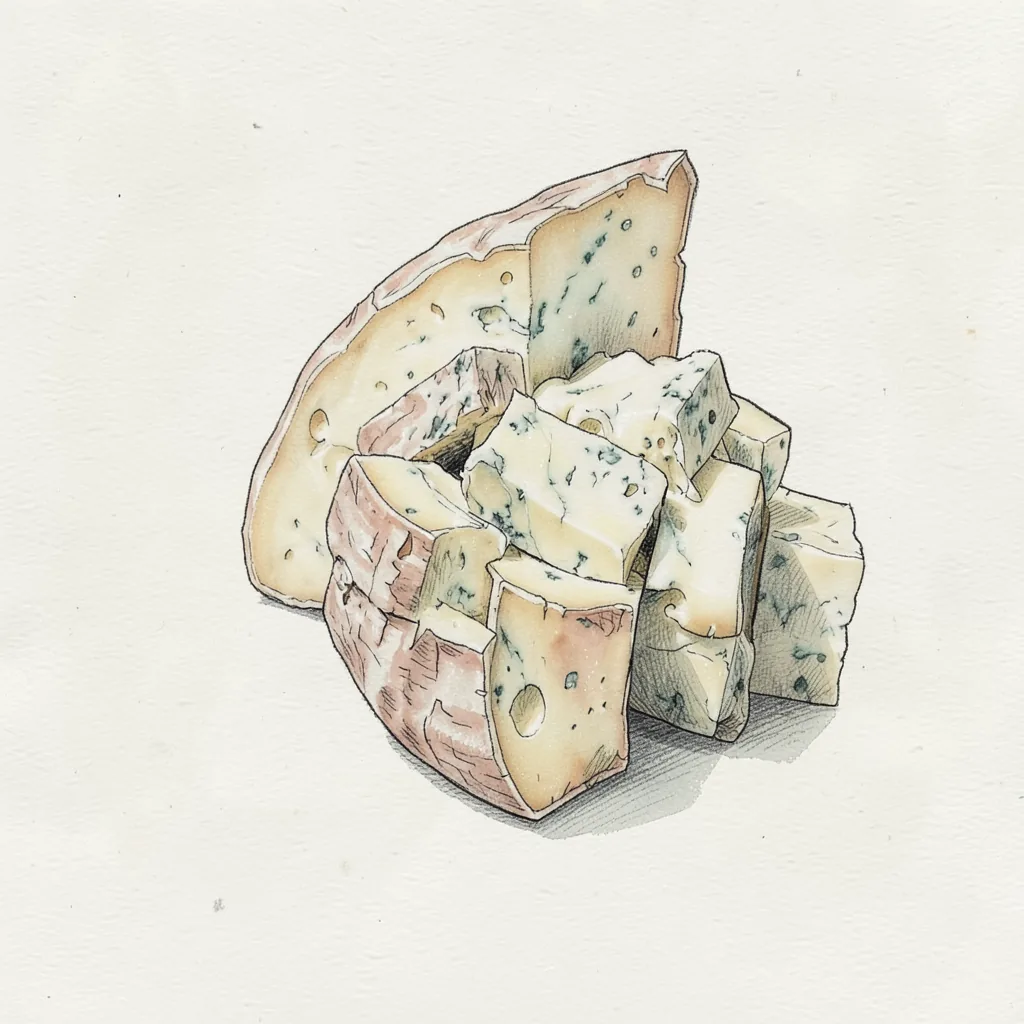
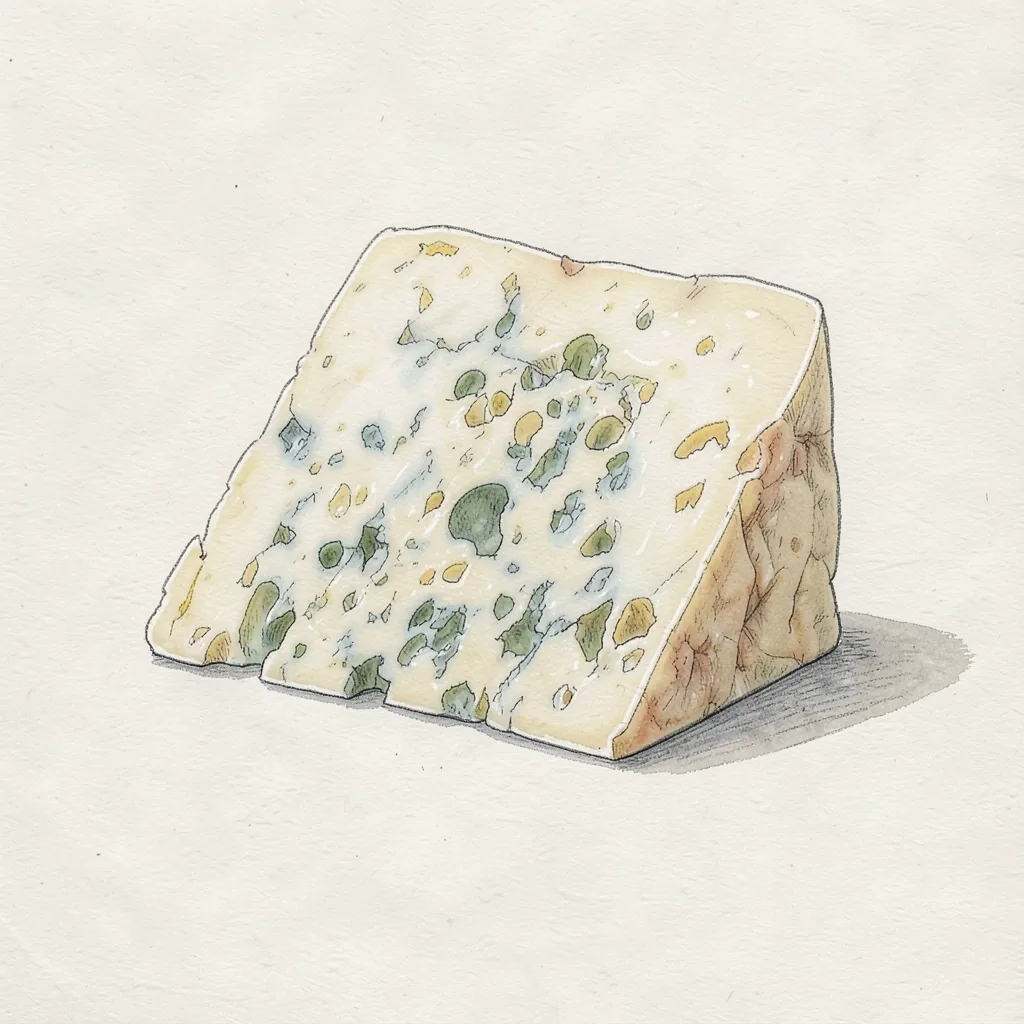
The interior is pale and moist, with blue-green pockets and lines through the paste. The texture breaks into crumbs rather than stretching into strings. The aroma is strong and savory, with a clear blue-cheese smell. Salt is easy to notice even in a small piece. Shops often sell wrapped wedges that are ready to crumble over food or to melt into a sauce.
History
Polish dairies developed Rokpol as a local blue in the manner of French blue cheeses, but they used cow's milk instead of sheep's milk. The style became associated with Wielkopolska, and other Polish dairies also made it. The name signaled a link to Roquefort without claiming to be the French cheese. Makers kept the pierced paste and the blue mold that give the cheese its look. It settled in as a familiar Polish blue rather than a short trial.
Some dairies later sold closely related wheels under their own trade names, while Rokpol remained a general name for this cow's milk blue. The cheese stayed in ordinary Polish shops, not only on specialty counters. Cooks used it in sauces and on salads as well as on boards. Export packs still present it as a Polish blue. A sheep's milk Roquefort from France is a different cheese, even if the colors look similar.
How it is made
Pasteurized cow's milk is set with rennet, and blue mold is added so veins can form inside the cheese. The curd is cut, drained, salted, and shaped. During ripening, makers pierce the cheese so air can reach the interior. That air lets the blue mold spread in lines and pockets. The cheese then rests until the veins are clear and the flavor has sharpened.
The paste stays semi-soft and moist rather than hard and dry. There is no bloomy white rind as the main feature, and there is no wax coat of the Gouda kind. Salt is part of the make, which is why a finished piece tastes clearly salty. A good cheese shows even blue growth and a clean pungent smell. If the paste is slimy or smells strongly of ammonia, it has gone too far.
Taste
Rokpol tastes salty, tangy, and pungent, with a mushroom note from the blue mold. The cow's milk base can feel a little rounder than a very dry sheep's milk blue, but the cheese is still forceful. The paste crumbles and feels moist, not creamy like a soft bloomy cheese. A small piece is enough to season a bite. Cold dulls the aroma, so let it warm slightly before you taste it.
Next to Roquefort, Rokpol is usually less sheepy and a bit less complex, because the milk and the place are different. Next to a mild blue with a white rind, it is sharper and saltier. Bitterness should stay moderate, not harsh. The finish is savory and a little peppery. If you taste only salt, the piece may be an edge cut or still too cold.
In the kitchen
Crumble Rokpol over salad, potatoes, or grilled meat, or stir it into a warm sauce for pasta or vegetables. Heat softens the pungency and lets the cheese melt into the dish. On a board, pair it with bread, walnuts, and grapes, or with a little honey so the salt has a sweet counter. Use less than you would of a mild cheese. The smell will lead the plate if you add too much.
Break the cheese while it is cool, then serve it a little warmer so the aroma can open. It does not slice into neat elastic sheets, and it does not stretch. Wrap it tightly, because the blue aroma travels in the fridge. A leftover piece still works in a cooked sauce if the smell is clean. Discard it if the paste turns wet and smells of ammonia.
Around the world
Rokpol is eaten mostly in Poland, where it is an ordinary blue rather than a rare import. Wielkopolska is the region on the card, though dairies in other parts of Poland have also made the style. Specialty shops abroad sometimes place it beside Gorgonzola and Danablu. Cow's milk and the Polish name are the points to remember. It should not be labeled as Roquefort, because that is a separate sheep's milk cheese from France.
Danablu is a practical substitute when you want a salty cow's milk blue for a sauce or a salad. Gorgonzola can stand in if you prefer a softer blue that still melts. Roquefort changes the dish because it is sheep's milk and often sharper. Fourme d'Ambert is another cow's milk blue, and it is usually gentler. None of those names replaces Polish Rokpol when a recipe asks for it by name.