Cow
What it is
The name joins the French word for blue with Neuchâtel, and the paste is marked by fine blue veins. It is soft enough to spread when it has warmed a little, with a flavor that is strong but not harsh. Wheels are pierced so the mold can grow inside the body. It is a Swiss blue, not a copy sold under a French or Italian name.
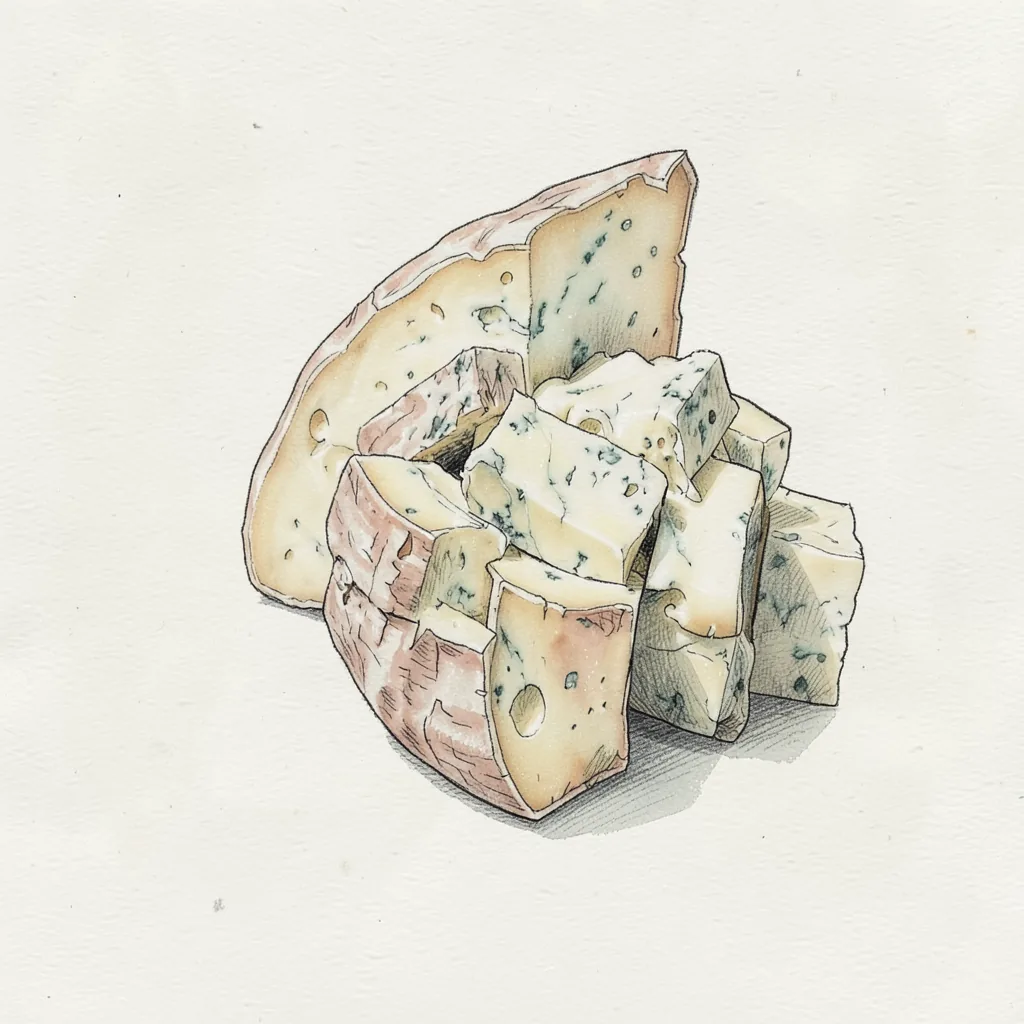
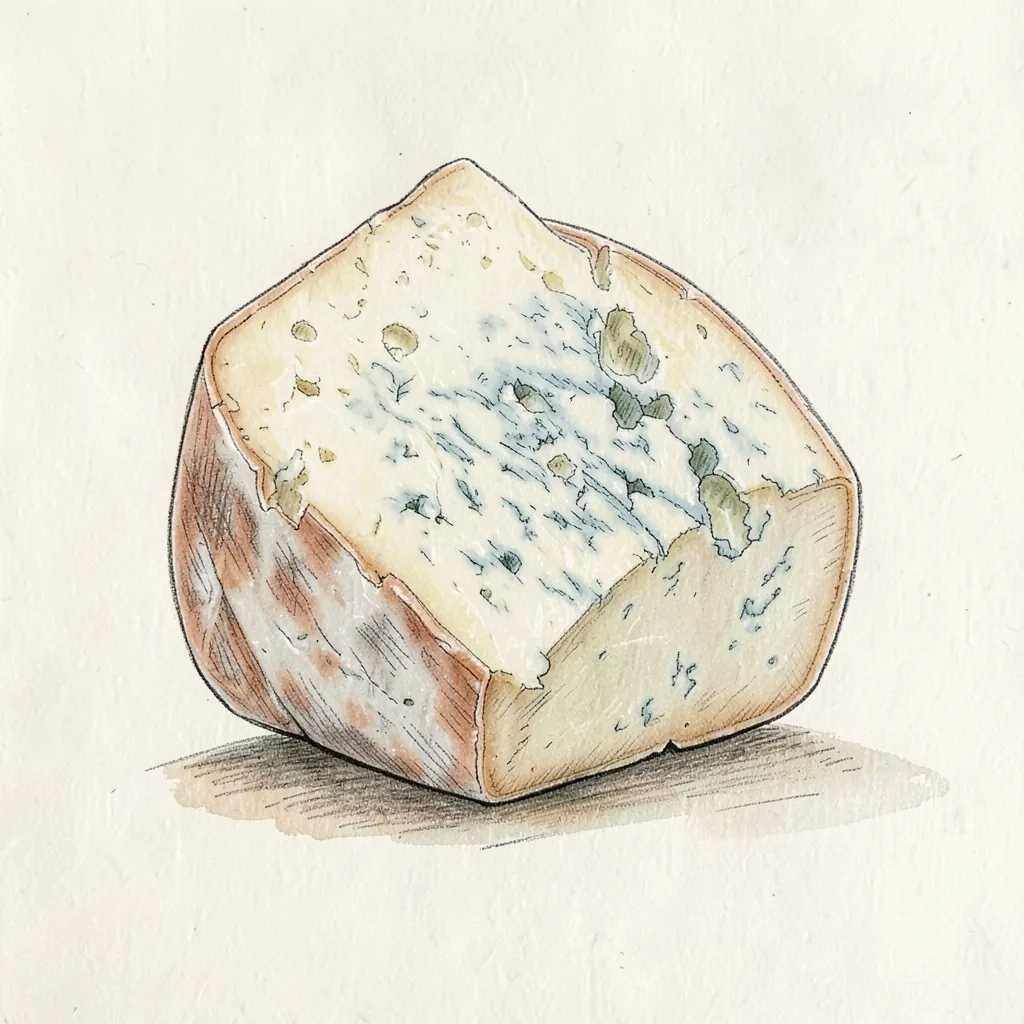
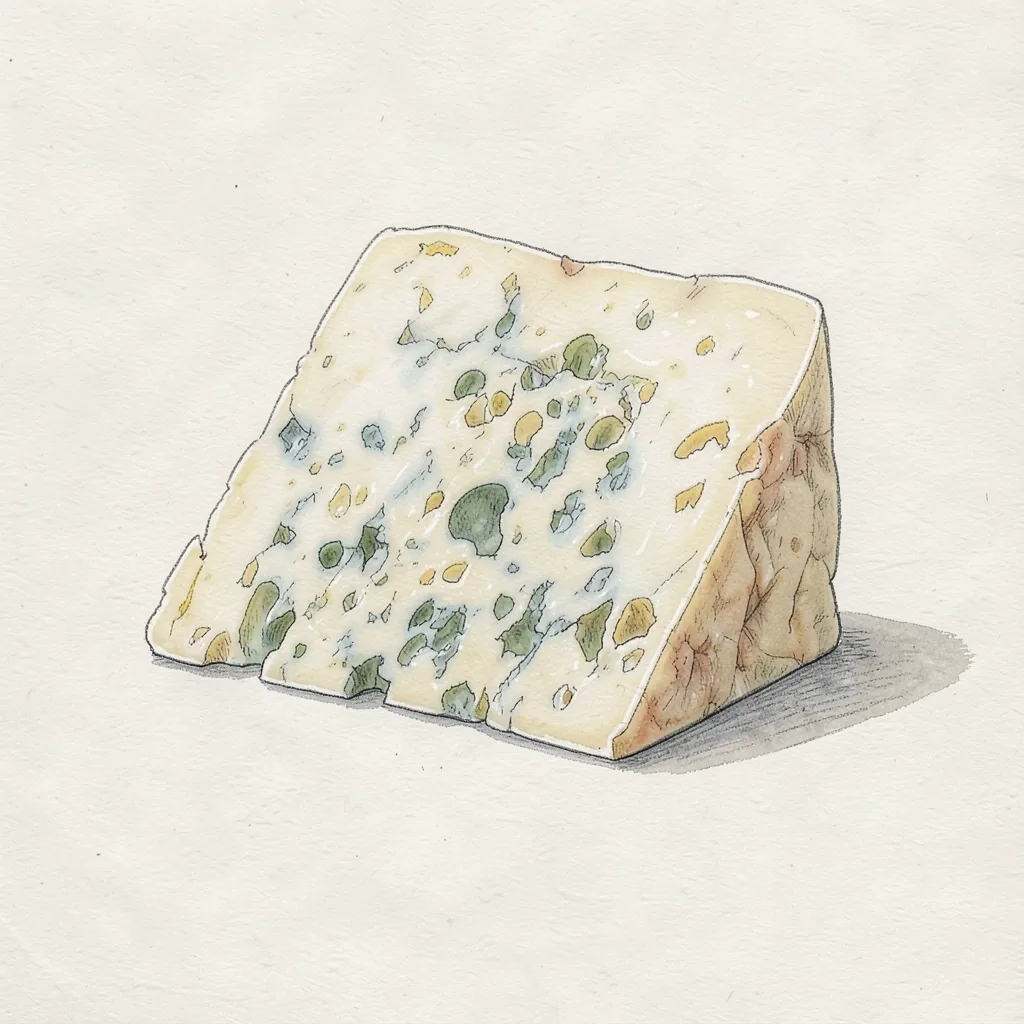
The cut face is pale and moist, with blue-green lines running through a tender body. The smell is of blue mold, cream, and salt, and it opens further as the cheese warms. Texture sits between a firm crumbly blue and a very runny one, so a spoon or a soft knife both work. People use it on a board, in a sauce, or crumbled over a salad. The character is rounded rather than wild, which is why cooks treat it as a versatile blue.
History
Blue cheese in Europe was long tied to France, Italy, and Britain, while Swiss dairies were better known for firm wheels with eyes or for washed rinds. Bleuchâtel is a Swiss answer in that blue family. The name tells you both the style and the Neuchâtel link in one word. Makers learned how blue mold behaves in a cream-rich cow's milk cheese, and how to keep that mold off other cheeses. Careful aging, away from plain firm wheels, became part of the practical story.
The cheese is still a product of Swiss milk and Swiss make, even when wedges are exported. It did not arrive as an old village recipe with a fixed seasonal rite. It is a dairy blue with a clear name inside the country. Shops sometimes file it next to Gorgonzola or Roquefort because the veins look familiar at a glance. The taste is its own, and the label should keep the Swiss origin in view, with cow's milk and blue mold as the facts that do not change.
How it is made
Cow's milk is set with cultures and rennet, and a blue mold culture is mixed in so the veins can form from within the paste. The curd is drained and salted, then formed into wheels of a manageable size. Those wheels are pierced with needles after they are shaped. The holes let in a little air, and the mold uses that air to grow along paths through the interior. Without the piercing, the center would stay plain and the blue would not thread the cheese.
Aging continues until the body is creamy and the blue is evenly spread, not only a stain on the surface. The cheese is kept apart from firm Swiss wheels that should not pick up blue mold. Salt and moisture are watched so the paste stays tender instead of dry and crumbly. There is no wax coat and no bloomy white rind of the Camembert type. What leaves the dairy is a blue-veined cow's milk cheese with a soft, rich cut face.
Taste
Cream comes first, then salt, then the mushroom and spice notes of the blue mold. The finish can be slightly sweet, which softens the salt and keeps the cheese from tasting only sharp. It is pungent enough to notice across a plate, but many people find it gentler than a very strong sheep's milk blue. The veins taste fuller than the pale paste around them. A small bite is enough to judge whether the balance suits you.
Texture is silky when the cheese is in good condition, and it should bend or spread rather than shatter into dry crumbs. If it is very cold, it seems firmer and the aroma stays hidden, so give it time to warm before you decide. A piece that smells of harsh ammonia or tastes only bitter is past its best. At a good point the mold, the salt, and the cow's milk cream feel like one flavor. That balance is the point of this Swiss blue.
In the kitchen
Crumble Bleuchâtel over a green salad, warm potatoes, or a grilled steak when you want salt and mold without a large amount of cheese. It melts into a sauce or a risotto and turns the cream savory and lightly colored by the veins. On a board, pair it with honey, pear, or plain walnuts, and keep the other cheeses milder so they do not fight it. Bread or a plain cracker is better than a heavily seasoned biscuit. A little of this cheese goes far in any dish.
Use a spoon if the paste is very soft, or a knife if the wedge still holds a shape. Do not boil it for a long time, or the blue flavor can turn aggressive and the fat can split. Stir it in off the heat at the end of a sauce. It is not a grating cheese and it is not a cheese for the grill. Wrap the cut wedge well, because the mold smell will move into nearby butter, and eat it while the texture is still moist.
Around the world
Bleuchâtel travels to cheese counters that stock European blues, though it is less famous than Gorgonzola, Roquefort, or Stilton. The name is sometimes misread by people who do not know Neuchâtel, so the Swiss origin gets lost on the board. Ask for a cow's milk blue from Switzerland if the exact word is not on the card. In Switzerland it appears on boards and in cooking beside the better-known firm cheeses of the country. An export wedge should still show clear blue veins through a creamy paste.
Gorgonzola is the closest everyday substitute, especially a creamy one, when a recipe needs a soft blue that melts. Bleu d'Auvergne can stand in for a stronger blue note with a cow's milk base. Roquefort is usually sharper and is made from sheep's milk, so it changes the dish. Fourme d'Ambert is firmer and milder in a different direction. If you only need salt and blue mold, any of those will cook, but they are not Swiss and they are not this cheese.