Cow
What it is
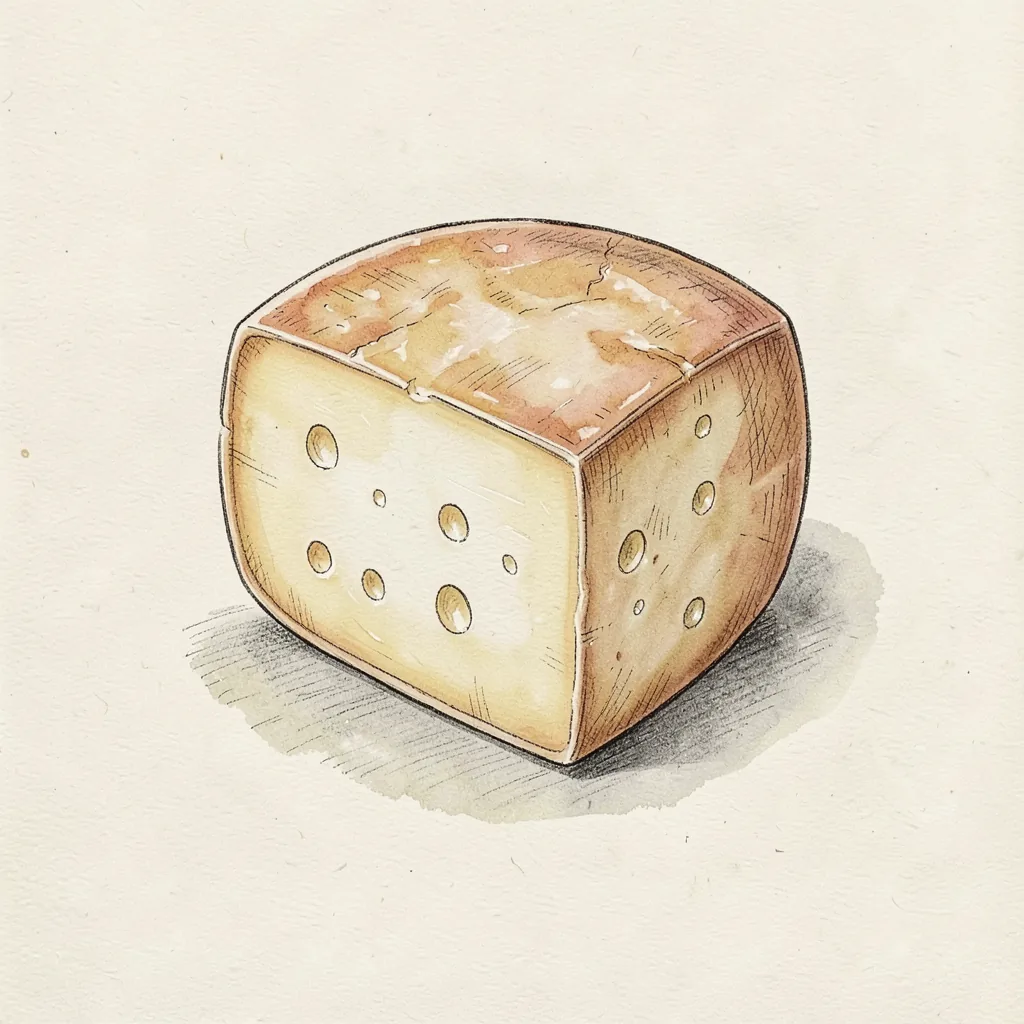
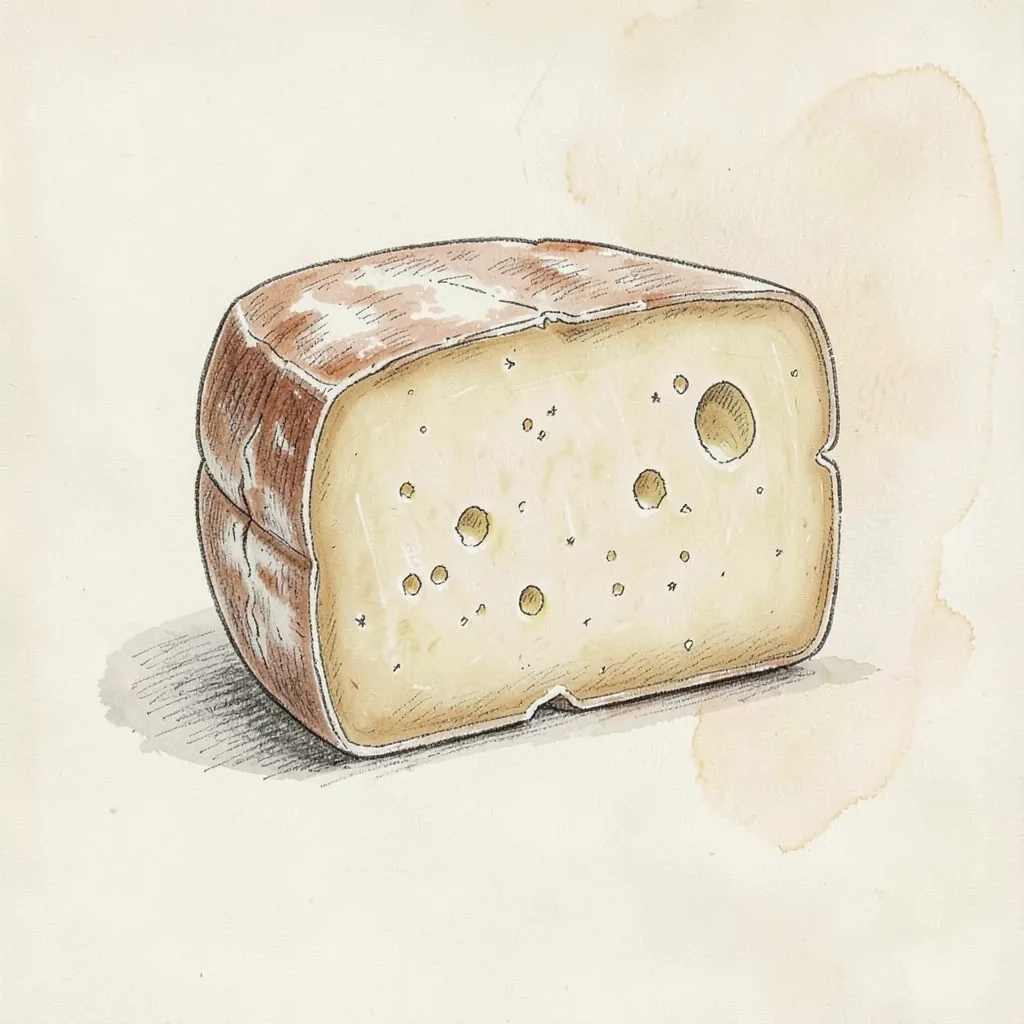
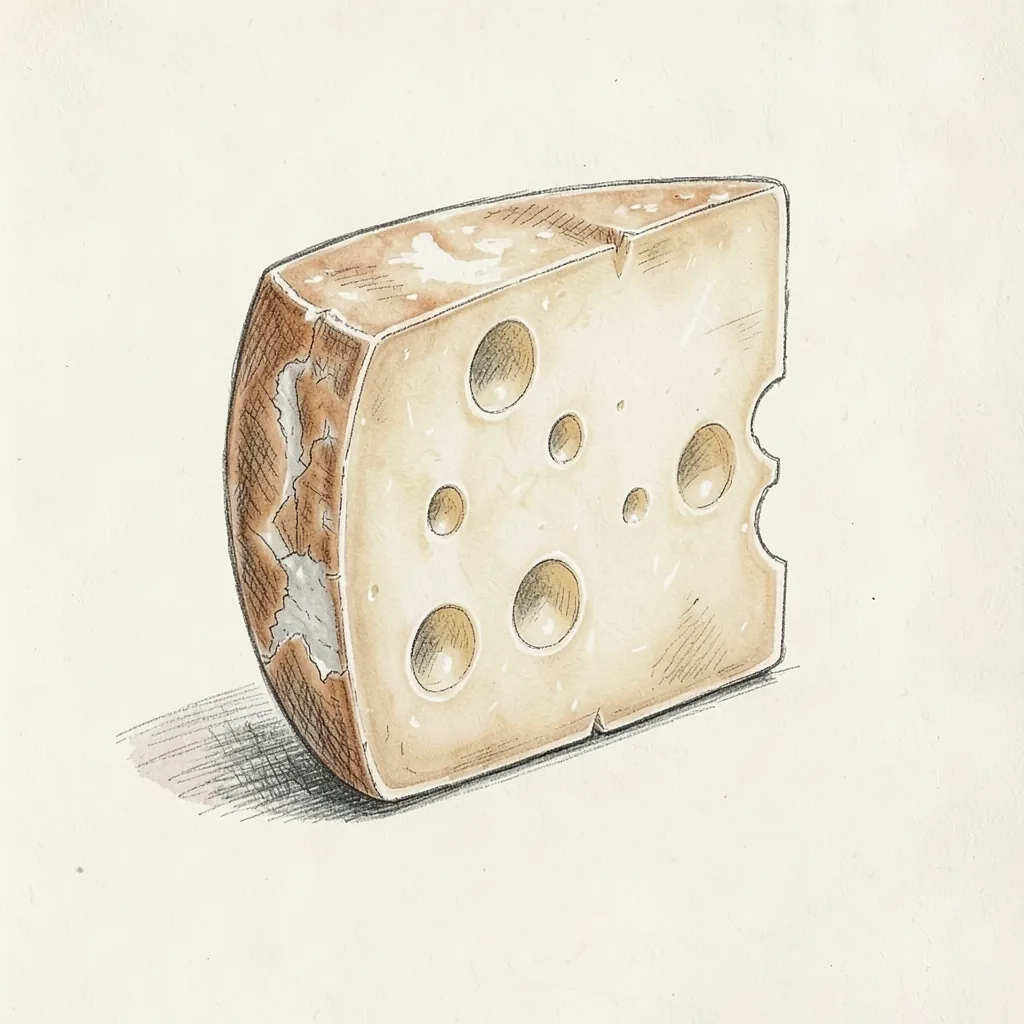
Spanish speakers often call the same cheese Queso Colonia. The paste is pale yellow and elastic, with many round eyes scattered through it. A smooth, firm rind covers wheels that are usually broad and somewhat flat. The flavor is mild and slightly sweet, closer to butter and warm milk than to a sharp aged cheese.
A shorter ripening keeps Colonia gentle, moist, and supple on the knife. A longer ripening deepens the nutty side and makes the paste a little drier. It still stays semi-hard rather than becoming a dry grating block. Both ages are the same Uruguayan cheese, useful on a snack board or in a cooked dish. The eyes and the mild cow's milk taste are the markers, not a strong smell from the rind.
History
Colonia took shape in Uruguay among dairy makers who wanted a cheese with large eyes. They had Swiss models in mind, but local milk and local conditions changed the result. The cheese became milder and a little softer than those alpine wheels. Uruguay kept it as its own variety and sold it under the name Colonia. No single foreign recipe still defines the flavor you meet in the country today.
The cheese spread through the dairy lands of Uruguay and into everyday shops. It became a table cheese for gatherings, not a rare secret of one farm. Large, bright eyes were treated as a sign of a proper wheel. Makers learned to balance moisture so the paste stayed elastic and easy to slice. Over time, Colonia settled in as a national habit rather than a straight copy of a Swiss cheese.
How it is made
Makers begin with cow's milk and set the curd with starter cultures and rennet. The curd is cut, stirred, and warmed enough to build a supple, semi-hard body. Workers then press it into round, fairly flat molds. Salt goes on in a brine bath or on the surface of the wheel. Gas from the ripening cultures opens the round eyes that buyers expect to see.
Wheels rest while the eyes develop and the flavor moves from plain milk toward a light sweetness. The rind is kept clean, smooth, and firm during that rest. Some cheeses get a thin coat on the outside for market, and that coat is not the paste. A good wheel has eyes of several sizes, spread through the interior, not one giant split. The paste should look even, from pale yellow to a deeper straw color.
Taste
Colonia tastes mild, lactic, and slightly sweet on the first bite. Butter and warm cooked milk are the closest flavor notes in the paste. Salt is present, but it never takes over the flavor. The eyes make each slice look open, and the paste feels elastic under the tooth. A gentle nuttiness shows more clearly in an older wheel, without the sharp bite of a long-aged mountain cheese.
The smell is clean and milky, with a faint sweetness when the wheel is cut. It should not smell sharp, soapy, or strongly of the barn. The rind stays quiet compared with a washed-rind cheese. Color in the paste runs from ivory yellow to a soft straw shade. If the cheese tastes bitter, or the eyes look wet and collapsed, that wheel is a poor example of the style.
In the kitchen
In Uruguay, Colonia goes on a picada, the shared snack plate, with bread and cold cuts. Slices are easy to pick up, and the mild taste suits guests who avoid strong cheese. The same cheese melts for sandwiches, baked pasta, or a simple grilled toast. The elastic paste softens in heat and still holds a little body. Those round eyes make a thick slice look open and generous on the plate.
Grate only a drier, older piece, and even then it is not a hard powdery cheese. For most cooking, thick slices or coarse shreds are the better choice. It pairs with a firm red wine from Uruguay or with a simple glass of white. Fresh fruit and a sweet fruit paste are usual partners on a snack board. Let the cheese warm fully before a tasting so the sweet milk note can come forward.
Around the world
Colonia is a Uruguayan cheese before it is anything else. People in nearby countries know the general style of a mild cheese with eyes. Brazil has a related cheese, and the two should not be treated as the same product. Farther away, Colonia shows up in Latin American shops and on restaurant snack boards. It is not a global commodity in the way some eyed Swiss-style cheeses are.
Cooks abroad can swap it for a mild cheese with eyes when they need an easy melt. The Uruguayan wheel is usually softer and less nutty than a long-aged Emmental. It will not do the job of a hard cheese meant only for grating. On a snack board it behaves like a friendly cow's milk cheese with holes. If a label is vague, look for Uruguay and for those round eyes before you buy.