Cow
What it is
It is the American style with holes, and it is not Emmental from Switzerland. Blocks and deli slices are the usual forms, and many pieces have no rind at all. The taste is mild, nutty, and a little sweet. Cooks buy it for sandwiches and for melting more than for a long-aged board.
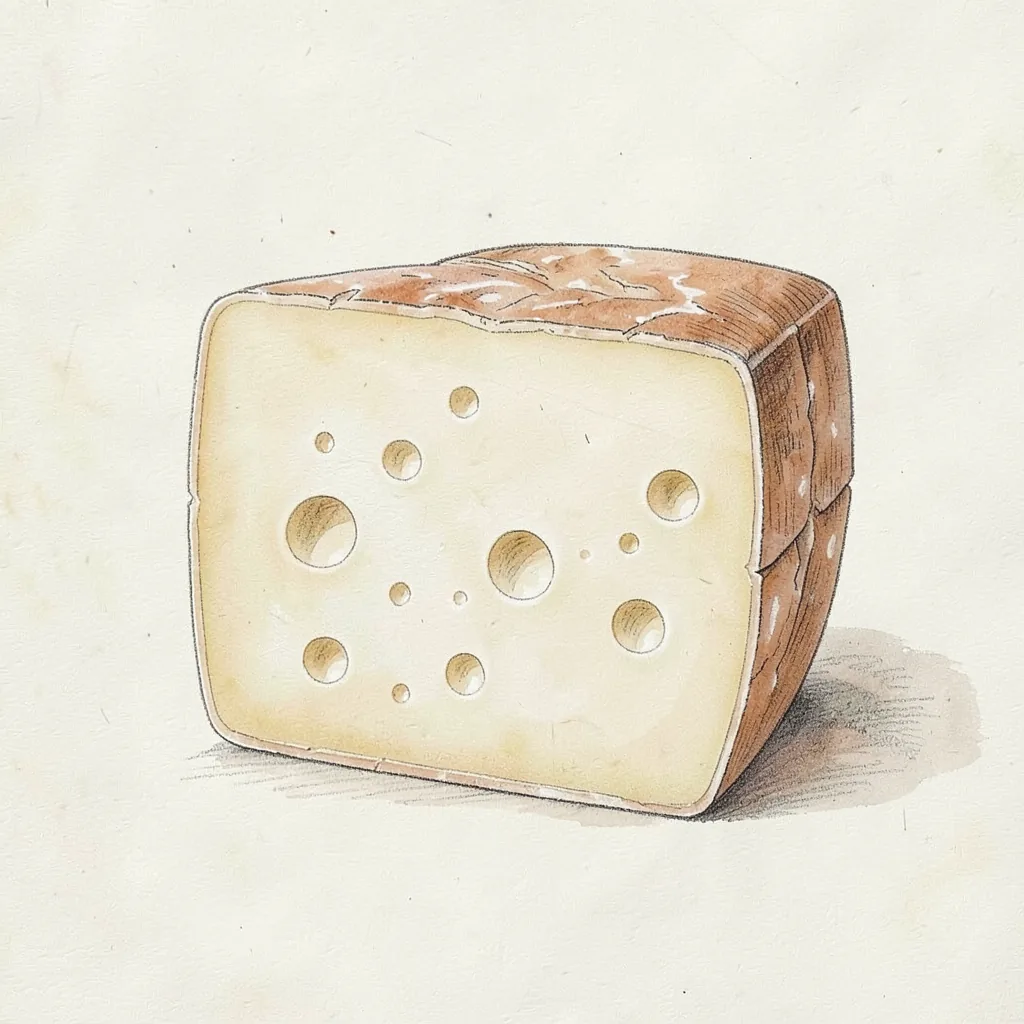
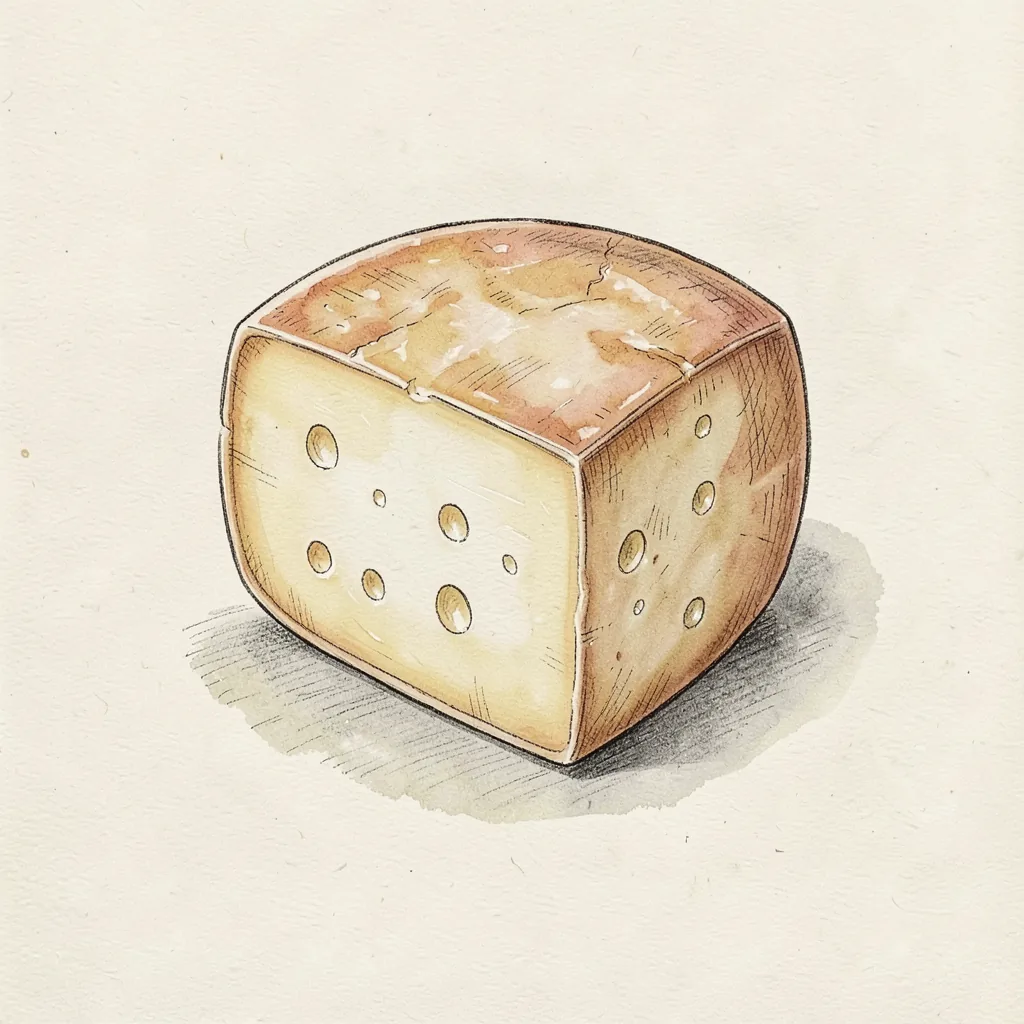
The holes are part of the identity shoppers expect. They form while the cheese ripens, and a typical slice shows several smooth round openings. The paste is pale yellow, supple, and smooth enough to bend when it is not very cold. A large block from the dairy case and a thin deli slice are the same style. Both should taste clean and mild, not sharp, bitter, or musty.
History
American dairies built this cheese for eaters who wanted holes like a Swiss wheel, made in the United States. The style followed European cheeses such as Emmental in broad outline, then took its own path in large plants. Rindless blocks suited slicing, shipping, and the deli counter. A mild flavor suited sandwiches and burgers better than a sharp aged wheel would. The name Swiss cheese stayed in American shops even though the product is domestic.
The category stayed wide enough to include more than one brand. One block may be slightly sweeter, and another may show larger eyes, but shoppers still expect the same mild cheese. It became a deli staple beside ham and other sliced cheeses. It did not stay a farmhouse specialty from one small district. When a recipe in the United States says Swiss cheese, it means this domestic cheese, not a wheel imported from Switzerland.
How it is made
Makers set cow's milk, cut the curd, and heat and stir the grains until they firm up. The curd is pressed into large blocks or tall wheels. During ripening, bacteria make gas, and that gas opens the eyes inside the paste. The cheese stays in the aging room until the holes are set and the flavor is mild and nutty. Most of what reaches shops is then cut into rindless blocks or thin slices.
The method aims at an even, flexible paste rather than a dry cheese for the grater. Salt stays moderate so the mild sweetness can show. A natural rind is not the point of the grocery version, and many pieces show only cut faces. Eyes should look round and glossy, not like ragged cracks through the slice. Large plants make this cheese steadily so delis can keep it in stock beside other sliced cheeses.
Taste
The flavor is mild, nutty, and slightly sweet, with a clean dairy finish. Salt is present, but it does not dominate the slice. There is little of the sharp tang that shows up in a long-aged firm cheese. The eyes taste the same as the paste around them. A cold slice is firmer and quieter, and a slice at room temperature is softer and a bit more aromatic.
The texture is smooth and slightly elastic in a sound piece. A slice bends before it breaks when it is not overly cold. Bitterness or a sour fermented note means the piece is no longer at its best. Very large eyes can make a slice fragile, but they do not add strength of flavor. People who want a deep savory cheese with eyes will find this American style gentle by comparison.
In the kitchen
Deli slices are the everyday form on sandwiches, burgers, and cold lunch plates. The cheese melts smoothly in a grilled sandwich and in a baked dish. It covers eggs, potatoes, or vegetables when you want a mild layer rather than a sharp one. Cubes sit comfortably on a simple board with bread and apples. It is too gentle to carry a plate of strong cured meat by itself.
Grate this cheese only when a recipe wants a soft melt, not a dry snow of hard cheese. In a sauce, take the pan off a hard boil before you stir it in, so the texture stays smooth. It browns lightly under a hot grill without much effort. Ham, turkey, mustard, and pickles are reliable partners on bread. If you need a sharper result, choose another cheese, because extra time will not turn this one bold.
Around the world
In the United States this cheese is a standard deli item, and many people simply call it Swiss. Travelers from Europe should not expect Emmental, Gruyere, or a wheel with a thick natural rind. The American cheese is milder, usually younger in character, and often sold without a rind. Jarlsberg and other cheeses with eyes can look similar once they are sliced for a sandwich. The country on the label is the sure way to tell which cheese you have.
Outside the United States, a shop may import the American style or may use the words Swiss cheese for a local cheese with eyes. Those products are not always the same thing. Emmentaler from Switzerland is the famous cheese people picture, and it is usually nuttier and more complex. Leerdammer and Maasdam are other mild cheeses with eyes that cooks sometimes swap into sandwiches. Use the American cheese for a gentle melt, and use a named European wheel when you want that wheel's own flavor.