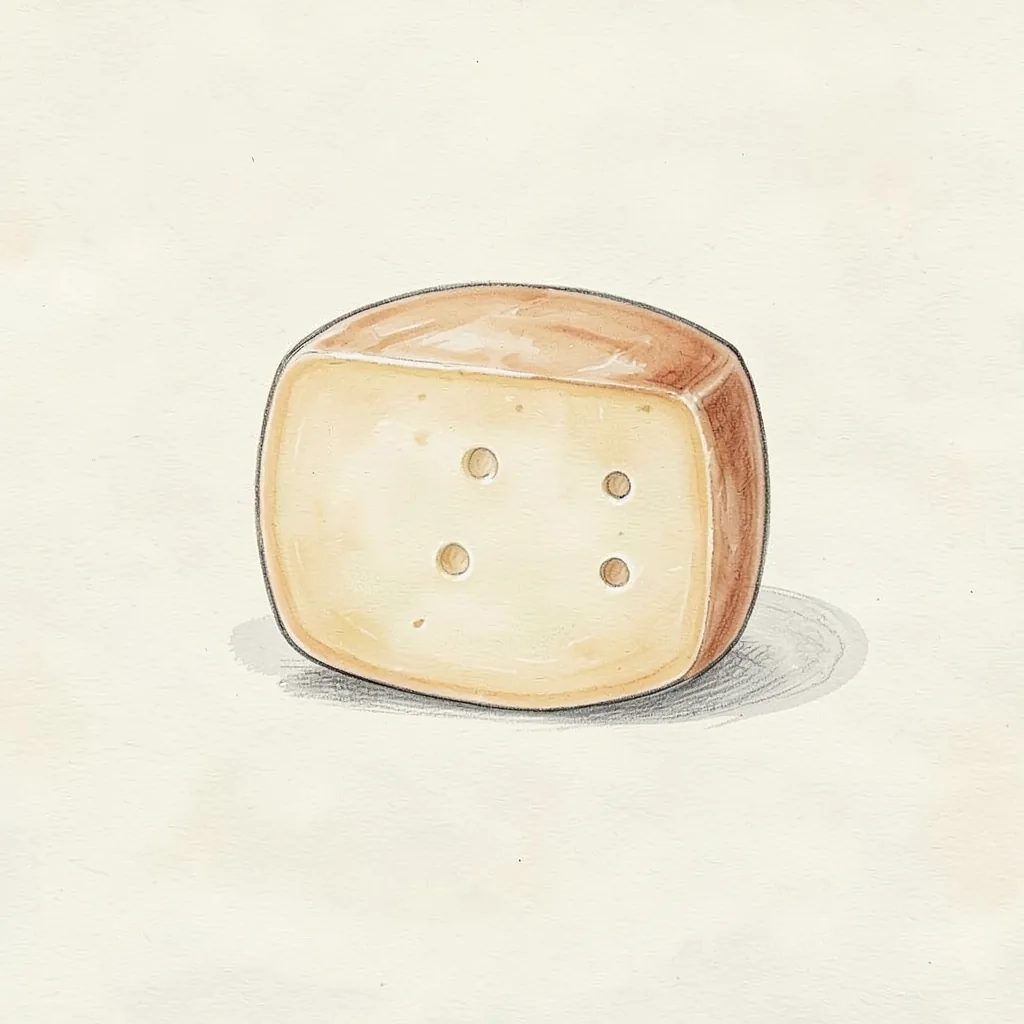
Cow
What it is
It is a dry pressed curd, pale and crumbly, with little fat and a quiet flavor. The cheese exists mainly so it can be melted into cancoillotte, the loose spoonable food that French cooks know better than the dry base. On its own, metton is firm and plain. It is not a bloomy soft cheese, and it is not a washed-rind cheese.
Dairies skim the milk first, often because the cream has gone to butter, and they turn what remains into this cheese. The blocks mature until they smell faintly yeasty and taste of milk rather than of a strong rind. They are then melted with water or milk, and often with butter, to become cancoillotte. You may see metton in French shops, sometimes labeled for that melting step. It is an ordinary dairy product, not a rare wheel saved for a cheese board.
History
Metton comes from the thrifty side of French dairy work. After cream was taken for butter, the skimmed cow's milk was still useful, and farmers set it into a dry cheese. That cheese could be kept and later melted into a warm savory food. The melted dish took the name cancoillotte, and metton remained the name of the base. The practice stayed in France, where both words are still used, and it is a story about skimmed milk rather than about a soft cheese with a famous rind.
As dairies grew, metton became a regular step rather than only a farm leftover. Milk is skimmed, the curd is made and matured, and only then is it melted. The dry cheese is less famous than the finished cancoillotte, but you cannot explain one without the other. Labels in France still say metton when they mean the unmelted cheese. Buy the dry base if you want to melt it yourself, and buy the tub if you want the food already finished.
How it is made
Skimmed cow's milk is warmed, cultured, and set with rennet. The curd is cut, drained, and pressed until it is dry and firm, with very little fat left in the paste. Salt is added, and the cheese is matured so a light yeasty note can develop. At that stage it is metton, pale and crumbly and plain. It may be sold ready to grate or ready to melt, and the press and the skimming are what separate it from a rich soft cheese.
To turn metton into cancoillotte, makers melt the matured cheese with water or milk. Butter often goes in, and sometimes garlic, wine, or spices. The heat makes a smooth, stretchy, spoonable mass that is no longer a block you can slice. Without that melting step, metton stays a dry ingredient, and you should not confuse the block with the melted tub. Home pots and dairy tubs differ in how much butter is added, so the finished food can be very lean or a bit richer.
Taste
Metton on its own tastes mild, milky, and slightly yeasty, with little butter because the cream was removed. Salt is present, but the cheese is not a salty brine style. The texture is dry, firm, and crumbly, the aroma is gentle, and it does not feel rich on the tongue. There is no mushroom rind and no sharp bite from a long cave age. Most people meet the flavor only after melting, when butter and seasonings round it out.
Once melted, the taste becomes smoother and more savory, still based on milk, with a faint tang. Garlic is a common addition and can lead the bowl. Wine or cumin shows up in some versions and changes the smell more than the base cheese does. The melted texture is glossy and a bit sticky, and it can be loose enough to spoon. If you taste the dry metton first, expect something plain, because the pleasure is mostly in the melted form.
In the kitchen
Use metton when you want to melt a lean cheese into a warm sauce or a spoonable pot. Grate or crumble it, add a little water or milk, and warm it gently until it loosens. Butter, garlic, or a splash of wine can go in near the end. In France that pot is cancoillotte, eaten warm with potatoes or cool as a spread. The dry cheese is a poor choice for a board on its own, because it is a cooking cheese and the melt is the point.
If you already have cancoillotte in a tub, you do not need to start from metton. The tub is the melted cheese, ready to warm or to spread. Do not bake the dry block and expect it to behave like a fatty melting cheese. The low fat keeps it from turning lush unless you add moisture and some butter. Store metton wrapped and cold, melt only what you need, and remember that it will not stretch into long strings.
Around the world
Outside France, metton is uncommon, and cancoillotte is the form more likely to appear in an import shop. Cooks who see the word in a French recipe should know it means the dry skimmed-milk cheese, not the finished melt. A fatty alpine cheese will not copy it, because those wheels have their own strong tastes and much more butterfat. The useful match is a very lean cow's milk curd that you melt with liquid. Ask for the base of cancoillotte if the label is unclear.
Cancoillotte is the product people confuse with metton, and it can stand in when you do not want to melt the dry cheese. The tub is softer, often a bit richer from added butter, and already seasoned in many cases. Metton is the plain block before that step. If neither is available, a cook can only approximate the lean melted texture, and the yeasty note will be missing. Treat the two names as one tradition: melt the dry cheese, or use the tub when the melting is done.