Cow
What it is
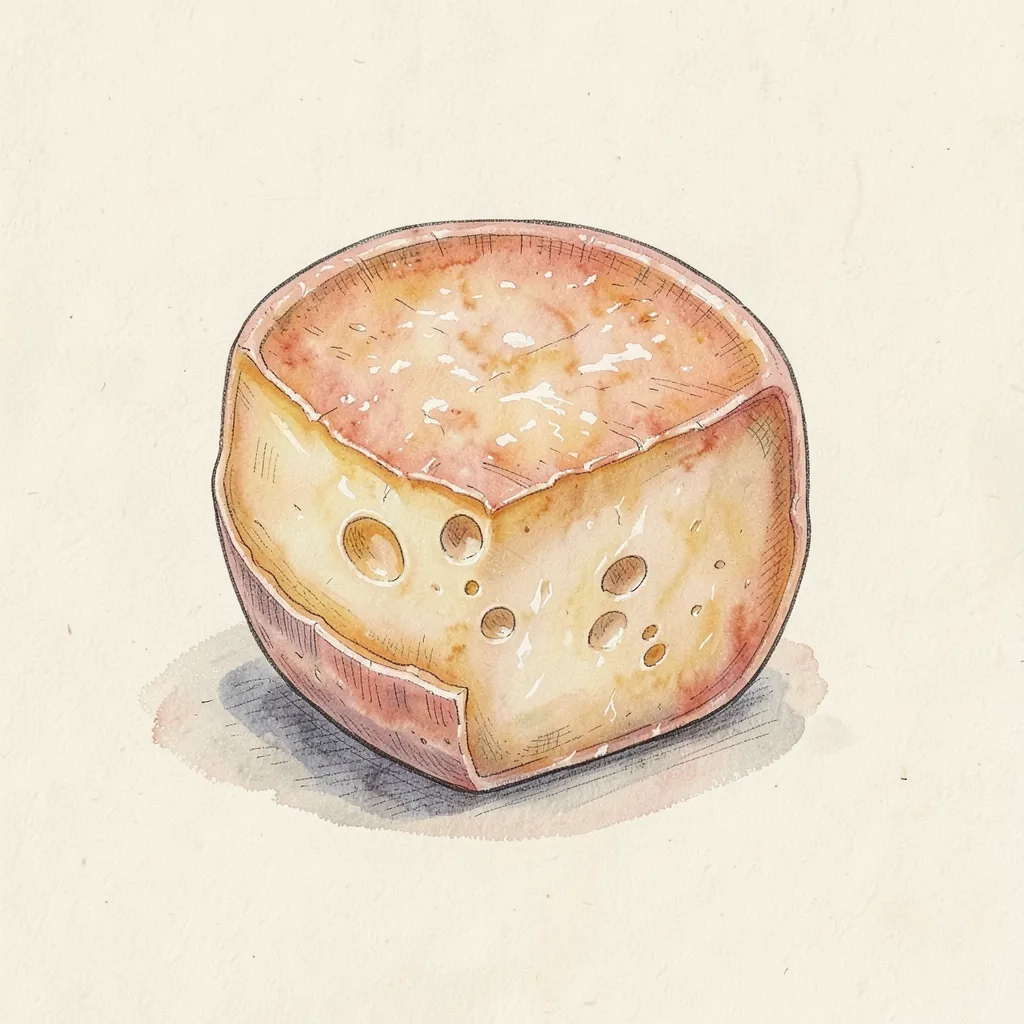
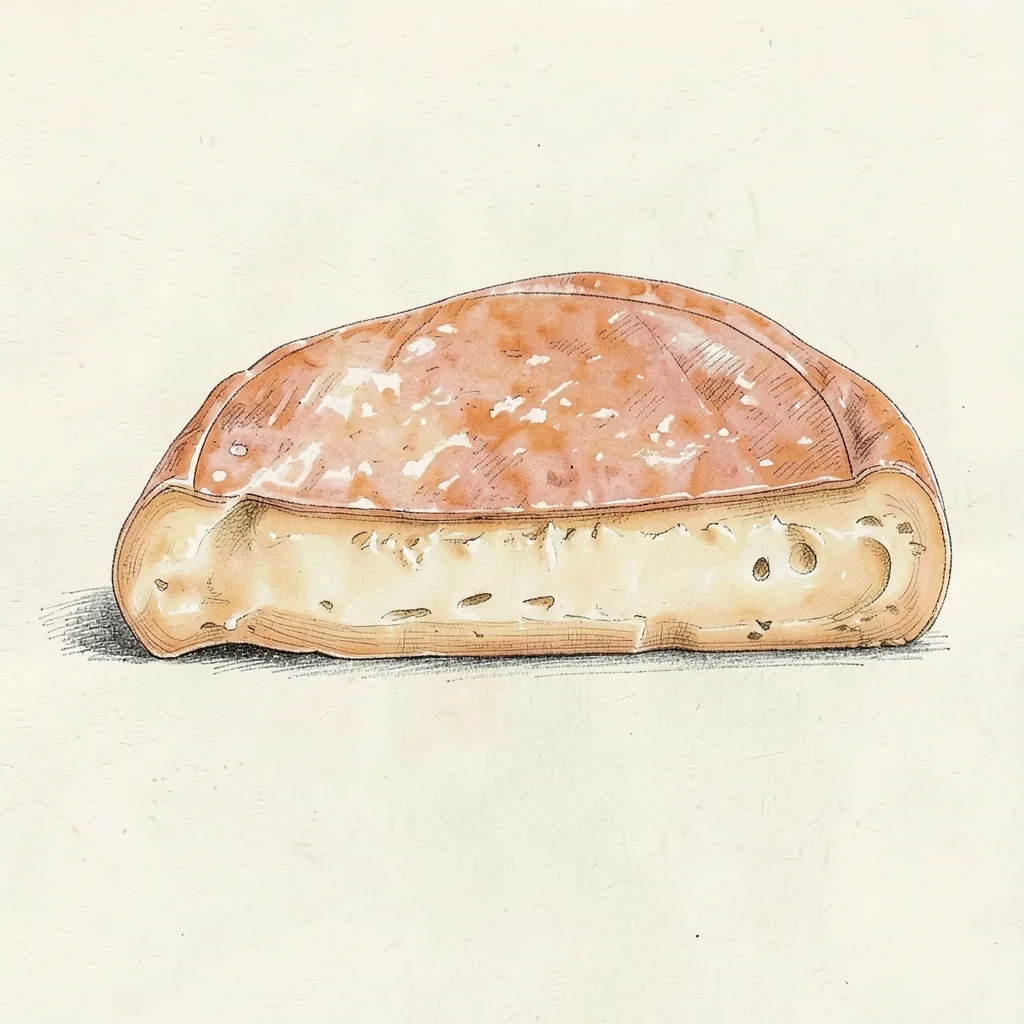
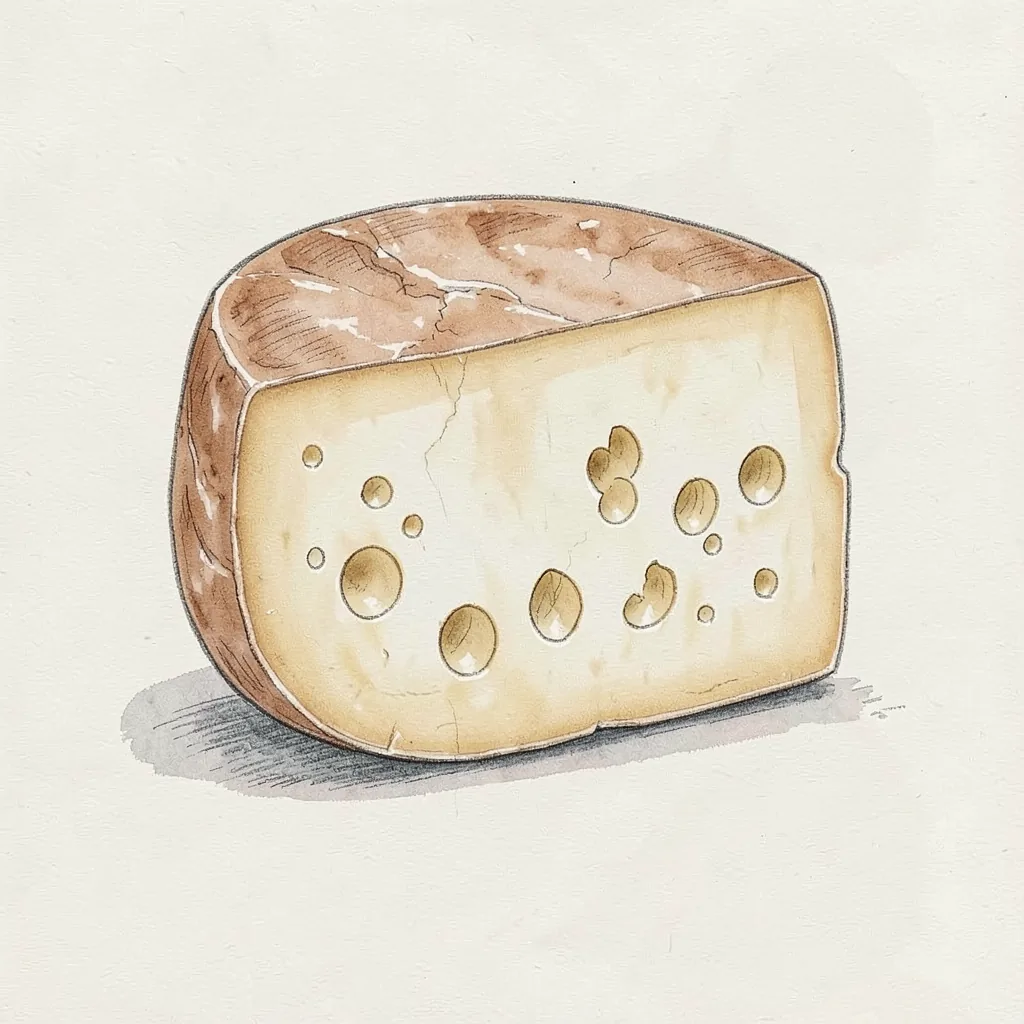
A strap of spruce bark holds the wheel, because a ripe paste is too soft to stand on its own. The rind is washed, pink to amber, and often a little wrinkled. The interior is pale cream, and a ready wheel can be eaten with a spoon. A related cheese is made in Switzerland, but the cheese on this card is the one from Franche-Comté.
Dairies make it in the cold part of the year, when milk in the region is not all going into large hard wheels. The spruce is more than a package, and it gives the paste a light resin note while the wheel ripens. At the table it works as a spooning cheese and as a baking cheese. Served ripe and cool, it is lush and savory. Warmed in the box, it becomes a hot dip for bread and potatoes.
History
The cheese belongs to Franche-Comté, and a closely related wheel is made across the border in Switzerland. French boxes may say Mont d'Or or Vacherin du Haut-Doubs, and both names point to this soft cow's milk cheese. The spruce strap began as a support for a delicate wheel, and the bark also scents the paste. The round wooden box grew from that same practical habit. Region, milk, and spruce explain the cheese better than any story about a single founder.
It is a seasonal cheese, made when herds are down from high pasture and the milk suits a soft washed wheel. In that season, creameries favor this cheese over huge pressed wheels such as Comté. They still wash, turn, and box it during a short ripening. Shoppers learn to wait for the cold months and to buy a box that is already ripe. Out of season, another soft cheese is a better plan than a tired box kept too long.
How it is made
Makers set cow's milk with rennet and ladle the moist curd into molds. After salting in brine, each wheel is belted with a strip of spruce bark. The cheeses ripen on spruce boards in a humid room, and workers wash the surfaces so a supple, colored rind develops. Washing limits a thick white bloom and builds the savory smell of the rind. When the paste softens, the wheel is set in its spruce box for sale.
The band is part of the make, not a ribbon added for display, and it grips the side while rind forms on the top and the bottom. A wrinkled top often means the interior has turned lush and spoonable. Making pauses outside the cold season, so the style stays tied to that milk. The Swiss relative is produced in its own plants and should not be described as the Franche-Comté box. For this profile, look for the French region on the label.
Taste
A cool spoonful tastes of cream, butter, and a light wood resin from the spruce. There is a mushroom note and a gentle savor from the washed rind, yet the cheese is not as fierce as some deeply orange rinds. Salt is clear but balanced. The texture runs from thick cream to a slow flow, depending on ripeness and on how warm the box is. Near the rind the flavor is a little deeper, and the center stays milder and sweeter.
A young wheel may still take a slice and smell quieter. Time in a cold fridge, then a rest in a cool room, lets the paste slump, but if it goes too far the smell turns sharp and the flavor tires. A good box smells clean, woody, and milky, not of ammonia. Skip the bark strap itself, which can taste bitter, and eat the paste. Warmth makes the resin note louder, so a baked wheel tastes woodier than a cold spoonful.
In the kitchen
The simplest service is a spoon and some bread. Cut a cross in the top rind, fold it back, and scoop the cream. Boiled potatoes, ham, and small pickles are classic partners. For a hot course, leave the cheese in its box and warm it until the center flows, then dip in bread or potatoes. Do not let the paste boil, or the fat will separate and the texture will turn oily.
You cannot grate this cheese, and a cube will not hold on a hot grill. Leftover cold paste can enrich potato soup or a piece of toast. A wedge on a board behaves like other soft washed cheeses, but the full boxed wheel is the real presentation. Keep it cold until the day you open it, and do not freeze it. Freezing breaks the cream and leaves a grainy, weeping paste.
Around the world
French and Swiss boxes both reach cheese shops abroad in the cold season, so the country on the label matters. This profile is the French cheese from Franche-Comté. Demand rises around winter holidays, and then the boxes disappear until the next season. A good shop will say whether a wheel is still firm or ready to spoon. Carry it home cold, and eat it soon, because a ripe box does not improve by waiting.
Vacherin Fribourgeois is the cheese people mix up with this one, and the mix-up is the shared word Vacherin. Fribourgeois is a firmer Swiss cheese for slicing and fondue, not a spoonable wheel in spruce. Époisses can stand in for a soft washed rind, though it has no spruce resin and a stronger smell. Reblochon is milder, more sliceable, and better for a gratin than for a spoon. When the box is gone, pick one of those roles on purpose, and do not buy a hard Vacherin by mistake.