Cow
What it is
It is made from the whole milk of Jersey cows, and that milk is not pasteurized. A white bloomy rind covers a yellow paste that turns softer as the cheese ripens. Young cheese tastes clean and milky, with a light buttery side. A ripe round can flow when it is cut, and the taste turns richer, with a gentle floral note.
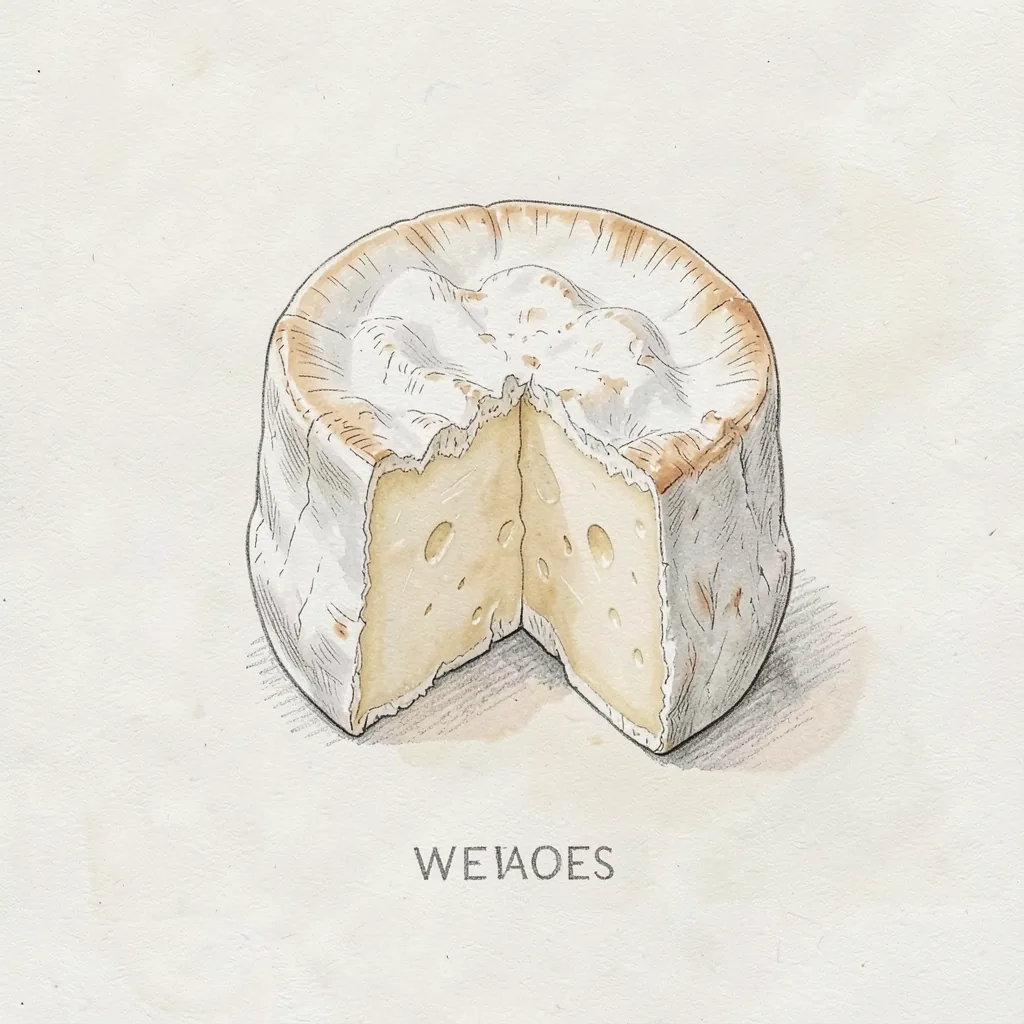
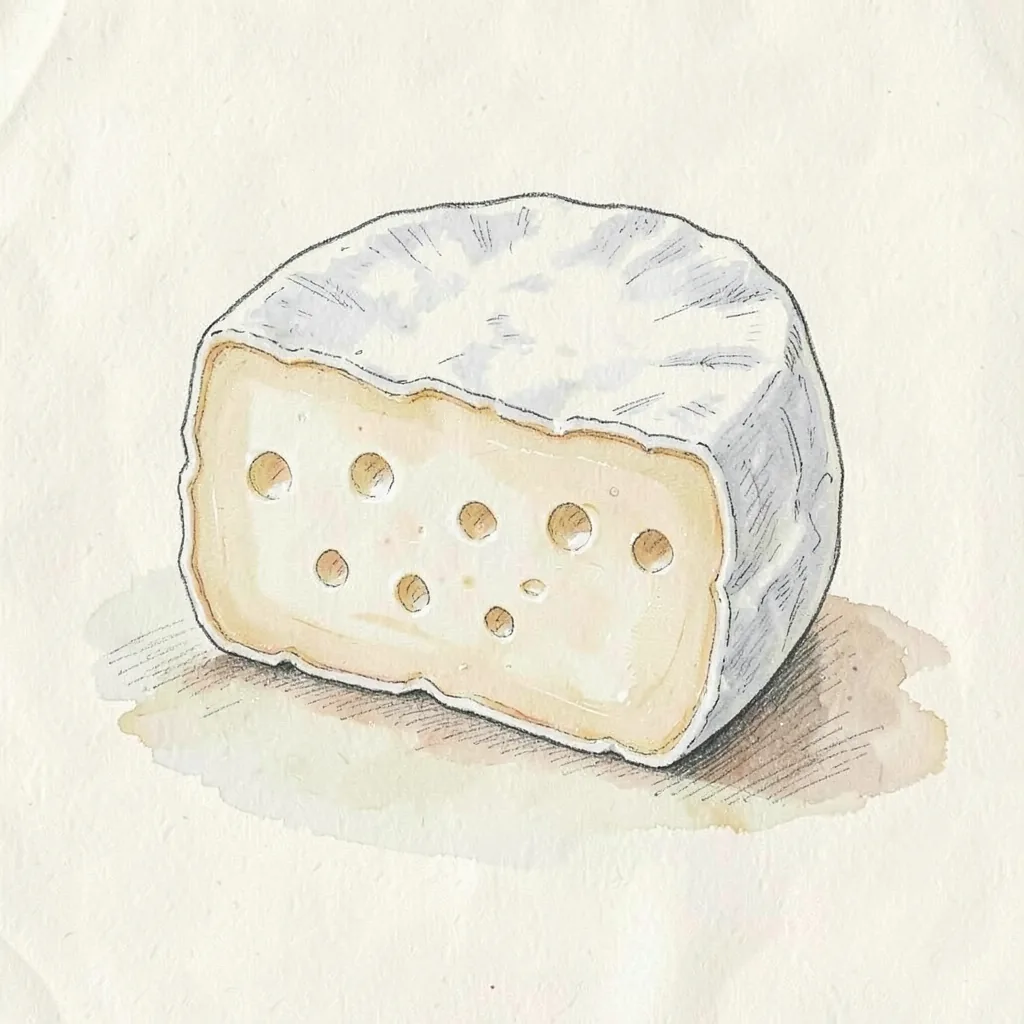
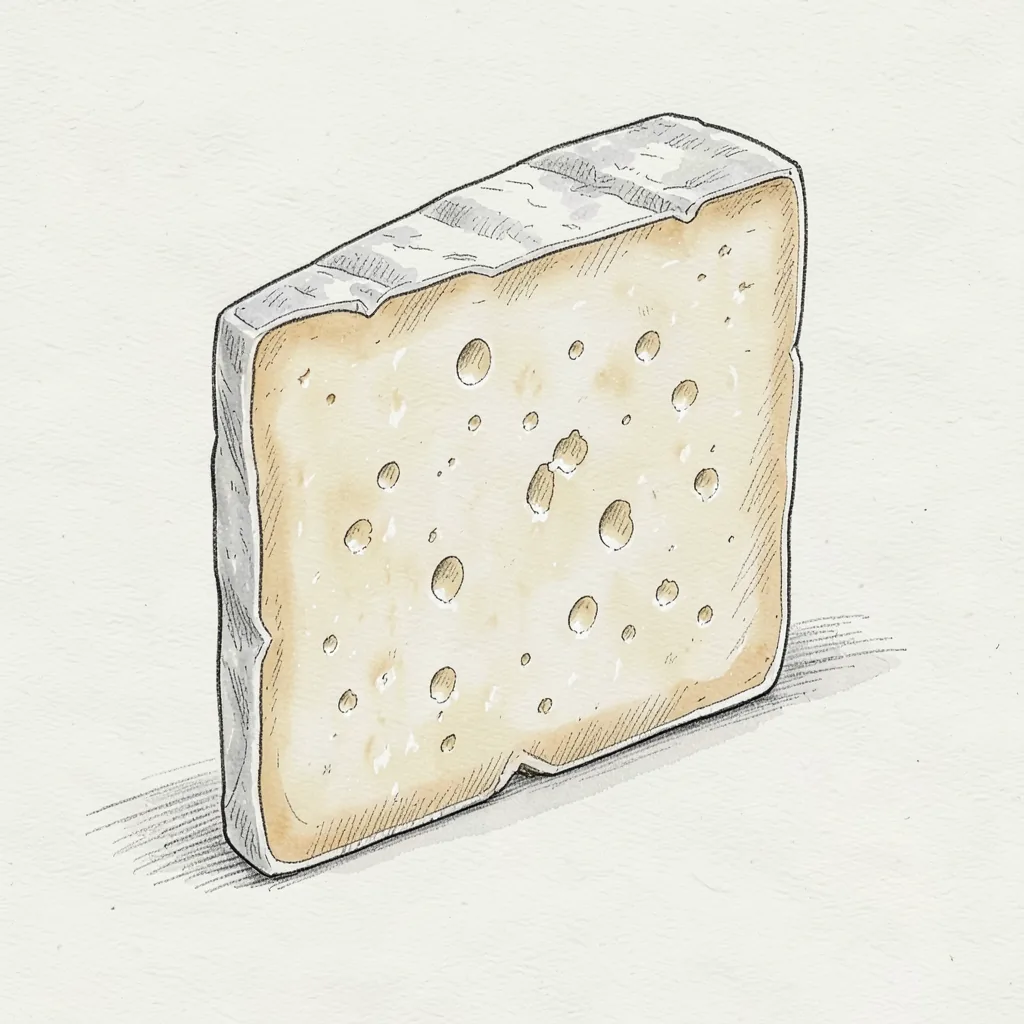
The usual shape is a small cylinder, and the rind looks floury white, sometimes with faint freckles. The paste moves from firm and pale to deep yellow and almost custard-like at full ripeness. It was made as a Scottish cheese in the soft white-rind family, but the Jersey milk gives it a rich, grassy character. Regular making has faded, so it is not a cheese to expect in an ordinary shop. If a round appears, treat it as a rare find and eat it soon.
History
Bonchester is a Scottish specialty from the United Kingdom, made in the soft white-rind style. Makers used raw milk from Jersey cows and a method close to the soft cheeses of northern France. The rounds stayed small, and the cheese never became a mass-market block on a supermarket shelf. Its reputation rested on rich milk and on a paste that ripens until the center softens. People who follow British cheese still speak of it, even though fresh rounds are now rare.
The white coat and the flowing center made it easy to set beside French bloomy cheeses. Jersey milk set it apart, because that milk is especially rich and full in the mouth. The cheese was sold whole, with the rind intact, so a buyer could judge ripeness by a gentle press. When regular production faded, the name did not simply move to a large factory line. A similar soft cheese from Scotland is not automatically Bonchester, even if the rind looks the same.
How it is made
Evening milk and morning milk from Jersey cows are brought together, and the milk is not heat treated. Starter cultures go in, including the mould that will grow the white rind. Rennet sets the milk, the curd is cut, and the soft curd is ladled into round moulds. The cheeses are turned so they drain evenly, then they take a brief dip in brine. After draining, the surface is encouraged to grow a white bloomy coat.
Ripening happens in a cool room, and the cheeses are turned while the white rind forms. A young round stays moderately firm and tastes of clean milk. With more time the paste turns deeper yellow and softer, until a ripe cheese can slump when it is cut open. The rind should look white and dry to the touch, not wet or slimy. Because the milk is raw, the cheese was always a specialist product, not a block meant for long storage.
Taste
A young Bonchester tastes mild, buttery, and clean, with a milky sweetness and a hint of grass. The rind adds a light mushroom note, as it does on other bloomy cheeses. As the center softens, the flavor grows fuller and a little stronger, but it does not become harsh or very salty. The texture can feel like thick cream on the spoon. Floral tones show up in a ripe piece, right beside the butter.
Jersey milk is the reason the paste tastes rich even when the flavor is still gentle. A cold piece will seem dull, so let the round warm until the center yields to a light touch. If it smells sharply of ammonia, or the rind is deeply discolored, it has gone too far. At its best the taste is mellow, grassy, and smooth from rind to center. People who like soft French cheeses usually recognize the style at the first bite.
In the kitchen
Serve Bonchester on a board while it is ripe enough to spoon or spread. Bread, plain crackers, and a few slices of pear are enough company. A red wine can match a mature round, and a lighter wine fits a younger one that still tastes milky. Do not cook it hard or for long. Gentle warmth, as in a tart eaten at once, can soften it further, but the point is the flowing center on the plate.
Cut a whole small round in wedges so each person gets rind and paste. If the center runs, that is a sign of ripeness, not a fault in the make. Spread it on toast only at the last minute, because the soft paste will soak the bread. It is not a grating cheese, and it is not a firm cube for a packed salad. Keep leftovers wrapped and cold, and eat them soon, since a ripe bloomy cheese moves quickly past its best.
Around the world
Bonchester is rarely seen outside the United Kingdom, and it is not sold in ordinary shops even at home. Cheese lists may still name it because the style is known, but a buyer should not count on finding a fresh round. If one appears at a specialist counter, ask how ripe it is and eat it soon. Raw-milk soft cheese also faces stricter import rules in some countries. That scarcity is why many people know the name and have never tasted a real round.
Camembert de Normandie is the usual substitute, with the same white rind and a soft buttery center. Cornish Brie can also stand in when you want a British bloomy cheese that is easier to buy. Teviotdale is another Scottish cheese people may set beside it, but it is not the same round. Brie is larger and often milder, with a different scale on the plate. None of those copies the exact Jersey-milk character of Bonchester, yet each can fill a soft cheese course.