Cow
What it is
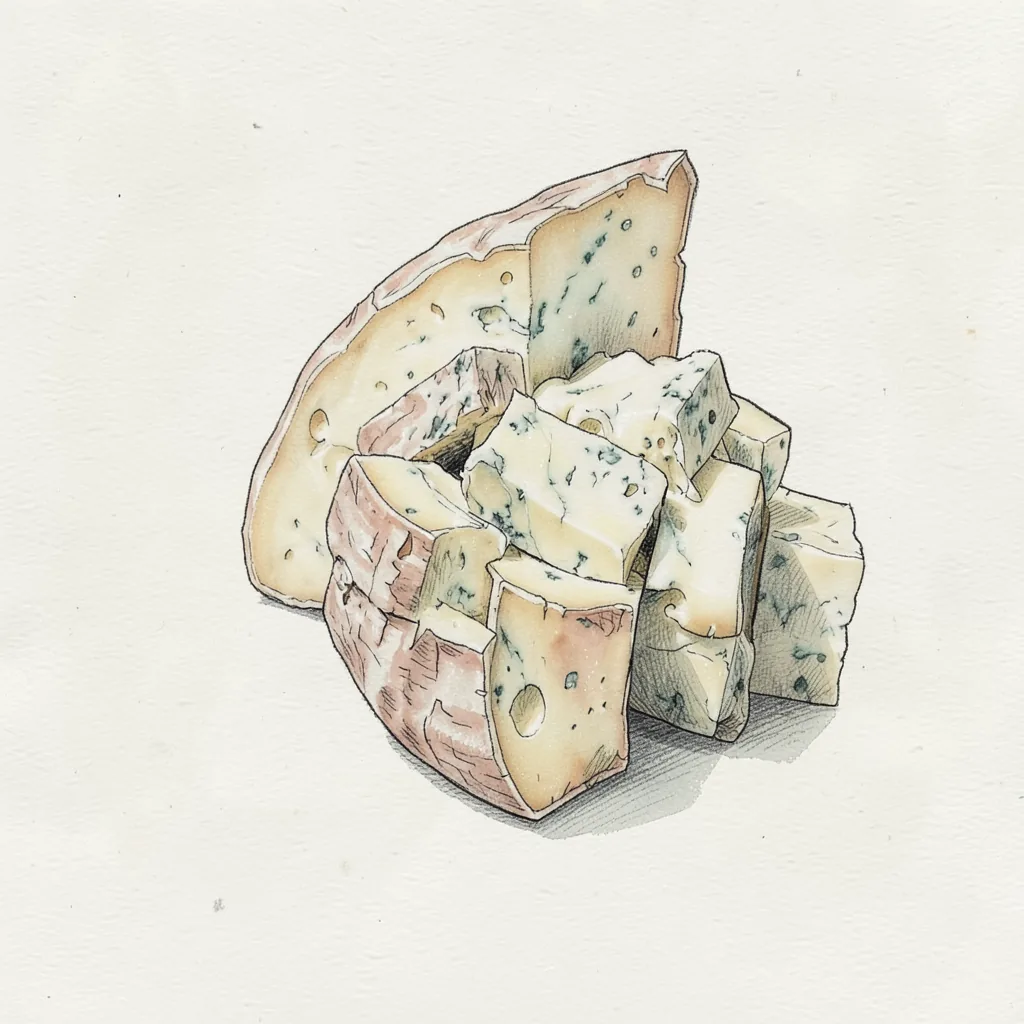
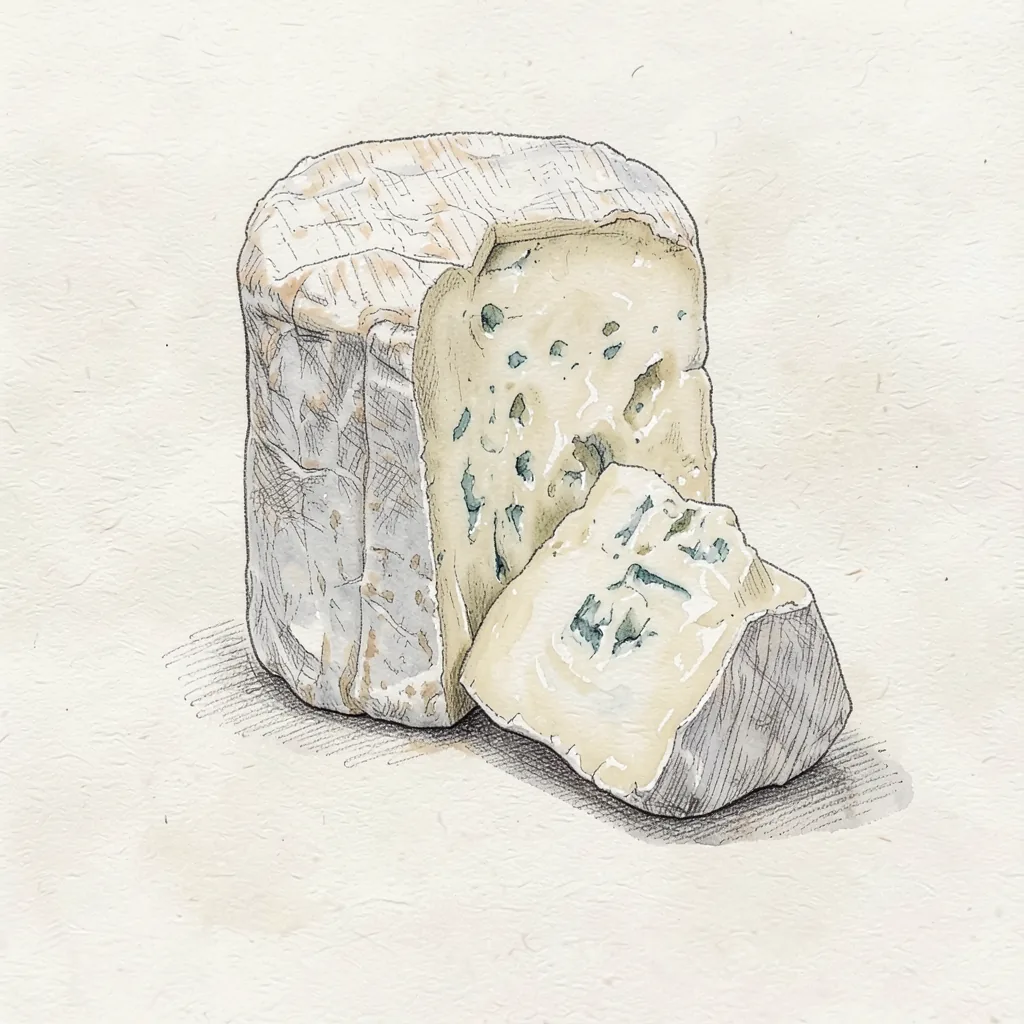
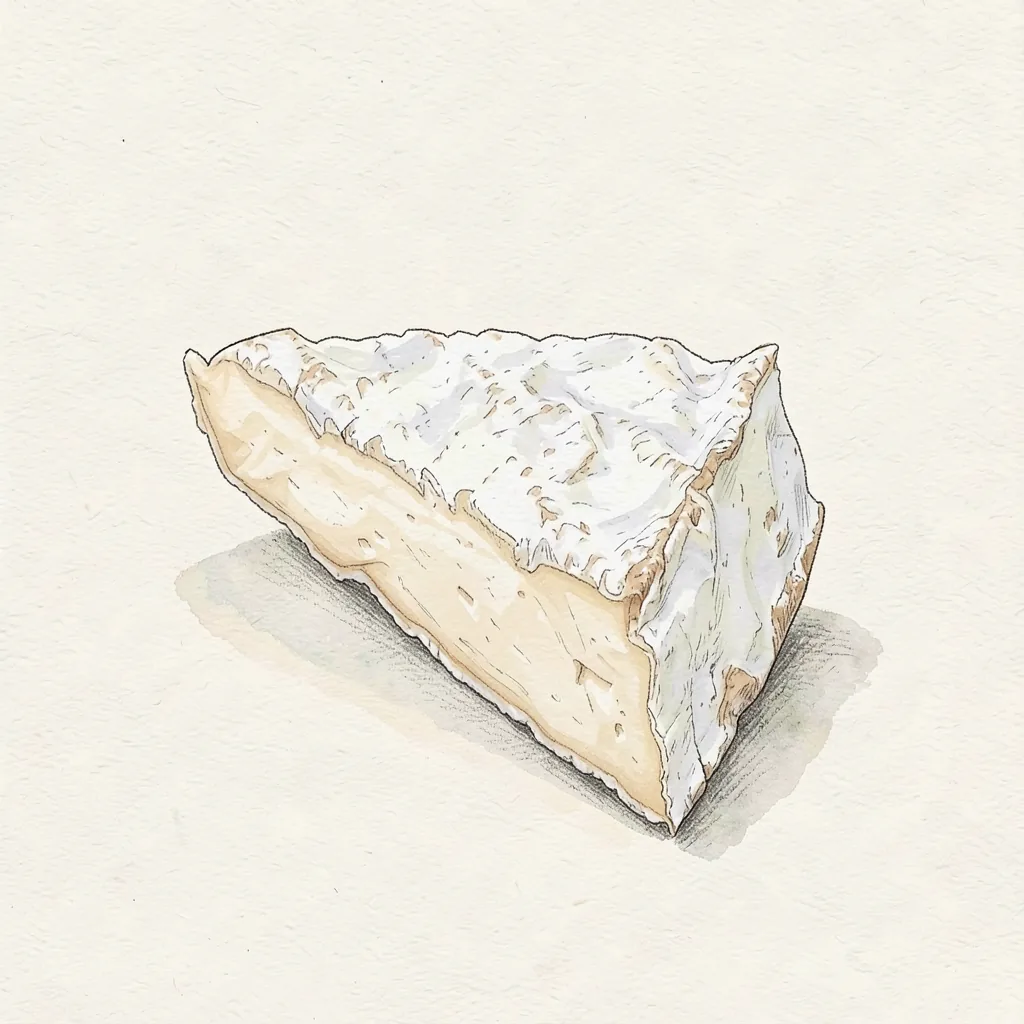
A wheel has a white bloomy rind and a pale paste marked with blue veins. Extra cream in the make keeps the center rich, and a ripe wheel is almost spoonable. The taste is milder than a firm traditional blue, with mushroom notes from the rind and a gentle blue tang inside. The name joins the idea of Camembert with the idea of Gorgonzola, and the cheese sits between those two styles.
Shoppers often meet it under the English nickname blue brie, which is a hint rather than a second cheese. The rind behaves like a soft bloomy cheese, while the veins behave like a blue, and both belong to one product. It is sold young and creamy, not as a dry crumbly wedge. Because Cambozola is a brand, other mild blues with a white rind are similar in spirit but are not the same wheel. Look for the name if you want this German cheese.
History
Cambozola was developed in Germany for buyers who wanted blue flavor without a harsh, salty punch. The recipe joins a white surface mold with a blue interior mold, plus enough cream to keep the paste soft. The cheese was built as a branded product for wide sale, not as a farmhouse wheel tied to one village. It spread through export counters under one trade name. That commercial path is why wheels from different shops tend to look and taste consistent.
The name itself explains the design. A soft white rind and a creamy body follow the Camembert idea, while blue veins and a savory edge follow the Gorgonzola idea. The cheese does not claim to be either of those older cheeses. It is a German product that borrows both ideas and softens them. English-speaking markets added the nickname blue brie because the rind looks familiar, and the brand name on the label remains Cambozola.
How it is made
Pasteurized cow's milk is enriched with cream, set with cultures and rennet, and formed into small wheels. Two molds do the visible work. One grows the white bloomy rind, and the other grows the blue veins in the paste. The blue culture needs air, so the young cheese is pierced and oxygen can reach the interior. That piercing lets the veins spread, and without it the wheel would stay a soft white cheese with no blue inside.
Ripening lasts long enough for the rind to soften the paste and for the blue to turn savory, but not so long that the cheese dries. A ripe wheel may bulge and can slump when it is cut. The rind is thin, white to pale gray, and meant to be eaten. Salt is present, yet the cream keeps the flavor round rather than sharp. The finished cheese is a soft blue sold while the center is still moist, and it is not aged into a hard crumble.
Taste
The first impression is sweet cream, then a mild blue spice, then a soft mushroom note from the rind. Bitterness stays low for a blue, and the salt is balanced rather than fierce. The paste feels lush, smooth, and spreadable, with veins that taste savory but not gritty. Aroma is noticeable, yet it stays closer to a ripe bloomy cheese than to a very damp cellar blue. People who find a dry salty blue too strong often accept this milder style.
A bite near the rind is softer and more mushroomy, while a bite through a heavy vein lets the blue speak louder. Both bites belong to the same wheel. If the cheese is less ripe, the center stays firmer and the blue tastes quieter. If it is fully ripe, a knife spreads it like a thick cream. Neither stage should taste unpleasantly sour or sharp with ammonia, and a harsh smell means the wheel is past its best rather than true to type.
In the kitchen
Cambozola belongs on a board and on bread, where the soft paste can be spread. Pears, walnuts, and a little honey are common partners, because the mild blue can take some sweetness. It can melt over potatoes or into a sauce, but high heat flattens the contrast between rind and vein. Gentle warmth is enough. Soft chunks also work on a salad if they stay large, but the cheese is a poor grater because the body is too moist to shred.
Use it when a recipe asks for a creamy blue and you want less salt and less bite. Slices can top a pizza or a burger if you add them late, so the cheese softens instead of cooking hard. It will not give the sharp hit of a dry blue. On a cheese plate, set it beside something firm and mild so the blue stays the interesting piece. Serve it cool rather than icy, or the paste tastes dull and the aroma stays closed.
Around the world
Cambozola travels as a packaged brand, and many countries stock it in the specialty case beside other soft blues. Buyers who do not read German can still recognize the white rind and the blue center. The nickname blue brie helps, but it also causes mix-ups with plain Brie and with other mild blues. Ask for Cambozola when you want this German brand. A similar-looking wheel under another name is a different cheese, even if the colors match.
Gorgonzola and some French bloomy blues are what people buy when this wheel is missing. Gorgonzola is usually stronger and less creamy. A plain Brie has the soft rind and the rich paste, but it has no blue vein. Bleu de Bresse is another mild blue that can feel close on a board. None of those carries the Cambozola name, so they are only kitchen stand-ins when the brand is absent and a creamy blue is still the goal.