Cow
What it is
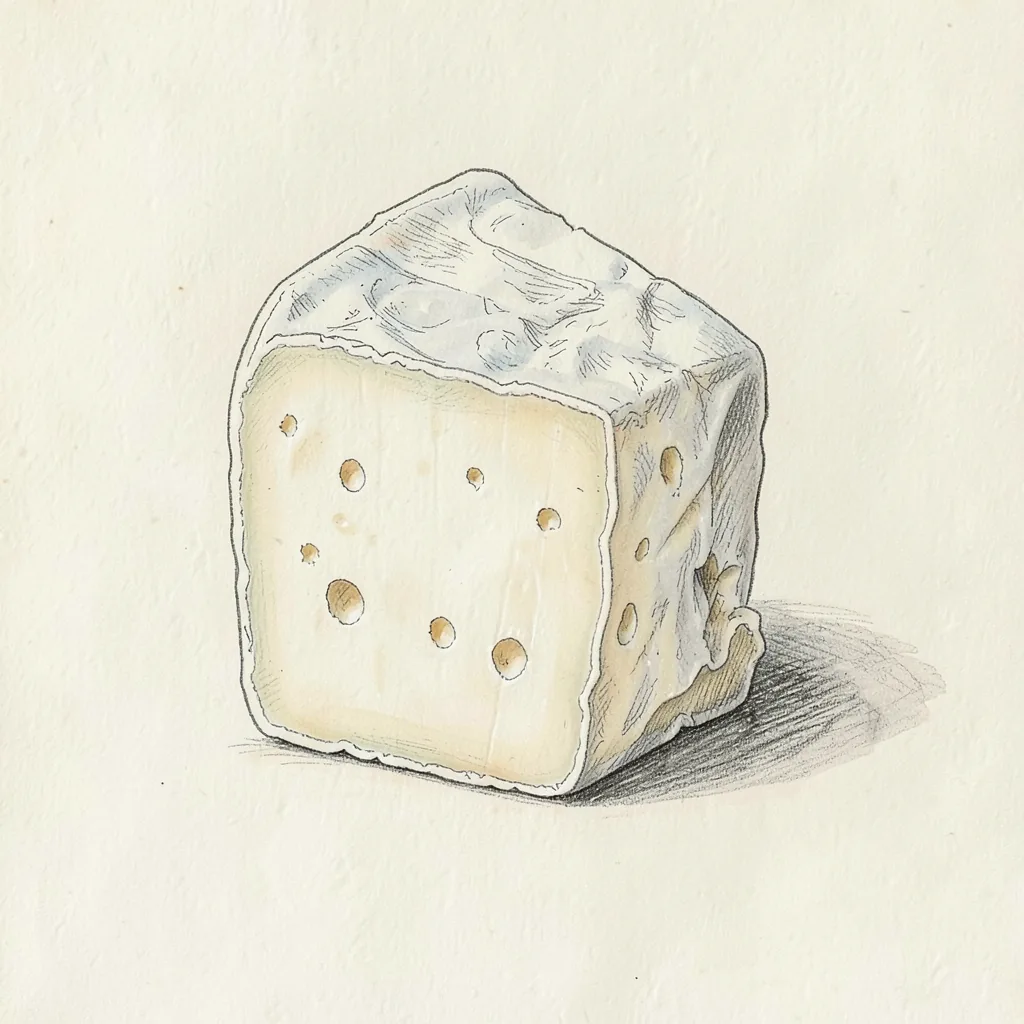
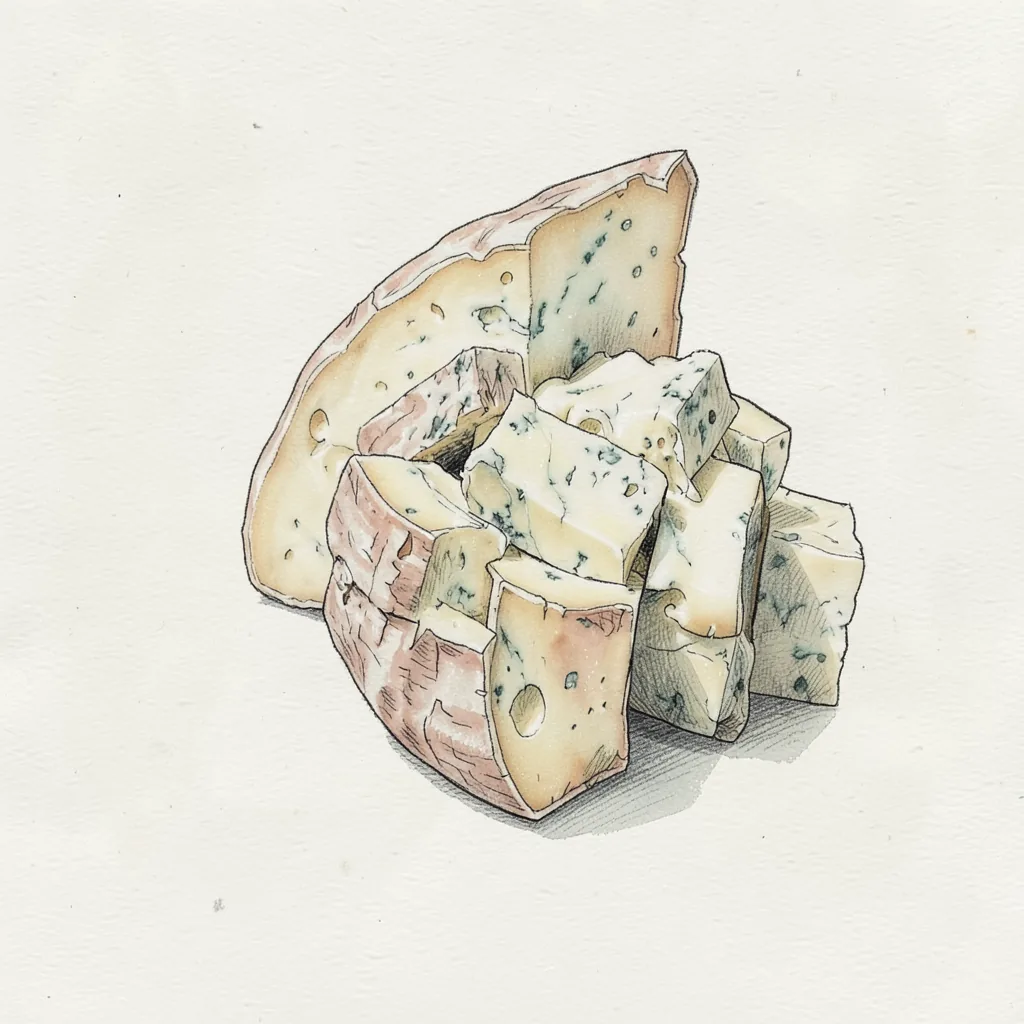
The name refers to Bresse, but the cheese is a creamery blue sold across France rather than a single farmhouse wheel from one village. A white bloomy rind covers a creamy paste, and blue-green mold is scattered through the interior. The flavor is mild, buttery, and lightly mushroomy, with a gentle blue note. Small rounds are the usual form, and they are soft enough to spread when ripe.
It sits between a bloomy cheese and a classic blue. You get the white coat and soft center of the first, and the blue veins of the second, without the salt and punch of a very old blue. Pasteurized milk and a short ripening time keep the taste approachable. The rind is eaten. Cut a round when the center yields to a light press and the aroma is of mushrooms and cream, not of ammonia.
History
Bleu de Bresse is a modern French cheese, developed when creamery blues were finding a larger retail public. The idea was a milder blue that could be packed in a small round and eaten with a spoon or a knife, more like a soft cheese than like a tall, salty cylinder. It answered a taste for creamy Italian-style blues while using cow's milk and a French bloomy rind. The cheese then moved into wider shop distribution across France. It was never a single farmhouse recipe tied to one family.
Because the style was a creamery idea rather than an old farmhouse title, dairies could shape it for retail sale. The familiar small round, with its white coat and blue pockets, is what shoppers learned to recognize. The Bleu de Bresse name remained the common label in French shops. The cheese stayed in the mild, creamy camp. It did not try to replace the old, sharp blues associated with caves and mountain huts.
How it is made
Pasteurized cow's milk is curdled, and the curd is cut and drained. Blue mold is mixed into the curd or added as the cheese is formed, so the color can grow inside. The curd goes into perforated molds that give the small cylinder its shape. After unmolding, the surface is salted and dusted with a white mold culture. That white mold becomes the bloomy rind while the blue develops in the paste.
Ripening is short compared with a large aged blue. The cheeses are turned and kept in cool, humid rooms until the rind is white and the interior is soft and marked with blue. They are then wrapped and sent to shops while still moist. A longer stay in the cold of a shop will make the paste softer and the flavor a little deeper. The cheesemaker is not aiming for a dry, crumbly blue.
Taste
The taste is creamy first, then mildly salty, with mushrooms from the rind and a light blue spice in the paste. It is sweeter and quieter than a Roquefort or a very sharp mountain blue. Bitterness should be faint. If ammonia dominates, the round is too old. A ripe piece smells of cream, mushrooms, and a clean cellar note, and the blue flavor finishes gently rather than burning the tongue.
Texture is the other half of the pleasure. The paste is soft, rich, and almost spoonable at the center, with a slightly firmer line under the rind. Blue veins break the cream into pockets, not into a dense network. It does not crumble, and it does not feel chalky when it is in good condition. Spread on bread, it feels closer to a soft bloomy cheese that happens to be blue.
In the kitchen
Serve Bleu de Bresse on a board with bread, walnuts, pears, or a little honey, and eat the rind. It can be spread on a baguette or crumbled into a green salad, where the mild blue does not overwhelm the leaves. Because the paste is soft, it also melts into a sauce, a risotto finish, or a baked dish if you add it late and keep the heat gentle. High heat can split the fat and dull the flavor. A small amount is usually enough.
Pair it with foods that are slightly sweet or crisp, not with more strong blue on the same plate. Sparkling wine, a dry white, or apple cider are easy drinks beside it, if you want a drink at all. For cooking, it can replace other mild blues in a cream sauce for pasta or chicken. Do not use it where a recipe needs a dry, salty grate. Keep the round cold until serving, and then let it warm a little so the paste softens.
Around the world
Bleu de Bresse travels well as a packaged French cheese, and shops outside France often place it with Brie, Camembert, and other soft blues. The label may say Bleu de Bresse or Bresse Bleu. Either name should show cow's milk, a white rind, and blue in the paste. It is easier to find than many small farmhouse blues because it is made for retail. Buy a round that looks full, not shrunken, and that smells clean through the wrap.
People sometimes confuse it with Cambozola, Gorgonzola Dolce, or a generic blue brie. All of those are mild and creamy, but they are not the same cheese. Cambozola is the closest in the kitchen if Bleu de Bresse is missing. A Roquefort or a firm Auvergne blue will be sharper and saltier, and it will not give the same soft white rind. Use Bleu de Bresse when you want French cream and blue together, in a mild key.