Cow
What it is
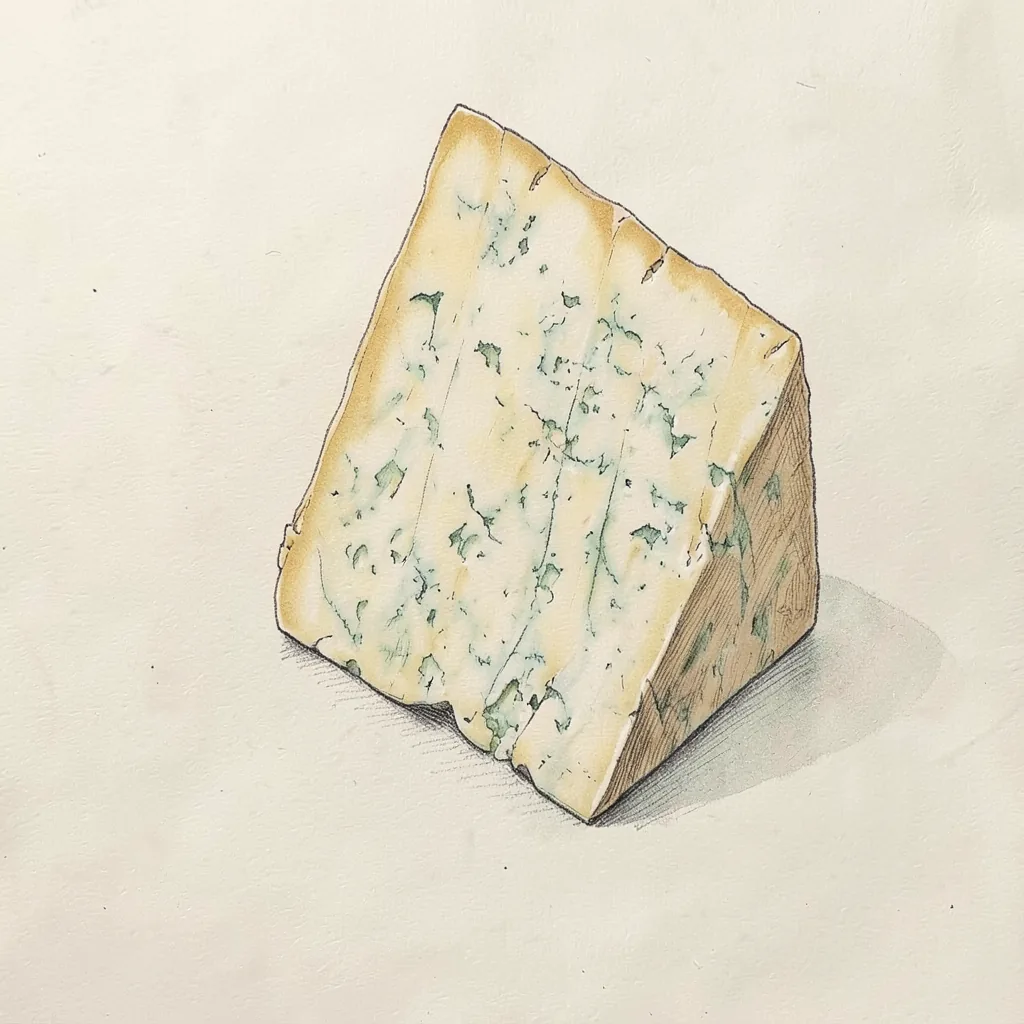
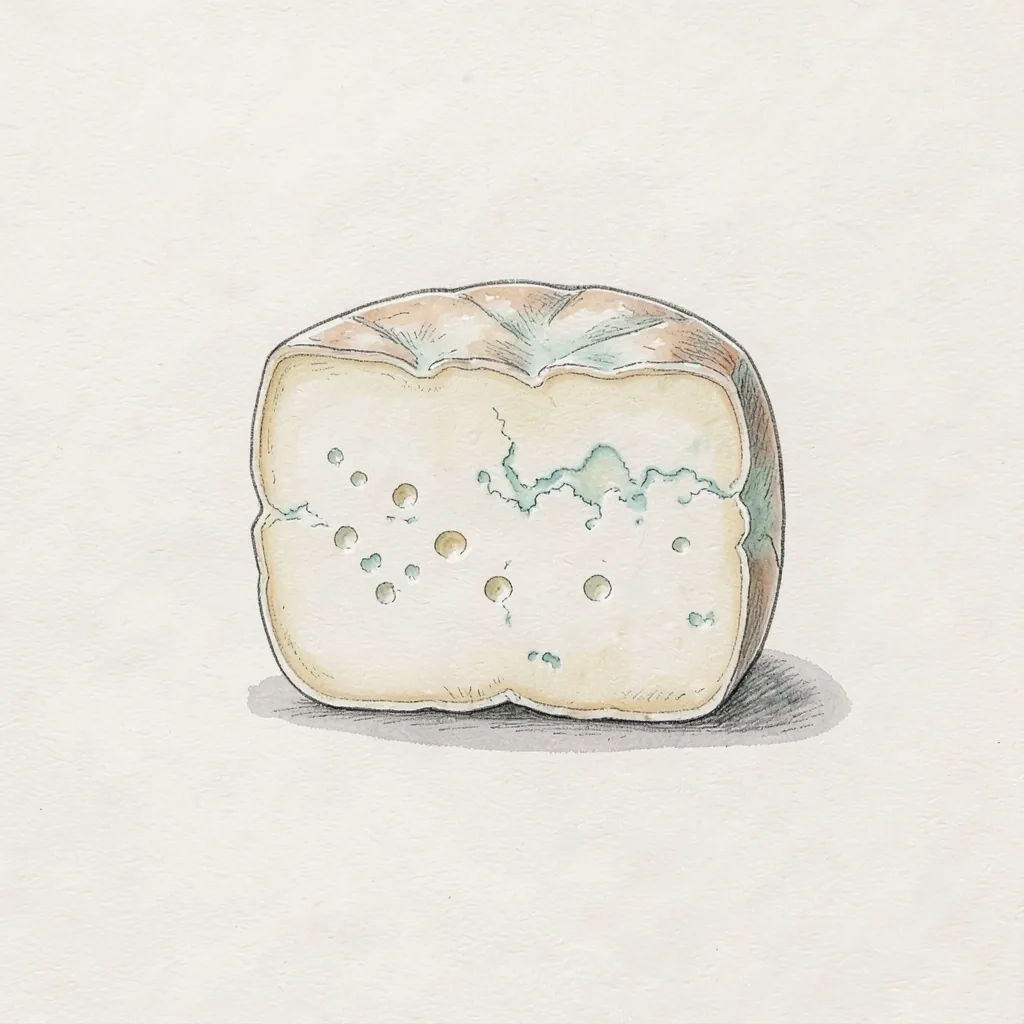
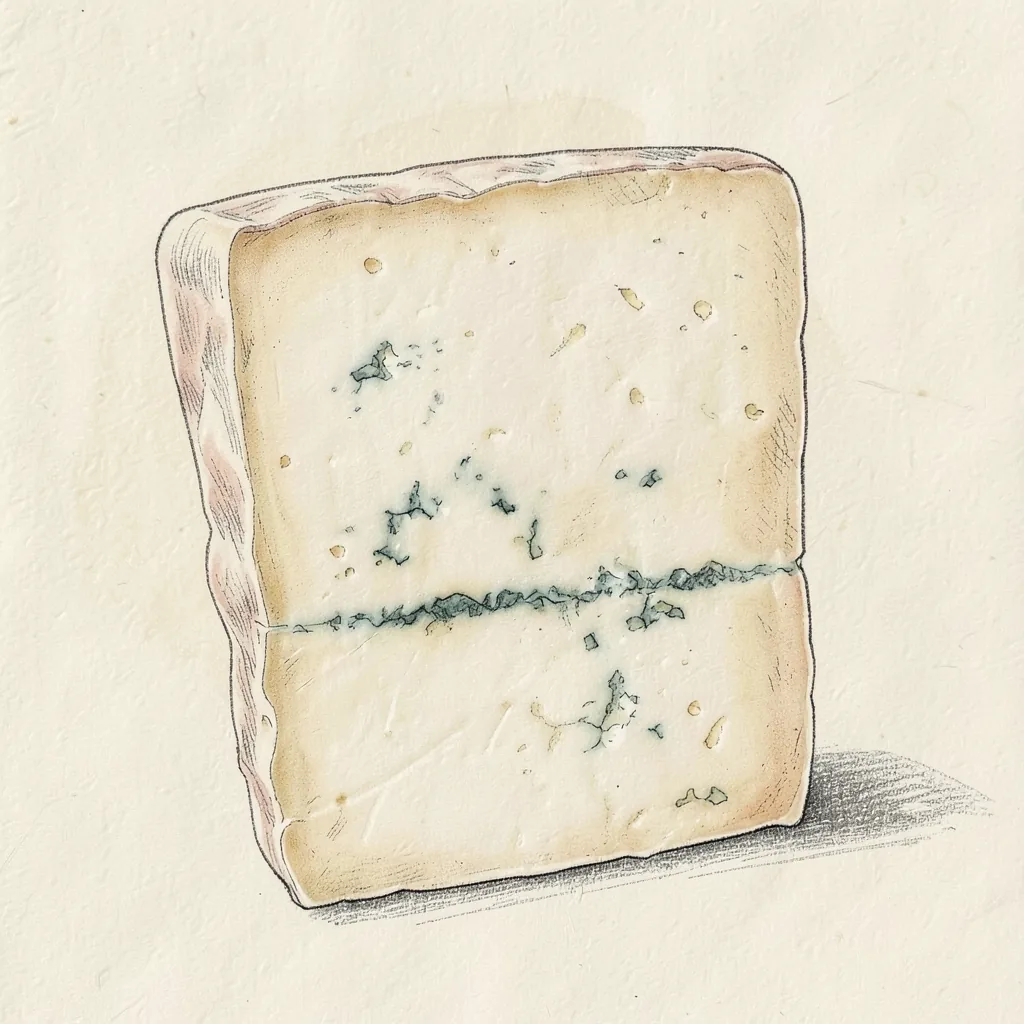
It is made from pasteurized cow's milk and is meant to be eaten while the paste is still young and moist. The interior is dense and pale, with blue-green veins through a buttery body, and a natural rind covers the outside. Makers use a vegetarian rennet, so the cheese suits many people who avoid animal rennet. The style is a modern British blue, not a copy of a dry, sharp classic.
Sweetness and cream come forward, and the blue taste stays gentle rather than fierce. A young piece feels close-textured, not open and crumbly like a long-aged wheel. It works on a board, in a salad, or melted into a sauce for meat or vegetables. People who find stronger British blues too harsh often start with this one. A wedge should look even, with veins through the body and a clean dairy smell.
History
Blue cheese already had a long place in British dairying when makers in Cornwall set out to produce one of their own. They wanted a cheese that used local cow's milk and stayed approachable for everyday eating. The aim was a softer, sweeter blue than the famous clothbound styles associated with the English Midlands. Cornish Blue is the result of that aim, and it is a modern farmhouse cheese rather than a medieval recipe. The method was built for a mild vein, not for a fierce crumble.
The cheese is sold young, so the blue mold has time to grow without drying the paste or turning the flavor sharp. Wheels are turned while they rest, which keeps the moisture even from one side to the other. A relatively short rest is part of the style, not a shortcut around a longer tradition. Notice from cheese competitions has carried the name beyond Cornwall, but the recipe stayed focused on cream and a light blue. Shoppers meet it as a whole wheel or, more often, as a cut wedge.
How it is made
Pasteurized cow's milk is set with vegetarian rennet and a blue mold culture. The curd is cut and then shaped by hand, and salt is worked in before the cheese is left to settle. Each wheel is pierced so air can reach the interior, and that air lets the mold draw the blue veins. The curd is handled gently so the paste stays dense instead of open and broken. The scale is small, and the same care shows in the even color of a finished piece.
After forming, the cheeses rest in a cool room and are turned on a regular schedule. Blue lines spread inward from the holes, while the outside stays a thin natural rind. The cheese leaves that room while the paste is still moist and the flavor is still sweet. It is not held until it becomes a dry, sharp crumble. Wedges in the shop should show fine veins through the body, not a pale center with color only near the rind.
Taste
The first taste is cream, butter, and a light sweetness, and the blue mold adds a clean tang behind that. The tang does not burn or linger as a harsh bite the way a very mature blue can. Salt is present and balanced, so the cheese tastes seasoned rather than briny. Texture is smooth and a little yielding, closer to a moist loaf than to a dry crumb. Aroma stays mild, with butter and a fresh dairy note more than a strong cellar smell.
Age moves the balance only within a narrow range, because the cheese is not built for a very long rest. An older wedge can taste a little fuller and less sweet, while the veins remain gentle. It should not smell of ammonia or show large cracks and a dark, wet rind. If the paste looks moist and the veins are fine, the mild character is still there. Serve it cool rather than icy, so the sweetness and the butter can show.
In the kitchen
Put Cornish Blue on a board with bread, pear, or a simple chutney, and let the mild paste carry the plate. It also melts into a sauce for steak, mushrooms, or baked potatoes without turning the dish bitter. Crumble it over a green salad or warm beets when you want blue flavor with a light hand. It can go into a tart or a burger, where heat softens the body and spreads the cream. Keep the other seasonings modest, because the cheese already brings salt and richness.
A wedge slices more cleanly than a very crumbly blue, so you can lay pieces on toast or a cracker. If you melt it, add it late and stir gently so the sauce stays smooth and does not split. It does not need a long bake, and high heat only dries the edges. Wrap leftovers well, or the cut face will dry even though the smell stays mild. Use a dry knife, and let a cold piece sit briefly before you put it on a board.
Around the world
Cornish Blue is sold across the United Kingdom and also reaches cheese counters abroad. It is easier to find than many tiny farmhouse blues, but it is not a standard block in every grocery. Look for the name on the label, because other cheeses from Cornwall are not blue and will not behave the same way. A wedge should name cow's milk and show a pale paste with real veins. Importers usually sell cut pieces rather than whole large wheels, which suits a small household.
Stilton is the usual comparison, and it is the substitute when you want a classic British blue with more bite and a drier crumb. Dolcelatte can stand in if you need a soft, mild blue for a sauce or a salad. Neither one has the same dense Cornish paste, and both should be labeled as themselves. Brighton Blue is another British blue, so the names can confuse a shopper who only reads the word blue. Read the full name before you assume the cheeses match.