Cow
What it is
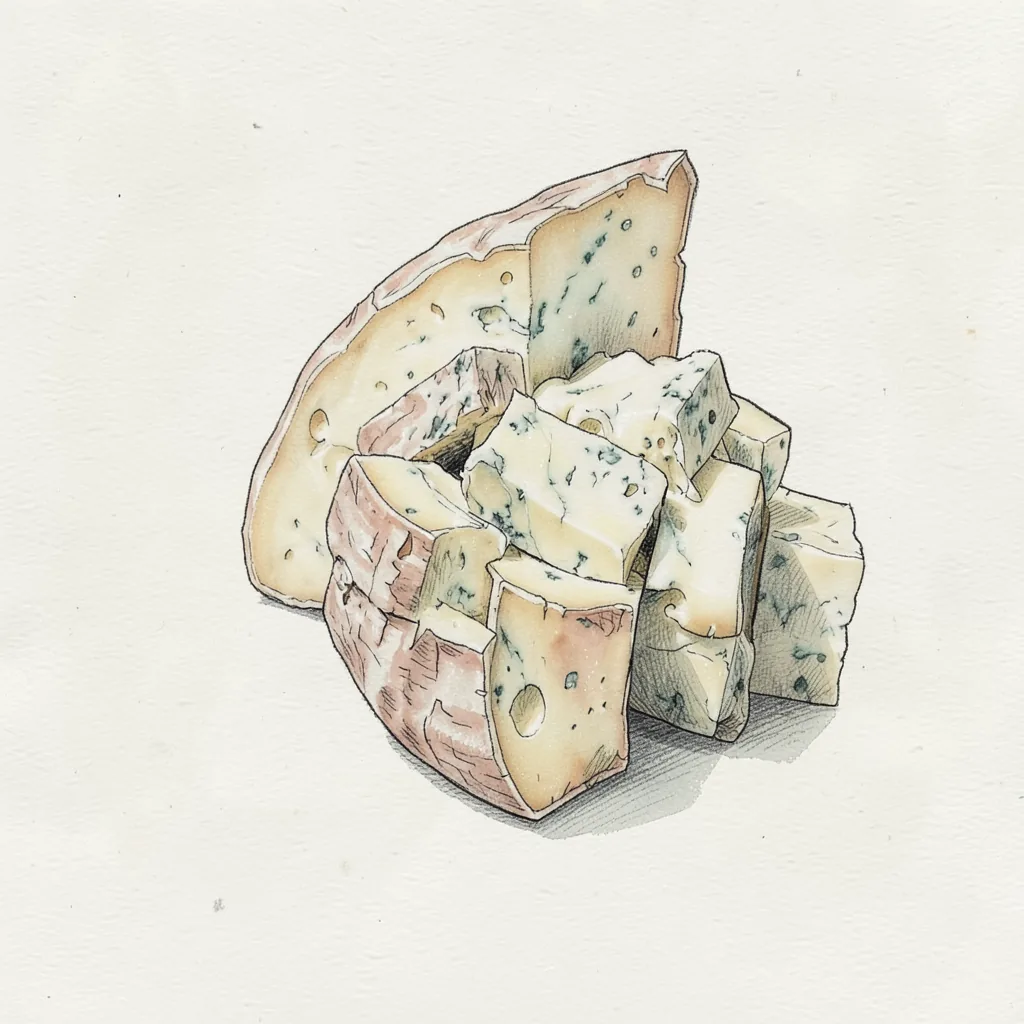
The name means sweet milk, and the taste matches that idea: creamy, mild, and only gently sharp. Blue-green veins run through a pale, spoonable paste. It is made in the manner of Gorgonzola, but it is aimed at people who want a sweeter, less forceful blue. The name is a trade name, and the cheese is sold as a mild Italian blue rather than as a long-aged wheel.
The paste is rich and moist, and it spreads when it is warm. Salt and the blue mold are present, but they sit behind the sweetness instead of leading. A wedge from the shop is usually ready to eat, with no thick rind to trim. It melts easily into pasta, risotto, and other hot dishes. It is a table blue for people who find a sharp Gorgonzola or a Stilton too strong.
History
Dolcelatte was developed in Italy as a mild cow's milk blue for eaters who wanted the look of Gorgonzola with less bite. The words in the name advertise sweetness, and that has stayed the point of the cheese. It found a large audience in Britain, where it became a familiar packaged blue, and it also sells in other countries under the same name. It does not come from a single village recipe passed down on farms. It is a modern dairy cheese in an old Italian blue style.
Gorgonzola remains the famous cheese of this family, with both a sweet style and a sharper style. Dolcelatte sits at the sweet, creamy end and is easier for a new blue eater. Because the name is a trade name, one package may not match another in every detail, though the mild creamy goal stays the same. Some wedges are close enough to sweet Gorgonzola that a shop might shelve them together. Read the label if you need a specific traditional cheese, because this name is not a place name.
How it is made
Cow's milk is cultured and set, and the curd is drained and put into molds in the way used for Italian blue cheeses. A blue mold is introduced so veins can grow through the interior. The cheeses are pierced during aging, which lets air reach the mold and turns the channels blue green. The make is kept on the sweet side, with a soft, high-moisture paste rather than a dry crumble. Wheels or tall cylinders are the usual form before the cheese is cut into wedges.
Aging stops while the paste is still creamy and the blue taste is mild. A longer, drier age would push it toward a sharper blue, which is not the aim. There is little rind development compared with a rustic wheel, and many pieces are wrapped for sale soon after cutting. Salt is part of the make, but the balance leans sweet, and no herbs, smoke, or washed rind are used. The veins, the cow's milk, and the short gentle ripening explain the cheese.
Taste
Dolcelatte tastes sweet, salty, and mildly tangy, with a blue note that stays soft. The paste feels rich on the tongue and can be spread with a knife when warm. Chill makes it firmer and dulls the sweetness, so a board piece should not be ice cold. The veins taste a little sharper than the white paste around them. Nothing should taste bitter, metallic, or harshly ammoniated, and a pleasant mushroom note from the mold is normal.
Set it next to a sharp Gorgonzola and the difference is clear. Dolcelatte is sweeter, creamier, and less salty on the finish, and it lacks the dry crumble of a long-aged blue. Cambozola is another mild blue, but it is closer to a white bloomy cheese with a blue line, not a full veined loaf. Stilton is stronger, drier, and more savory. If a wedge of Dolcelatte tastes fierce or chalky, it is not a typical piece, because the style should feel lush first and blue second.
In the kitchen
Spoon or crumble Dolcelatte onto hot pasta, gnocchi, or risotto and let the heat melt it. A little of the cooking water or cream makes a quick sauce. It is also good on pizza in a thin layer, added near the end so it softens without burning. On a board, pair it with pears, figs, grapes, or honey, and keep the portions small because it is rich. Bread or a plain cracker is enough, and strong pickles can cover the sweet milk taste.
Use it where a recipe says Gorgonzola and you want the milder result. A sharp blue will not give the same sweet sauce. It can go into a salad with walnuts and fruit, or onto a burger if you like a soft blue. It does not grate well because it sticks and smears. Keep the wedge wrapped and cold, and use it soon after cutting so the paste does not dry or take on fridge smells.
Around the world
Dolcelatte travels well as a packaged wedge, and it is especially common in British shops among Italian blues. Other countries meet it in supermarkets and cheese counters that want a mild blue with an Italian name. It is not tied to one town on the label, so the trade name is what you search for. Sweet Gorgonzola is the cheese most likely to be offered in its place. If the label says piccante, the piece will be sharper than Dolcelatte.
Cambozola can stand in when you need a mild, creamy blue for spreading or a simple melt. It is usually even gentler and has a white rind character that Dolcelatte does not. Gorgonzola dolce is the closer Italian match for pasta and risotto. A strong Stilton or a Danish blue will overpower a sauce written for this cheese. Say which blue you used if you swap, because the sweetness is the whole point and a sharp wheel is a different recipe, not a small change.