Cow
What it is
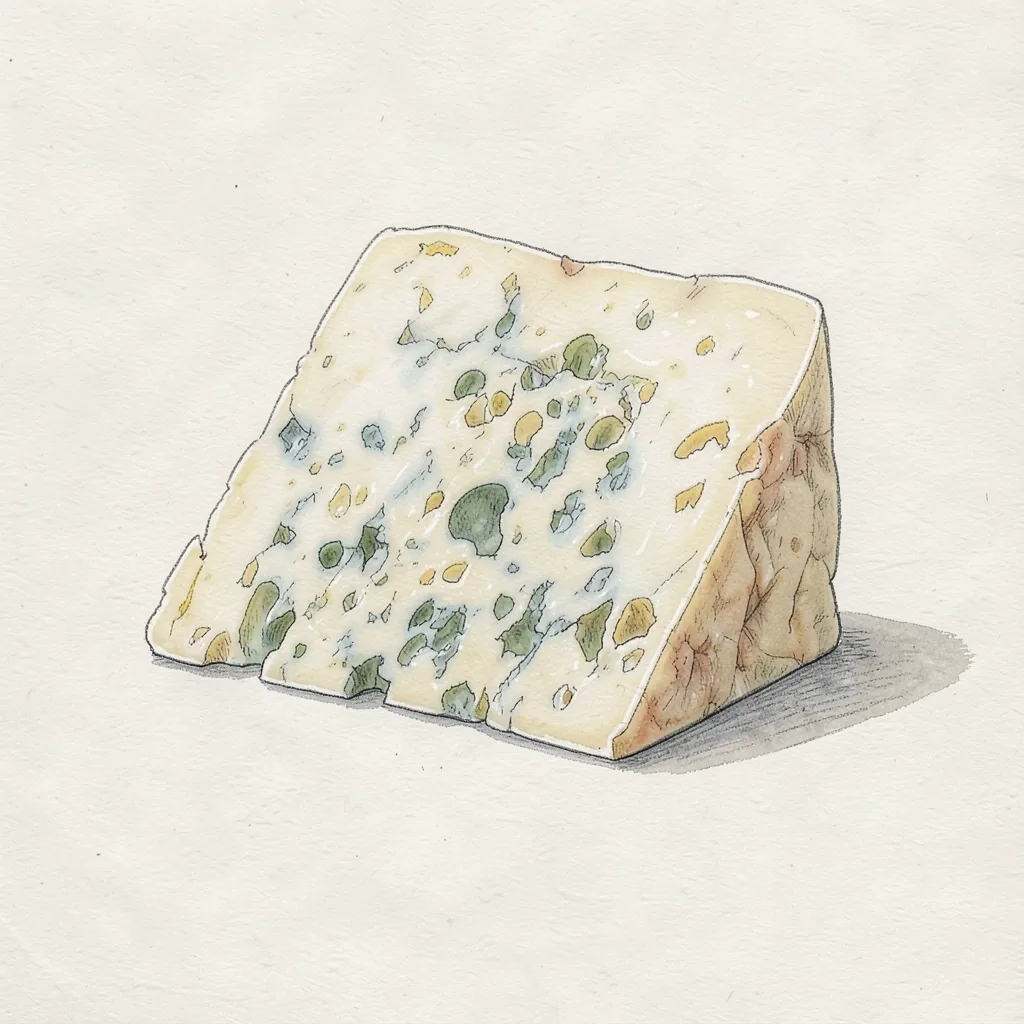
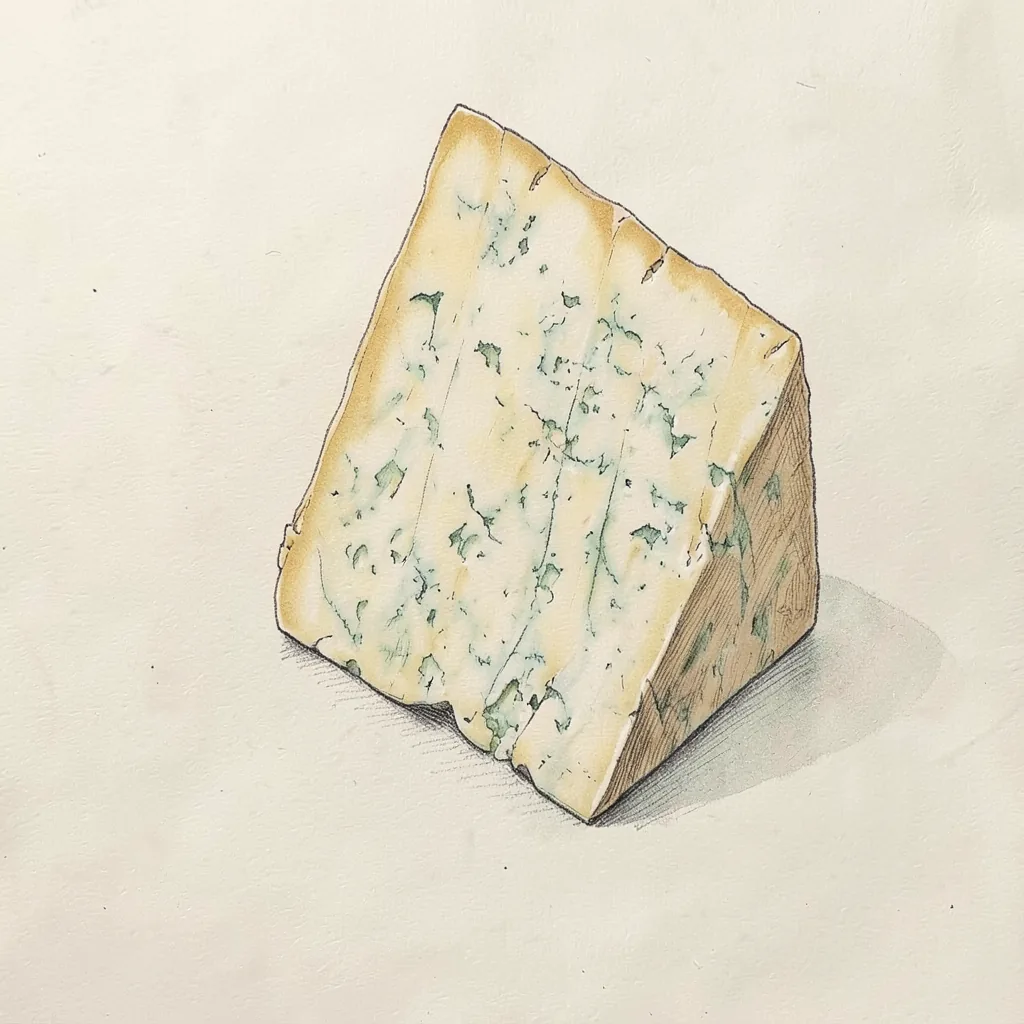
It is a cow's milk wheel with blue-green veins through a pale, creamy paste. The taste is salty, sharp, and tangy, and the texture breaks into moist crumbs. Makers pierce the wheels so the blue mold can grow inside, which is what gives the cheese its color and bite. It is sold for the table and the kitchen, not as a mild slicing block.
A young piece is a little softer and milder, while a longer-aged piece turns drier, sharper, and more crumbly. Both are the same blue cheese, and both keep the salty mold note that sets a blue apart from a plain pressed wheel. The aroma is clean and mushroom-like when the cheese is in good condition. Crumbles hold their shape on a salad, and a softer piece can melt into a dressing or a hot sauce.
History
Blue cheese had a long life in Europe before American dairies began making their own wheels. Maytag Blue cheese was developed in Iowa as a cow's milk answer to those older blues, with veins of mold through a rich paste. The style was built for a wheel that could be aged until the flavor turned bold, then cut and sold in pieces. It became one of the American blues that shoppers could learn by name, and it stayed tied to Iowa even as other blues spread.
The method follows the classic blue pattern of salting, piercing, and aging so air can feed the mold. What marks this wheel is the cow's milk body, which is creamier than a sheep's milk blue such as Roquefort, and a steady sharp finish. Producers kept a round form with a natural rind and a veined interior. Cooks in the United States use it where a recipe asks for a pungent blue, and the name on the label matters because many blues share only the veins.
How it is made
Cow's milk is cultured, set, and cut so the curds stay moist enough for a blue cheese. The curds are drained, salted, and placed in round molds, and they are not pressed into a dense hard wheel. After the wheels are formed, makers pierce them with needles so oxygen can enter the paste. Blue mold then grows along those paths and draws the veins you see when the wheel is cut.
Aging happens in a cool, humid room where the mold can keep working without drying the wheel to a cracker. The exterior forms a natural rind, while the inside stays ivory with blue-green lines. A shorter age leaves more creaminess, and a longer age makes the paste crumblier and the taste more direct. There is no brine wash on the rind and no bloomy white coat, and the cheese is sold as wedges or larger pieces.
Taste
The first impression is salt, then a bright tang, then a savory blue flavor that lingers on the tongue. The paste is creamy and a bit crumbly, so it breaks under a knife instead of stretching. Fat from the cow's milk softens the sharpness, but it does not hide it. A well-kept piece smells of mushrooms and fresh dairy, with the mold note clear and not dirty. People who want a mild cheese may find the finish strong, and that strength is the point of the style.
Texture and bite change together as the wheel ages in the cellar. Early on, the center can feel moist and almost spreadable, with veins that taste peppery and bright. Later, the crumbs are drier, the salt seems firmer, and the flavor is broader and more robust. There should not be a soapy or bitter edge if the cheese has been stored cold and wrapped. Let a piece warm a little before tasting so the aroma can open.
In the kitchen
Maytag Blue cheese is at home on a board, crumbled over salad, or stirred into a warm sauce. Steak, burgers, and baked potatoes are common partners, because the salt and tang cut through rich food. A little goes a long way in a dressing or a pan sauce. Melt it gently into cream or butter, and do not boil it hard or the fat can separate. It is a poor choice when a recipe wants a mild melting block with no blue flavor.
For a cheese board, pair it with plain bread, walnuts, or a firm pear, and give it space beside milder cheeses. Crumble it cold so the pieces stay neat, or soften it if you want a loose spread for bread. Leftovers should be wrapped so the smell does not take over the refrigerator and the paste does not dry out. A fresh mild cheese will not give this salty blue punch, and a hard grating cheese will not crumble in the same moist way.
Around the world
Outside the United States, Maytag Blue cheese appears in shops that carry American cheese, and it is less common than Roquefort, Stilton, or Gorgonzola. Those three are the blues many recipes name first. Maytag is the cow's milk wheel from Iowa, with a creamy crumb and a sharp finish, and it can play the same role on a salad or in a sauce. Buyers should read the label, because American blue is a wide category and not every domestic blue has this balance of cream and salt.
When you cannot find it, choose another blue with a similar job in mind. Roquefort is saltier and more moist, and it is the classic crumble for salad, though the milk is not the same. Stilton is a firmer English cow's milk blue with a deeper, slower finish on a board. Gorgonzola can be creamy and mild or firmer and sharper, depending on the wheel. Any of these can stand in, but none is the Iowa cheese named on this label.