What it is
The paste is pressed and not cooked the way a very dry grating cheese is cooked, so the texture stays semi-hard and supple. Many tommes were traditionally made from milk that had already lost some cream. The word covers farm cheeses across France. A label that says only tomme names a style, not one fixed cheese from one valley.
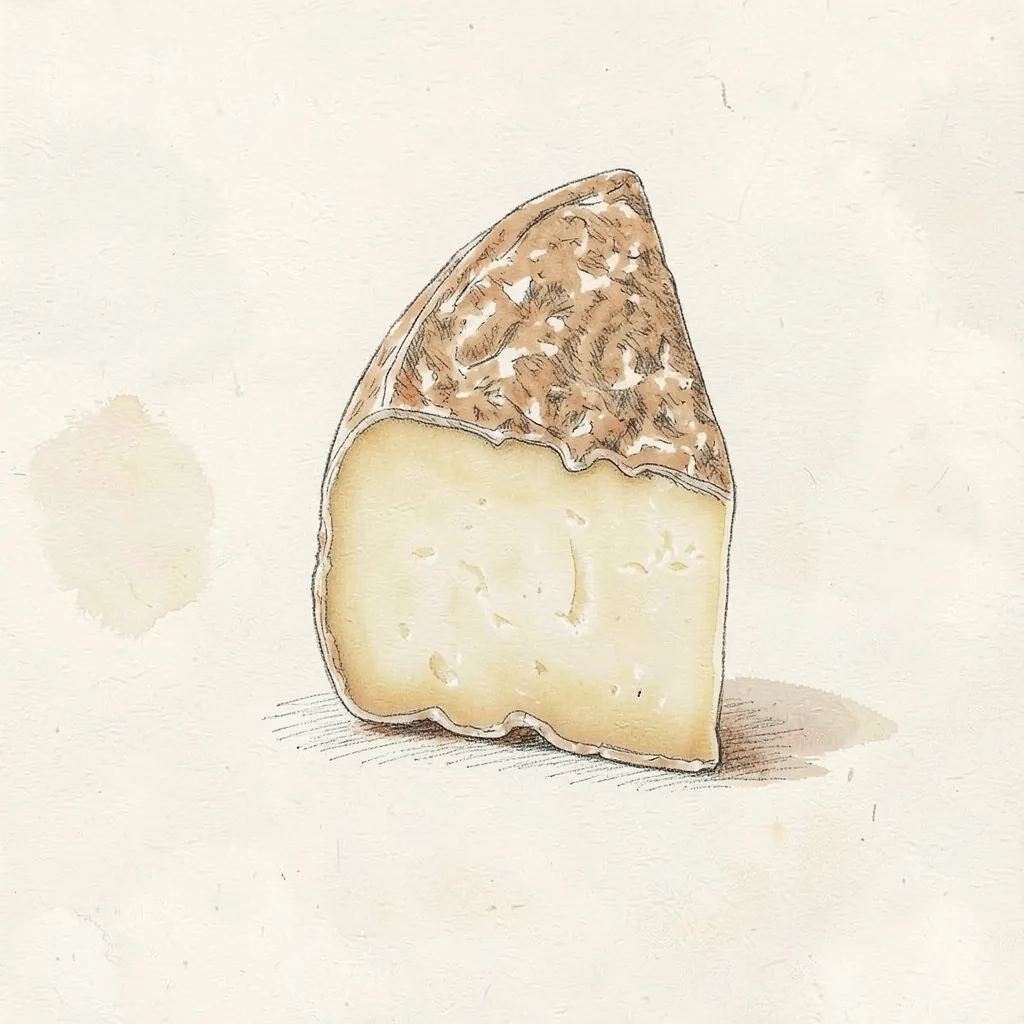
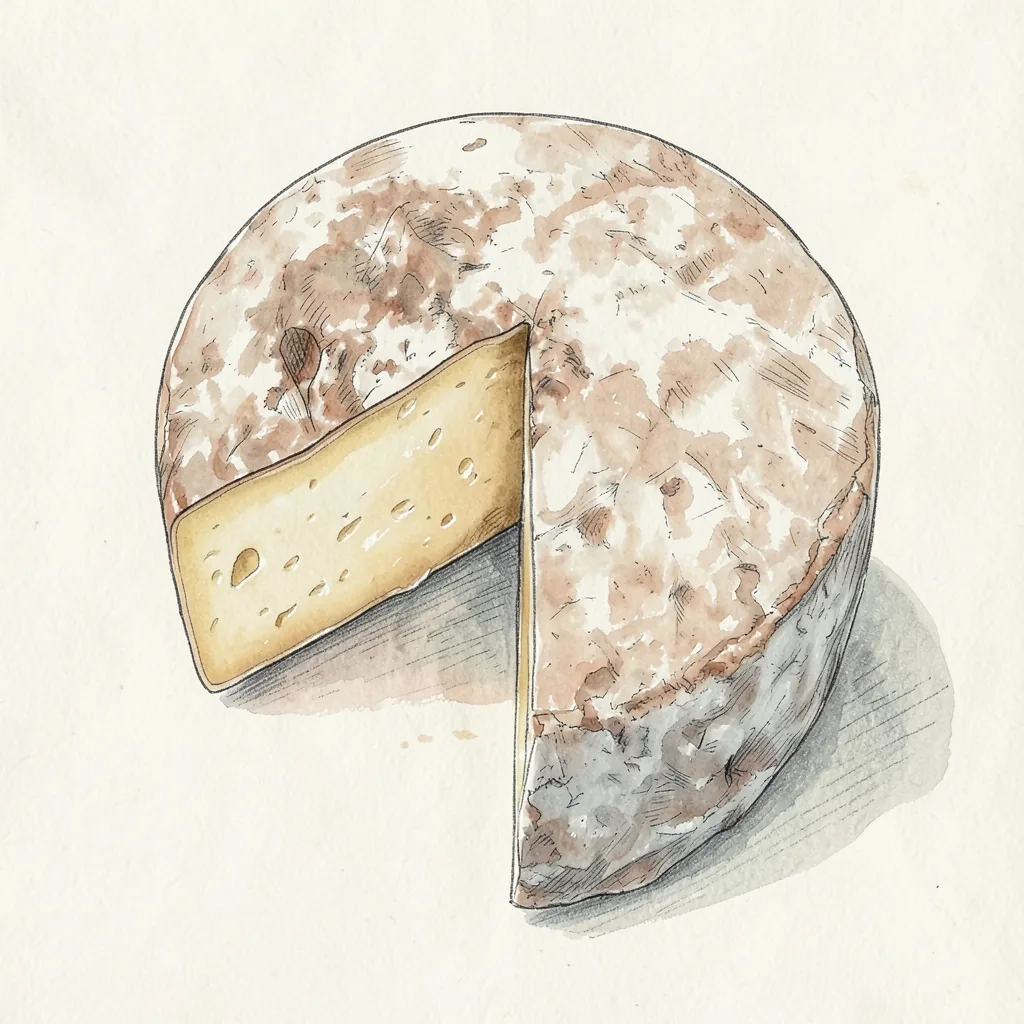
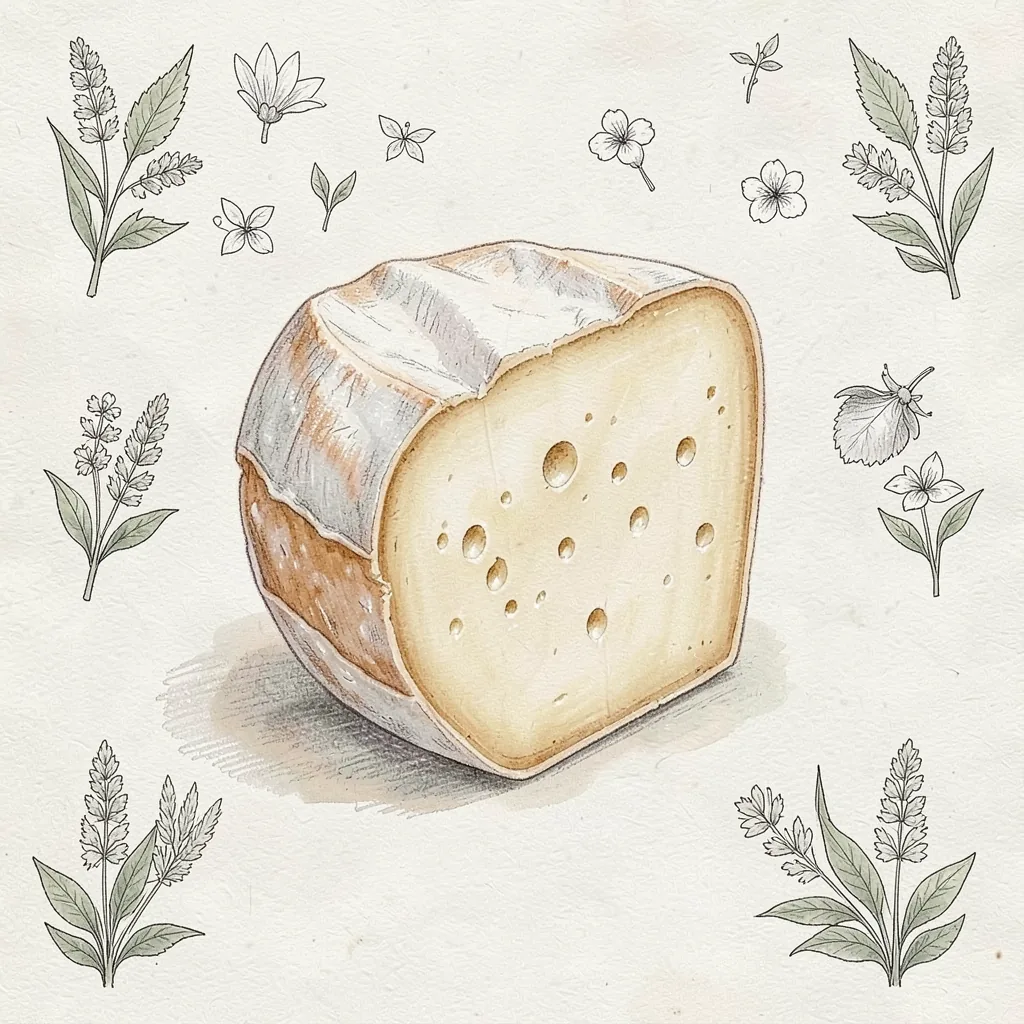
Spellings vary, and tome without the second m appears on some labels for the same kind of wheel. The rind is often gray or mottled, with a rustic look from cellar molds rather than from a wash or a wax coat. Flavor runs from mild and milky to lightly tangy, with hints of cellar, hay, or mushrooms near the rind. Small openings in the paste are common and are not a fault. Named cheeses add a place to the word, and those names are specific products inside the wider group.
History
The word tomme is old in French cheese talk, and it marked a practical wheel rather than a luxury recipe. It was often smaller and moister than the big cooked cheeses associated with high pastures, and it was often the cheese made when richer cream had another use. Dairies pressed the curd, salted it, and kept the wheels in cool, damp rooms until the rind developed. Mottled rinds became part of the expected look. The name then spread, so tomme now appears on cheeses that are only loosely alike.
Because the word is a type, its history is a history of habit, not of one firm or one inventor. Different districts kept the round pressed form and changed the milk, the size, and the age. Some wheels stayed local farm foods and never traveled far. Others gained their own names and a wider trade, while plain tomme remained the umbrella term. A cheese book can list many tommes. The plain word still means the rustic pressed wheel.
How it is made
A typical tomme starts when milk is set with rennet, and the curd is cut, stirred, and pressed in a round mold. Makers skip the high cook that drives a cheese toward a very hard, dry texture. Salt is rubbed on the surface or added in a short brine bath. Aging takes place in a humid cellar, where molds and yeasts form a natural coat. Makers brush the wheels rather than wash them orange, and the paste may show a few small holes.
Details change with the dairy, so some tommes are small and mild while others are larger and nuttier. Fat level varies, because some use partly skimmed milk and some use richer milk. The shared signs are the round shape, the pressed paste, and the natural rind. A name that adds a place, such as Tomme de Savoie or Tomme des Pyrenees, marks a specific cheese inside the group. Plain tomme on a menu still deserves a question about which wheel is meant.
Taste
Most tommes taste mild to savory, with notes of fresh milk, cellar air, and sometimes hay or a light mushroom tone. The paste is supple, not crumbly, and a slice often bends before it breaks. A thicker rind can taste earthier than the center, so many people trim a dry patch and eat the rest. Stronger wheels pick up a slight tang from the rind flora as they age. They rarely show the pungent wash of a red-rind cheese or the sharp veins of a blue.
Because the category is wide, one tomme can be gentle and another frankly rustic on the same counter. A very young wheel may taste simple and milky, with little more than salt and cream. A longer-aged wheel tastes nuttier and drier at the edge, though it should still slice for the board. Bitterness is not the aim, and a harsh mold note with no milky center means a poor example of the style. Ask to taste when the label gives no place name and no clue about age.
In the kitchen
Tomme belongs on a board with bread, nuts, and fruit, and it slices cleanly for a simple lunch. It melts gently in potatoes, omelets, and simple sauces, though it will not stretch into long strings. Grating is a weak use unless the wheel is unusually dry and old. Because the name covers many cheeses, taste a piece before you build a whole dish around it. A mild tomme can vanish in a bold stew, while a rustic one can stand next to cured meat without help.
Serve the rind if it is thin and clean, and pare it away if it tastes dusty or bitter. Room temperature wakes the flavor more than any strong condiment will. In cooking, add the cheese near the end of a sauce so it softens without separating into grease. It is a friendly cheese for a mixed board because it does not overwhelm a soft white cheese or a hard grating cheese beside it. Leftovers keep their shape for sandwiches the next day, as long as the cut face is wrapped.
Around the world
French shops and export counters use tomme as a family name, and buyers abroad often meet it beside Tomme de Savoie and Tomme des Pyrenees. Those named wheels are easier to buy again than a generic tomme, because the label records which one you liked. Cheesemakers outside France sometimes borrow the word for a small natural-rind wheel. That borrowing is a style hint, not a French cheese. When a recipe says tomme and gives no place, choose a savory semi-hard wheel with a natural rind.
The word can confuse shoppers who expect one flavor and one shape from a single name. Treat tomme as a family name, because it points to a group, and the specific wedge still matters. Tomme de Savoie will not match every farm tomme, but it is a reliable member when you need a clear choice. Tome des Bauges is another named relative with a natural rind. If the counter has only a generic tomme, ask how strong it is before you buy a large piece.