Cow
What it is
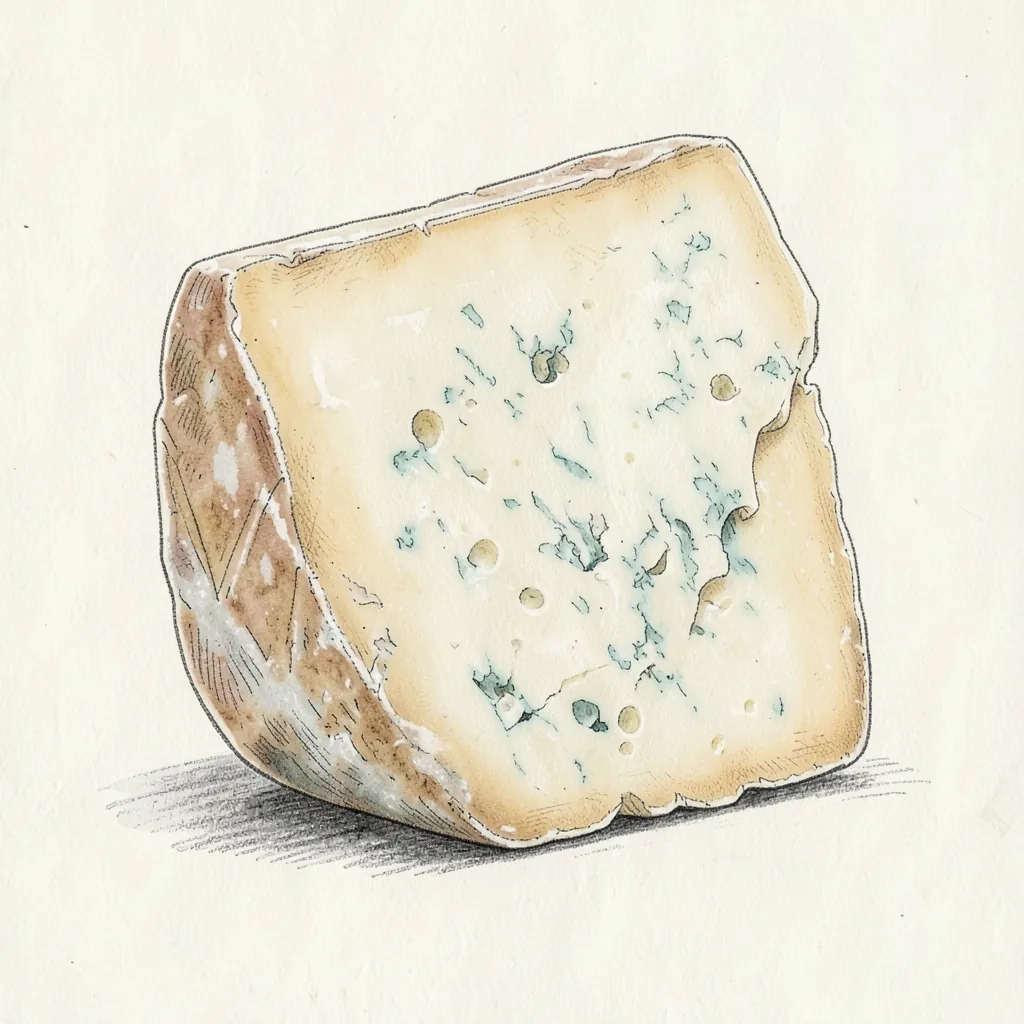
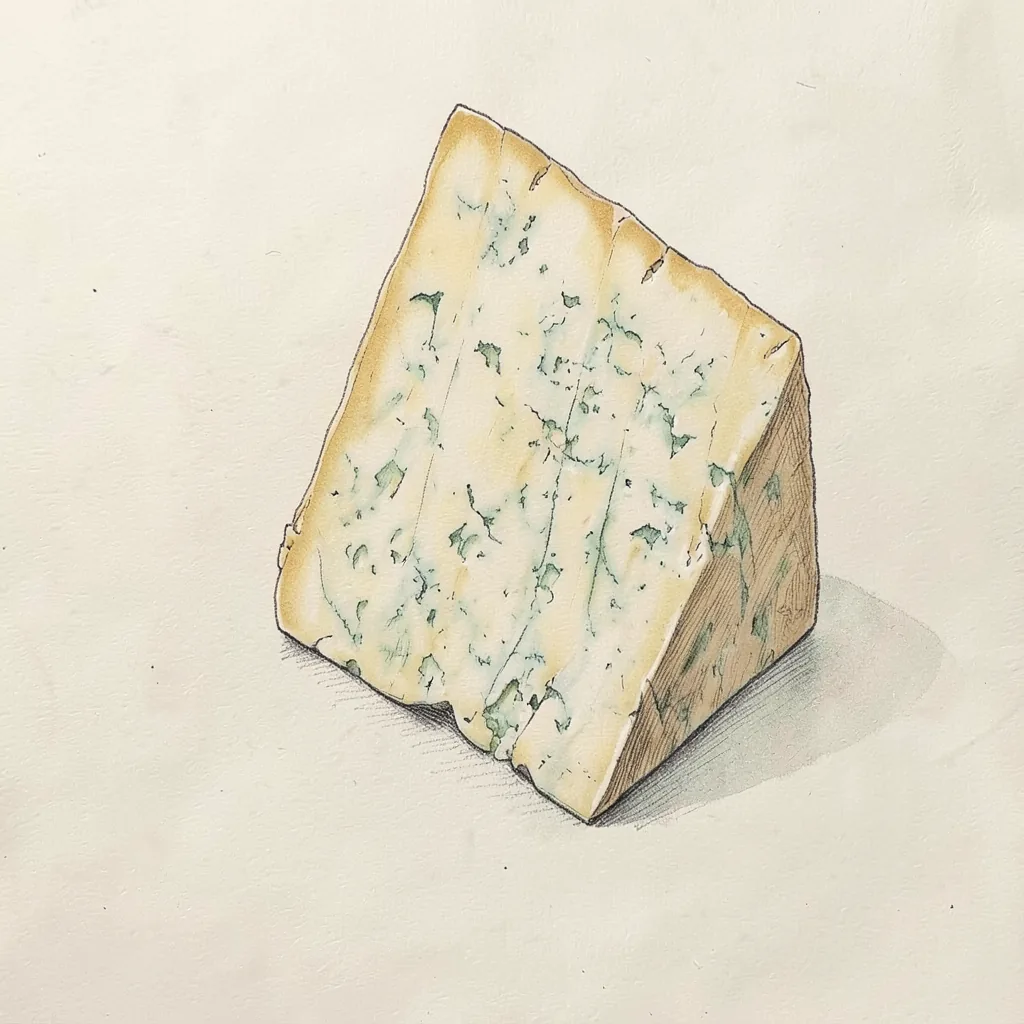
Annatto colors the paste a deep russet or orange, and thin blue veins run through that warm body. The texture starts crumbly and grows smoother and creamier as the cheese rests. The taste is mild for a blue, with cream first and a gentle tang after. It is often set beside Stilton, but the color and the softer finish set it apart.
The rind is thin and can be eaten with the paste. A sound piece shows even color and fine veins, not large gaps or a wet, broken coat. It suits a board, a salad, or a plate of fruit more than a long bake. Sweet drinks are a common match, because the cheese is not as salty or as sharp as some blues. It is a specialist British cheese, so many shops do not cut it every week, and the label matters.
History
Buxton Blue was developed as a modern British blue in the same broad family as Stilton. The name belongs to Britain, and the cheese was offered as a milder cousin of that famous blue. Makers colored the curd so the wheel would look russet beside the usual pale Stilton paste. The idea was a blue that more people would enjoy with fruit or at the end of a meal. It entered the market as a creamery cheese, not as a farm recipe recovered from an old notebook.
Cow's milk, a russet paste, and light blue veins are what define the cheese in the kitchen. It was aimed at eaters who wanted blue flavor without the strongest Stilton finish. Availability has varied over time, and a shop may go a long stretch without a cylinder on the counter. When a piece does appear, the orange body and the fine veins are the signs to trust. It is not a washed-rind cheese, and it is not the white form of Stilton.
How it is made
Cow's milk is set, and annatto is added so the curd takes on a warm russet color before it is molded. The curd is cut, drained, and salted, then filled into cylindrical forms. A blue mold culture is part of the make, as it is for other British blues. The young cheeses are pierced so air enters and the veins can grow inward from those holes. Color is the extra step, and the rest follows the broad method of a pierced blue.
Resting lets the veins develop and lets the crumb become creamier instead of staying dry. The cheese is not meant to harden into a block kept only for grating. A finished cylinder has a thin natural rind and a moist interior with an even orange tone. If the paste is pale cream, annatto was not used and you are looking at a different blue. Even veining and a clean smell are the signs of a sound cheese, and the rind can stay on the slice.
Taste
Cream comes first, then a mild blue tang, and the finish often carries a savory onion-like edge. Some people also find a slight cocoa note once the paste warms in the mouth. Those notes are gentle, not a blast of spice or a burnt taste. Salt is present, but the aftertaste stays softer than that of a very mature Stilton. The paste breaks under the knife, then feels richer as it softens, and the aroma is blue and dairy without a heavy barnyard hit.
A younger piece is crumblier and a little brighter in the blue flavor. More time smooths the texture and rounds the cream without turning the cheese into a spread. The orange color does not mean the cheese was smoked or washed in brine, because it comes from the annatto in the curd. If the veins are missing, the blue character will be weak and the piece will taste mostly of mild dairy. Let it warm slightly so the cocoa note and the cream can both show.
In the kitchen
Crumble Buxton Blue over pears, walnuts, or a green salad, where the russet pieces show against the leaves. It also sits on a board with bread and a little honey or a not-too-sharp chutney. The mild veins mean it can go into a sauce or onto a baked potato without taking over the plate. It is less suited to long, high heat than a cheese made to melt into strings. Use it where you want color, cream, and a gentle blue taste together.
The crumb makes it easy to scatter, and a knife still cuts a fair wedge for a plate. Eat the thin rind if you like, or trim it if the edge is dry. Wrap leftovers well, because the blue aroma travels into other food nearby. If the cut face dries, shave that edge away and use the moist part underneath. Do not treat the orange paste as a sign of a mild cooking block, because the veins and the tang will behave like a blue.
Around the world
Buxton Blue is a British specialty, and it is far less common abroad than Stilton or a supermarket blue in a wedge. Some counters in the United Kingdom may not stock it either, so ask before you plan a menu around it. Look for the name, and check for a russet paste with real blue veins rather than orange color alone. An imported orange cheese with no veins is not a match. When you do find it, buy a modest piece and eat it while the paste is still moist.
Shropshire Blue is the cheese most often confused with it, because both are orange and veined with blue. Stilton is the usual substitute when you want a British blue and the russet color does not matter to the dish. Stilton is typically paler and can be sharper and drier on the finish. Shropshire Blue can stand in on a salad if you want the same look on the plate. Neither one guarantees the same mild onion and cocoa finish.