Cow
What it is
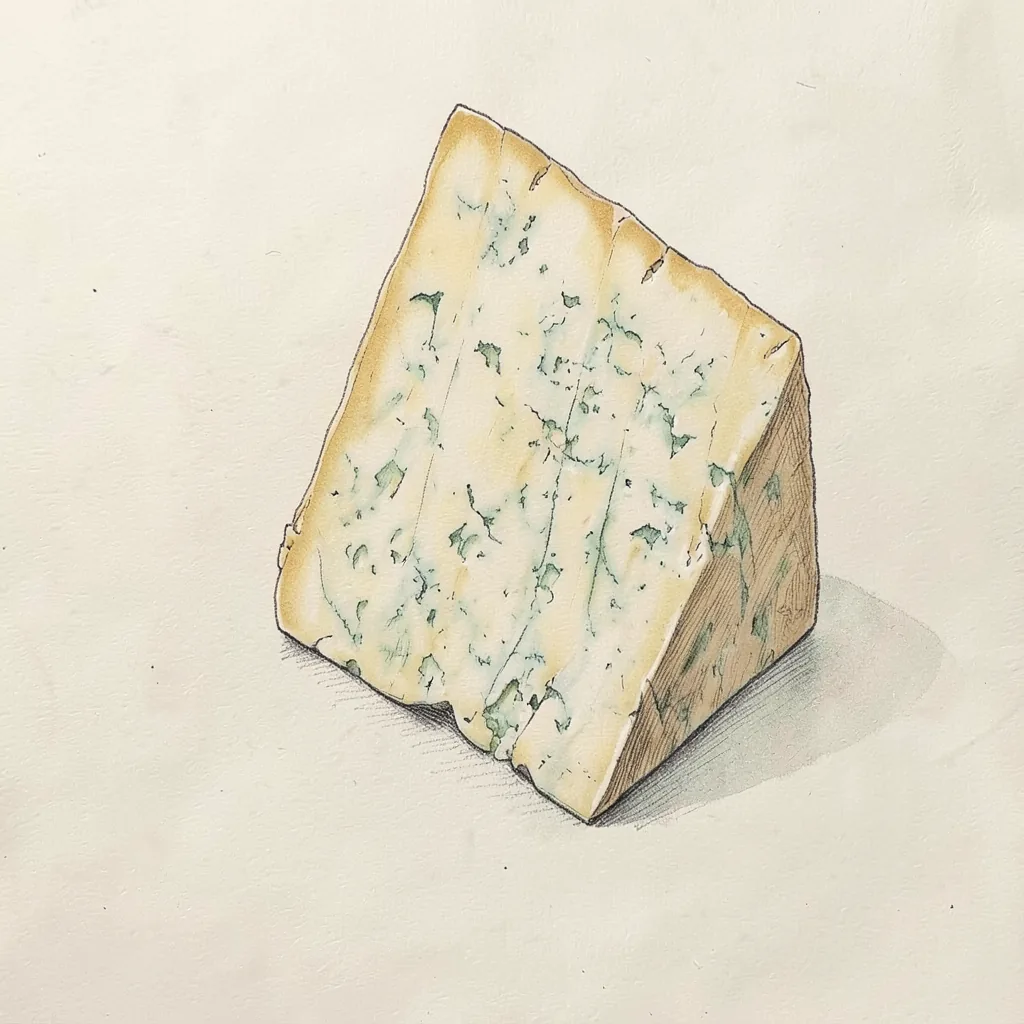
The color comes from annatto, not from the mold. The mold supplies the veins and a sharp, savory taste. Despite the name, it is not a cheese that belongs only to the county of Shropshire. It is known as a Scottish blue that is also made more widely in Britain.
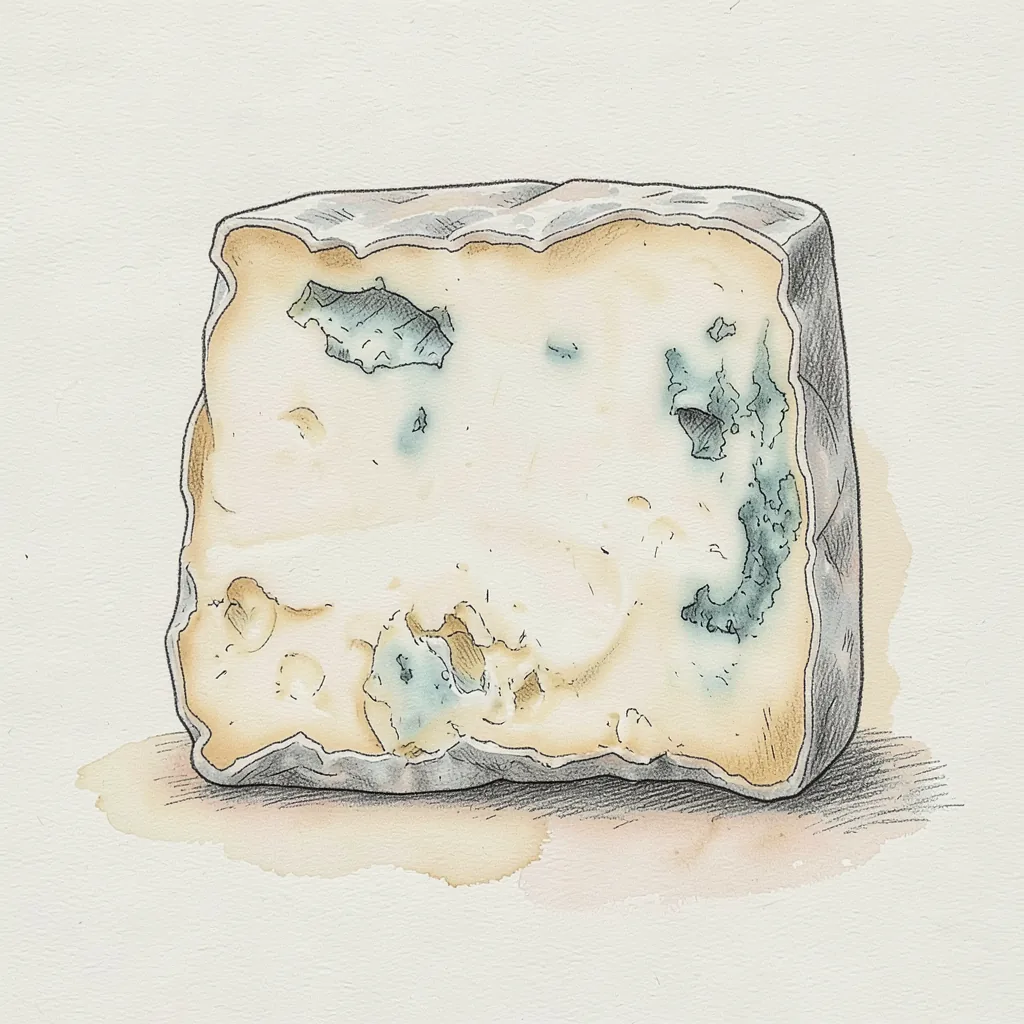
The paste is creamy and open, with a natural rind that is brownish orange. A wedge looks bright beside a pale Stilton, and the two are often compared. Shropshire Blue is usually a bit richer and tangier than a young Stilton, with a full blue bite. It is firm enough to slice and soft enough to crumble. You will find it in ordinary cheese shops in Britain.
History
The cheese was first made in Scotland, so it is fair to call it a Scottish cheese even though the name is English. The orange paste and the blue veins were the idea: a colored British cheese with a Stilton-like mold. Production later spread to other dairies in the United Kingdom. The name stayed Shropshire Blue, and that name still confuses buyers who look for a Shropshire farm. There is no rule that ties every wheel to one county.
Several makers now produce it, so one producer's wheel is not the only version. Some are made by dairies that also make Stilton, and some are not. The cheese has no single closed recipe that every producer must copy. What shoppers expect is the orange interior, the blue veins, and a creamy cow's-milk paste. The story is recent beside old British regional cheeses, and the name is newer than the counties it suggests.
How it is made
Makers start with cow's milk, add cultures and rennet, and cut the curd. Annatto goes in to color the curd orange, separate from the blue mold that will make the veins. The curds are drained, salted, and placed in molds. Blue mold is in the curd or is encouraged so veins can grow in the open texture. The cheese is pierced later so air reaches the mold and the blue develops.
Wheels rest while the paste turns creamy and the veins spread. A natural rind forms on the outside, and it is not waxed and not washed like a smear cheese. Different dairies age it to slightly different points, so one wedge may be firmer than another. The orange color should be even through the paste, with veins that look like branching lines. A gray wet coat or a sharp ammonia smell means the wheel was kept poorly.
Taste
The flavor is creamy, salty, and clearly blue, with a tang that can feel a little sweet at the edges. Annatto does not add a strong taste of its own. The veins bring the mushroom and cellar notes typical of blue mold. The paste melts on the tongue more readily than a dry crumbly blue. A good piece is rich rather than harsh.
Compared with Stilton, many tasters find Shropshire Blue a touch sharper and more buttery. Compared with a mild blue, it is fuller and saltier. The rind is earthy and should be cut away if it tastes bitter. Near the rind the paste can be stronger than in the center. If the cheese tastes only of ammonia, choose a fresher wedge instead.
In the kitchen
Crumble Shropshire Blue over salads, steaks, or baked potatoes, where the orange pieces stay visible. It melts into a sauce or a burger more readily than a very dry blue. On a board, pair it with pears, walnuts, and a plain cracker so the blue stays clear. A little honey is enough sweetness. Do not bury it in a dish with many other strong cheeses.
Use it where you might use Stilton, and expect a brighter look on the plate. It is good in a baked mushroom or a rarebit-style melt if you want a blue note. Balance the salt with something fresh, such as celery, apple, or lettuce. It is not a grating cheese for a long-cooked pasta sauce in large amounts, because the blue flavor turns aggressive. A modest crumble at the end of cooking is the better habit.
Around the world
Outside the United Kingdom, Shropshire Blue appears in shops that import British blues, often next to Stilton. The orange color makes it easy to spot and easy to misunderstand. Some buyers think the color means a smoked cheese or a flavored spread. It is neither of those things. It is a blue cheese colored with annatto, and the veins are the flavor clue.
If the import case has no Shropshire Blue, Stilton is the closest usual substitute for cooking and for a board. Oxford Blue and other British blue wedges are also near neighbors when you can find them. Tell a cheesemonger you want the orange British blue, not a pale Stilton and not a red hard cheese. The cheese was first made in Scotland, and later production settled with dairies elsewhere in the United Kingdom. Read the maker on the label if the place of making matters to you.