Cow
What it is
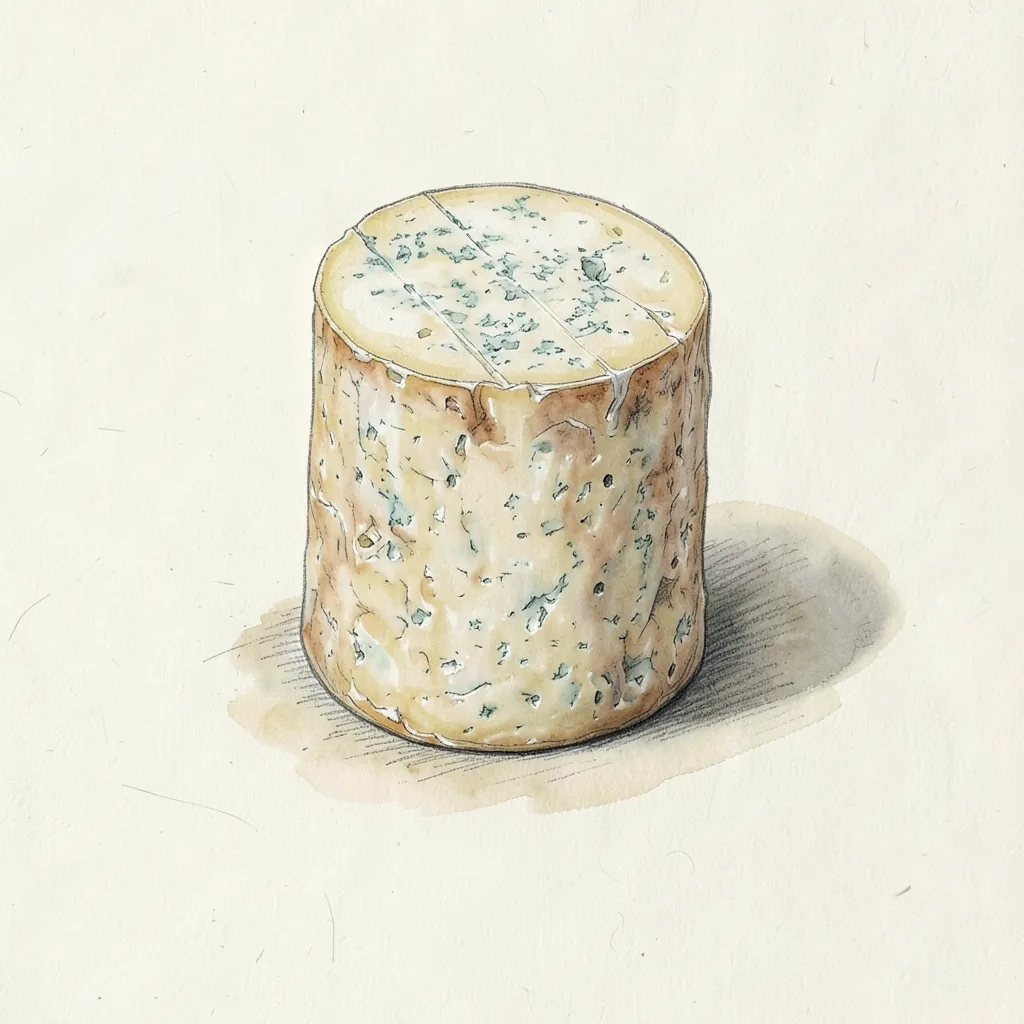
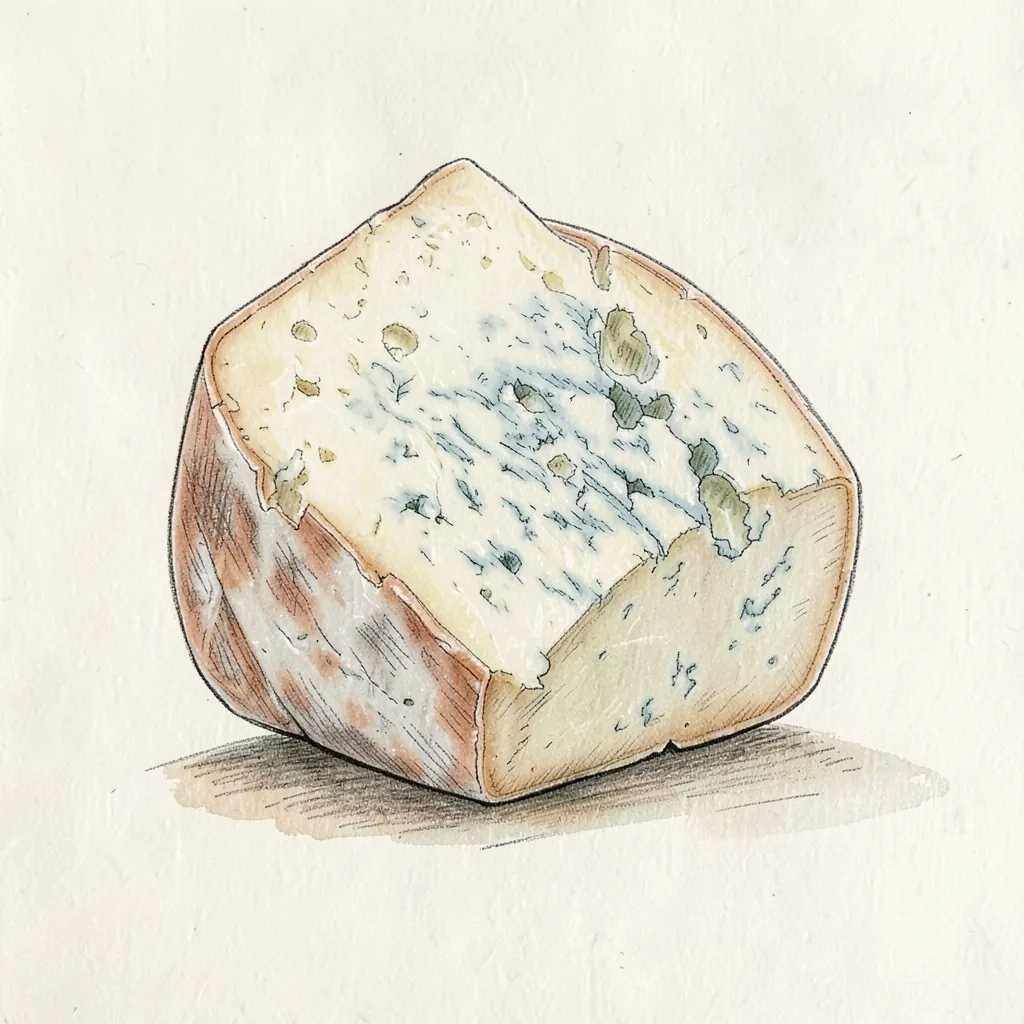
The wheel is a tall cylinder rather than a flat disc, with a pale interior and blue-green veins. A natural rind, usually gray, covers the outside and may show small spots of other mold. The taste is milder and creamier than many famous blues. It belongs on a board as much as in a warm sauce.
The word fourme refers to the form that shapes the curd, and the rest of the name points to Auvergne. In the kitchen it behaves as a gentle blue, with less salt bite than a sheep's milk blue such as Roquefort. Cow's milk keeps the paste supple and a little sweet. Veins should look evenly spread, not crowded into one dark streak. A ripe piece smells of cellar, cream, and mushrooms, and it should not smell of harsh ammonia.
History
Blue cheese has a long place in Auvergne, and Fourme d'Ambert is one of the older named wheels from that part of France. Makers shaped cow's milk into tall forms so the paste could drain and later take blue veins. The style stayed tied to Auvergne dairies rather than to one family firm. It is a regional blue with a set shape, a set milk, and a milder taste than many of its cousins.
For a long time, Fourme d'Ambert and Fourme de Montbrison were treated as close twins, and shoppers still mix them up. They share cow's milk, a tall shape, and blue veins from the same family of mold. Small differences in the make and in the salt set them apart today. Bleu d'Auvergne is another neighbor, usually stronger and formed in a different shape. Knowing those three names keeps an Auvergne cheese board clear.
How it is made
Cow's milk is set with rennet, and a blue mold, Penicillium roqueforti, is added so veins can grow later. The curd is cut and stirred until the grains stay separate, which leaves tiny gaps inside the wheel. Those gaps matter, because the mold needs air. The curd is ladled into tall cylindrical molds and left to drain without a hard press. If the openings closed, the blue would struggle to develop through the paste.
Salt is worked in, and the wheels are pierced with needles so oxygen can reach the center. The mold then traces blue-green lines through the ivory paste. Aging continues until the texture is semi-hard and the flavor has settled into a creamy, earthy balance. The rind stays natural and fairly thin, in shades of gray with occasional lighter spots. A careful wheel shows veins that run evenly from the middle out toward the edge.
Taste
Fourme d'Ambert is creamy, mild, and lightly earthy, and the blue reads as a flavor rather than a burn. You get mushrooms, butter, and a soft salt note, with a gentle tang at the end. The paste feels smooth and a bit moist, not chalky and not runny. Aroma is cellar-like and clean when the cheese is in good condition. If the smell is sharply ammoniated, the piece is past its best and will taste harsh.
Compared with Roquefort, this cow's milk blue is softer in salt and less fierce on the tongue. Compared with a very strong Gorgonzola, it is rounder and easier to eat in a larger slice. The veins add a little spice, but the body stays mellow and slightly sweet. A cold piece tastes tighter and milder. A piece that has warmed a little on the board shows more cream and more aroma.
In the kitchen
Set Fourme d'Ambert on a cheese board with bread, nuts, and a sweet fruit paste, and crumble it over a warm salad. It melts into sauces for pasta, potatoes, or a simple steak without turning bitter. Because the blue is gentle, it will not take over a dish the way a sharper blue can. Cut wedges rather than tiny crumbles when you want the creamy paste to show. The rind is edible, though some people trim the dry outer edge.
Keep the heat moderate so the fat stays in the sauce and the blue flavor stays sweet. A small piece stirred into cream is enough for a pan sauce. On a tart or a burger it melts and can brown at the edges. It is a poor grating cheese, because the paste is too moist to fall into dry shreds. Keep it for slicing, crumbling, and melting, and pick a harder cheese when you need a powdery finish.
Around the world
Outside France, Fourme d'Ambert shows up in shops that carry European blues, and it is often the mild choice beside Roquefort or Stilton. The tall cylinder is the easiest clue when the label is small. Fourme de Montbrison is the cheese most often confused with it, so read the full name before you buy. Bleu d'Auvergne is also from Auvergne, but it is usually a stronger blue in another format. Those differences still matter in an export case.
Cooks who cannot find it can use another mild cow's milk blue, and the result will be close in a sauce or a salad. A sheep's milk blue will be saltier and more intense, so use a lighter hand if that is the only option on the counter. The cheese is an ordinary commercial food, sold in wheels and in cut wedges. It needs no special warning. Serve it first as a table blue, and let the creaminess lead the plate.