Cow
What it is
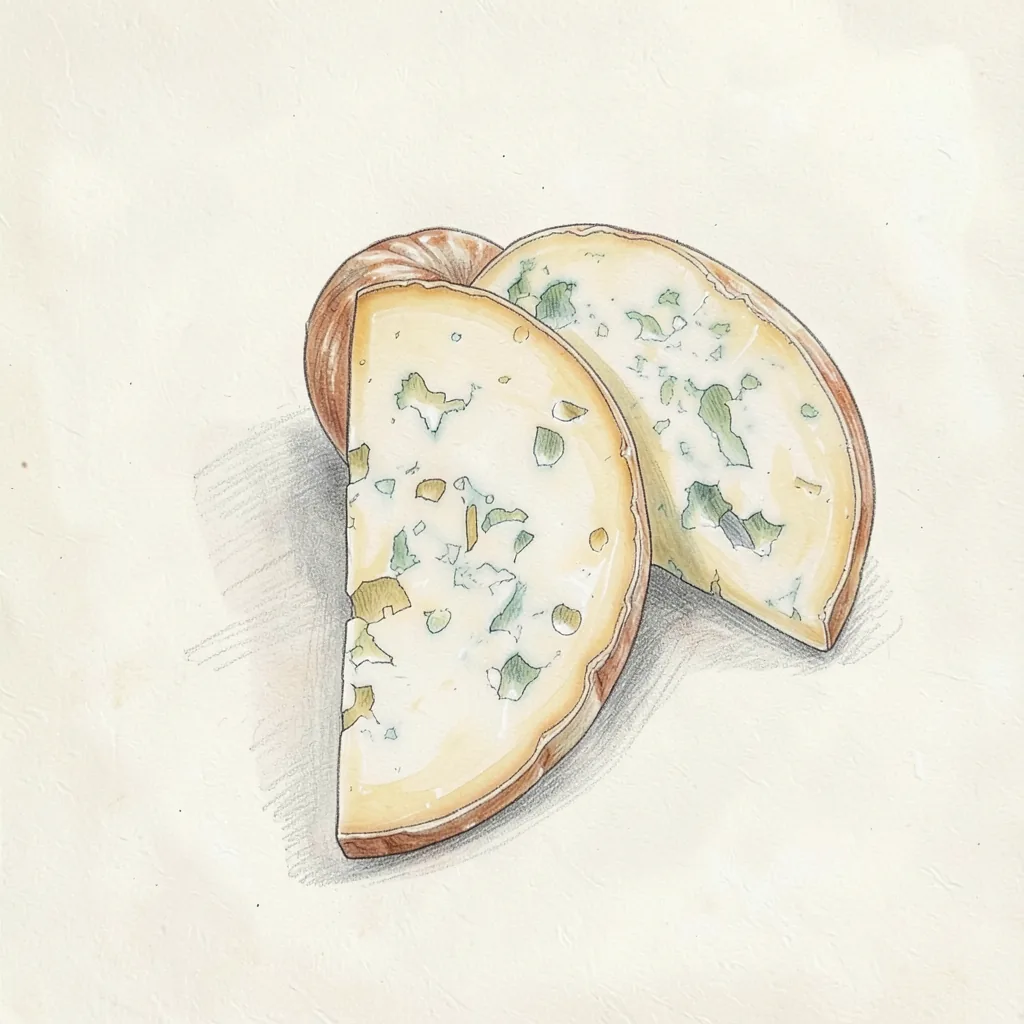
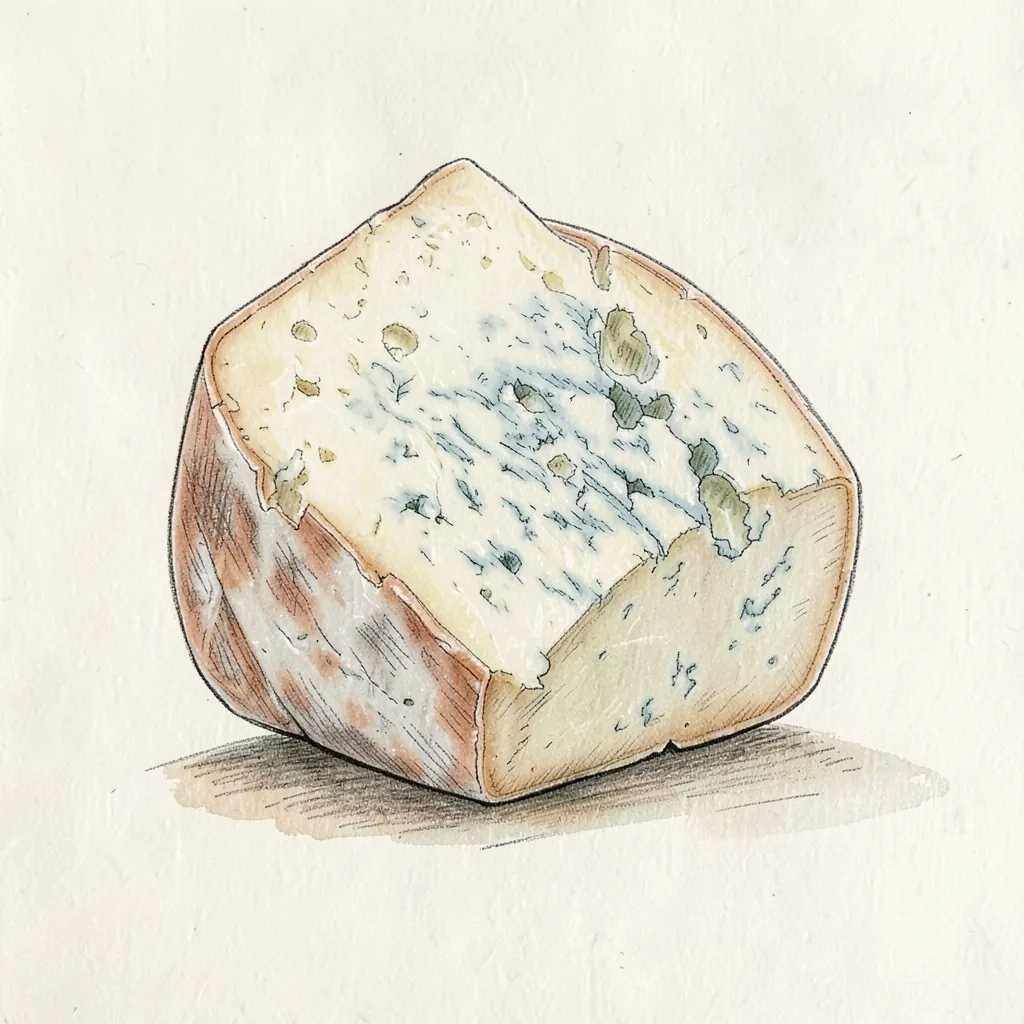
The word fourme refers to the tall mold, and Montbrison is the place the cheese is named for. Each piece is a cylinder with a dry natural rind and a pale paste crossed by blue-green veins. It is milder than many blues. The scent is musty, and the taste is gentle and a little dry rather than harsh.
The paste is semi-hard and moist enough to slice, with open pockets where the blue mold has grown. Veins are scattered rather than packed into one dark seam. The rind is thin and grey to light brown, not a wax coat and not a thick white bloom. People eat the cheese on a board and also melt it. The mild blue flavor can go into a sauce without taking over the rest of the plate.
History
Fourme is an old word in the mountains of central France for cheeses shaped in a tall form. Fourme de Montbrison and Fourme d'Ambert grew up as close relatives in that country. For a long time they were treated almost as one blue cheese. Makers later drew a line between them because the salting, draining, and finish are not the same. The two names now mean two cheeses, even if a hurried buyer still mixes them up.
The Montbrison cheese sits in the Auvergne family of cow's milk blues, with Bleu d'Auvergne and the Ambert fourme nearby. Herds graze the uplands, and the milk suits an open curd that can hold blue mold. A tall cylinder, wooden racks for draining, and salt mixed into the curd became part of the local method. Nothing in that method makes a spoonable cream. The cheese stays sliceable, with a dry aroma and a calm taste.
How it is made
Cow's milk is set with rennet, and Penicillium roqueforti is added so the blue can grow later. The curd is cut and handled so small openings remain between the grains. Salt is mixed into the curd, and the curd is filled into tall cylindrical molds. The young cheeses are not pressed hard, because those gaps are needed for the mold. They are turned by hand on wooden racks while the whey leaves and a rind begins to form.
Needles or narrow air channels later open the interior so the blue mold gets oxygen and draws its veins. The cheese then rests in a cool, humid cellar until the paste is even and the flavor is mild but clear. Some wheels are sold once that character is set, and others stay longer so the taste can round out. Most of the cheese is made from pasteurized milk, while some smaller makers use raw milk. The cylinder, the veins, and the gentle blue flavor stay constant.
Taste
The smell is musty and a bit like a cellar, but it is not aggressive. On the tongue the cheese is mild for a blue, with a creamy feel and a dry, slightly salty finish. The veins taste mushroomy rather than sharply metallic. Paste between the veins is mild and a little sweet. There is less punch than in a very strong Roquefort, which is why some people who avoid blue still try this one.
A younger wheel is softer in flavor and a bit more lactic. A wheel kept longer is drier, saltier, and more clearly blue, though it should stay balanced. The rind can taste earthier than the paste, so trim it if you want only the mild interior. Strong bitterness is a fault, not a goal of this cheese. If the veins smell of ammonia, or the paste is slimy, the wheel is too old.
In the kitchen
Put Fourme de Montbrison on a board with bread, walnuts, and a ripe pear. Crumble it over warm potatoes or a salad of bitter leaves. It melts into a sauce for pasta or steak, where the blue note stays gentle enough to share the plate. A little can go into a tart or over a burger. Because the cheese is milder than many blues, a generous amount will not drown the dish.
Use a sharp knife, and expect the paste to crumble along the veins. Heat the cheese gently so the fat blends and the blue does not turn harsh. It will not stretch, and it will not brown like a grilling cheese. A sweet wine or a light red sits well beside a board serving. Wrap cut pieces so the smell stays in the cheese and not in the rest of the fridge.
Around the world
The cheese travels from Auvergne to French counters and to shops that stock traditional blues. It is less widely known than Roquefort, so staff may offer Fourme d'Ambert instead. That offer is close, but the cheeses are not identical. Read the full name on the label. A cylinder with a grey rind and fine blue veins is the look you want, and a label that only says fourme is not enough.
Fourme d'Ambert is the main cheese people confuse with this one, and it is also the best substitute. It is another cow's milk cylinder from the same broad region, with a similar mild blue taste. Bleu d'Auvergne is often a bit stronger and creamier, and it works in a sauce when Montbrison is absent. Gorgonzola can fill a melt, but it is usually softer and more pungent. Use that Italian blue only if you want a louder flavor.