Cow
What it is
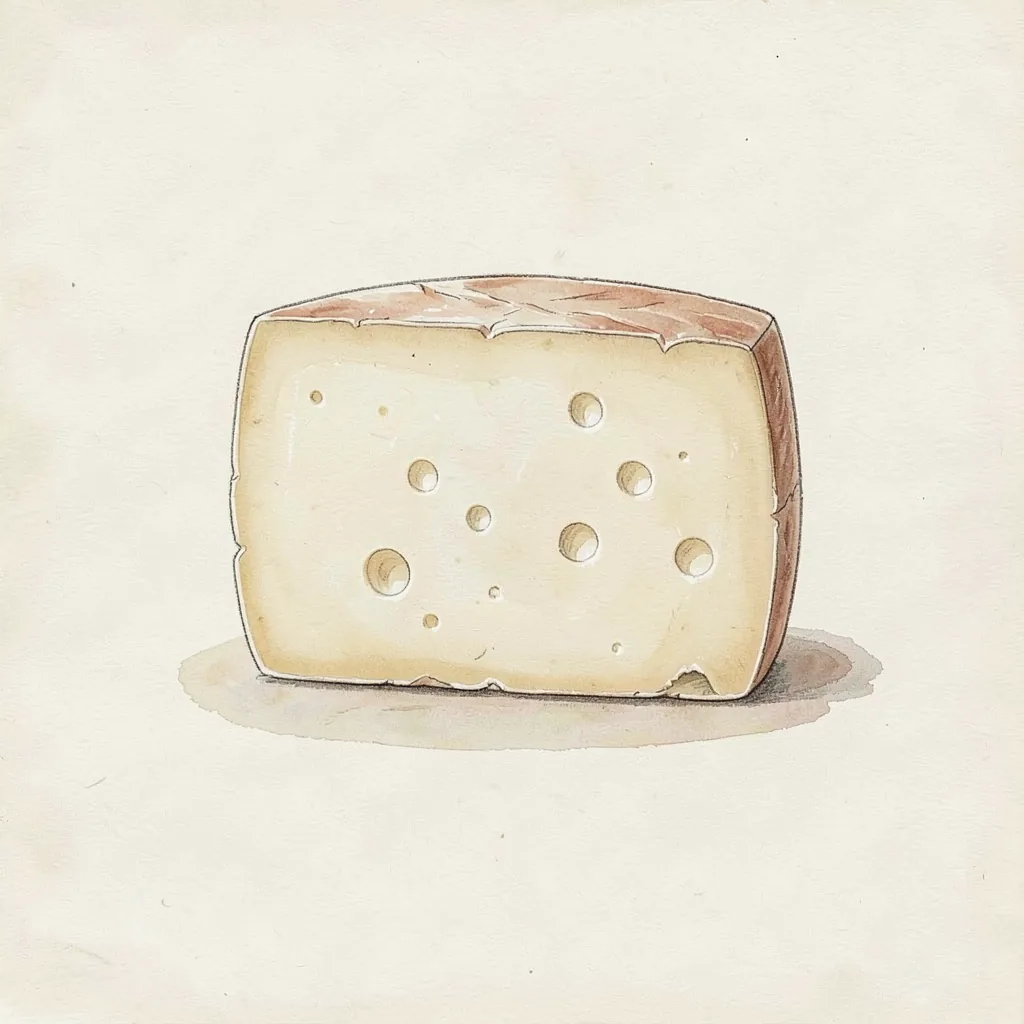
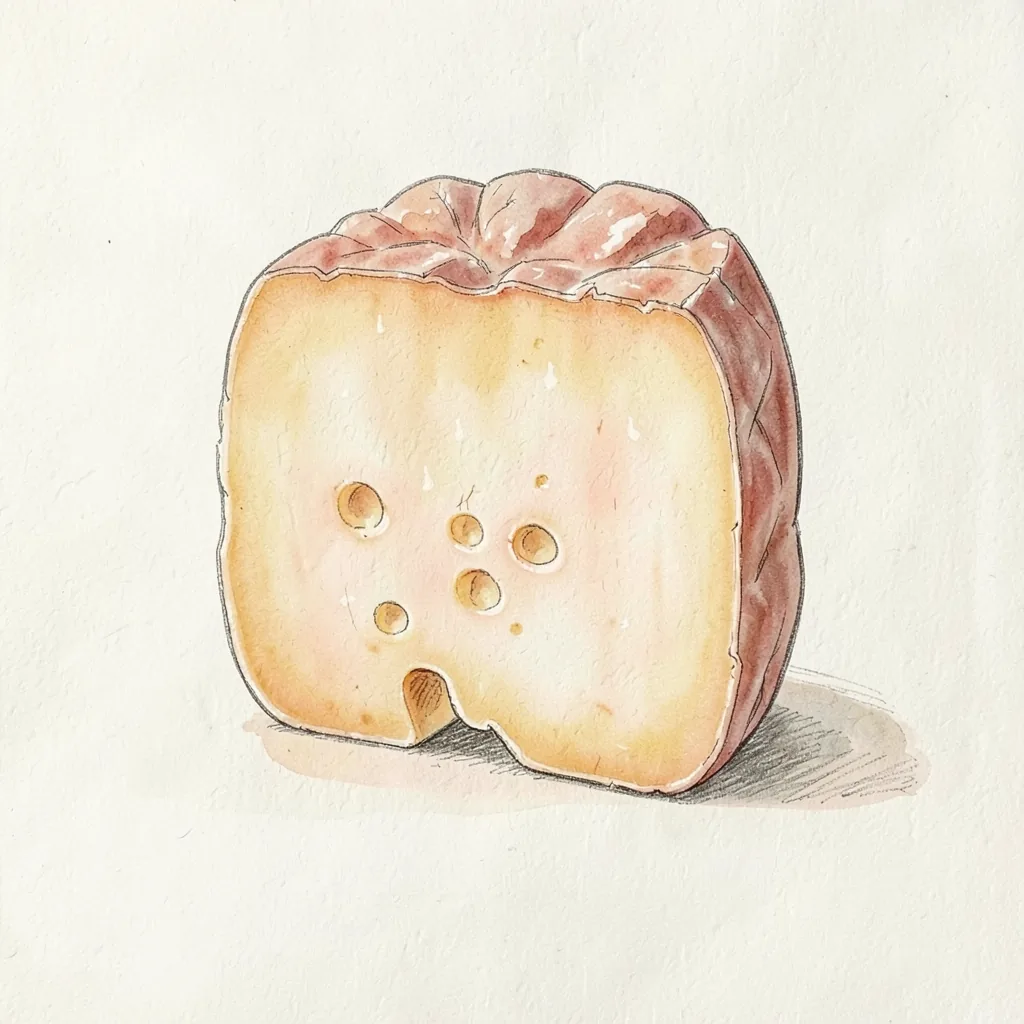
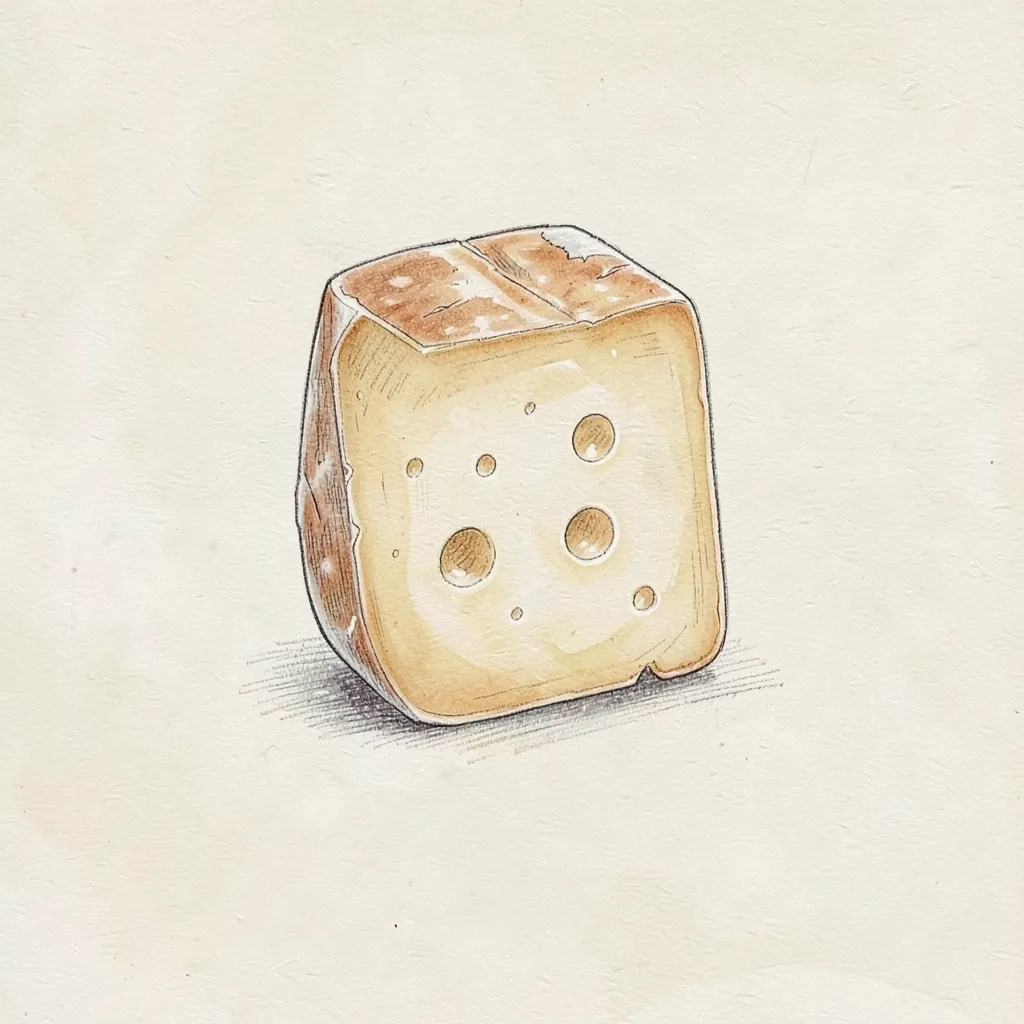
The name means old cheese, which fits a food kept until mold has done its work. Makers sour skimmed milk, warm the curd, and press it, then ripen the round with a surface mold. The color shifts toward brownish yellow as that mold moves inward. It is a sharp cheese for bread, not a mild wheel for a quiet snack.
The texture is dense and granular, and a knife meets a moist grain rather than a smooth cream. The aroma is pungent before the taste even arrives. Flavor is sharp, earthy, and lasting, with the tang of soured milk still easy to notice. The cheese feels lean on the tongue because the milk was skimmed and the fat was not put back. A little goes far on dark bread, and Norwegian shops still know it even where other countries rarely see it.
History
The cheese belongs to an older Norwegian larder, beside flatbread and other foods that had to last without a cold room. Sour skim milk was common on farms, and a pressed cheese made from it stored well. The name old cheese suits a round that waited while mold worked from the outside in. Farm practice varied from one district to another. Some batches used a share of buttermilk, but skimmed cow's milk remains the classic base.
Making the cheese was slow work for the hands. After the curd was pressed in round forms, mold was put on the surface, sometimes from the wood of a form used only for this cheese. People rubbed that growth back into the paste so ripening moved inward. More time and more care produced a stronger cheese. Later factories took on part of the work, but the taste stayed sharp, and it never became a mild cheese for wide export.
How it is made
Skimmed cow's milk is soured with a lactic culture until the protein sets. The sour milk is warmed so the curd firms and leaves the whey. Curds are gathered and pressed into round forms until they hold a shape. At that stage the cheese is still pale, and it is not yet ready to eat in the traditional way. Mold is then put on the surface, by rubbing in the older path, or by contact with equipment kept for this cheese alone.
Ripening runs from the outside toward the center. The exterior darkens to a brownish yellow, while the middle can stay lighter until the mold has worked through. Makers rub the surface growth back into the cheese, which keeps the change even and stops a mere fuzzy coat. The finished round is moist, coarse, and golden brown, not white with blue veins. No cream is mixed back in, there is no long bath in brine, and the lean curd and the mold are the whole method.
Taste
Sharp and pungent are the fair words, and they fit both the smell and the taste. The sour milk tang is strong, and an earthy note, a little like mushrooms, comes from the mold. Salt is present, but the shock is the sharpness, not a heavy brine. There is little butteriness, because the milk was skimmed before the curd was made. Some eaters find the first bite harsh, while fans want that clean, lean, lasting bite.
The paste is firm, moist, and grainy, and it can feel slightly chewy under the tooth. It does not turn to cream on the tongue. Color is brownish yellow, often deeper near the outside when ripening is well along, and sometimes paler in the middle. A fully worked piece tastes more even from edge to center. If the smell is only a faint dairy note, the cheese is probably younger than the style intends, and a wet unclean rot is a sign to reject the piece.
In the kitchen
Serve thin slices or small crumbles on dark bread, often with butter, which softens the lean sharpness. Sour cream, a spoon of jam, or a tart berry can sit beside it in a familiar Norwegian way. The cheese belongs on a board in small amounts, not as a large mild wedge. It is not a melting cheese for pizza, and it is not a fine grate for a delicate pasta. Heat is not required to enjoy it.
Use it only where a dish can take a strong, low fat, sour note, and keep the quantity small. A crumb on a robust open sandwich is plenty for most people. It will take over a cream sauce, and it clashes with sweet dessert cheeses on the same plate. A malty beer is a sturdier partner than a fragile white wine if you want a drink beside it. Wrap the cut piece, because the aroma stays in a shared fridge.
Around the world
Gamalost is easy to buy in Norway and unusual in ordinary shops in other countries. It is not sold like a mild jar cheese or a waxed block for sandwiches. Visitors often meet brunost first, the sweet brown whey cheese, and then assume every brown Norwegian cheese is that food. Gamalost is savory, mold ripened, and sharp. Brunost is cooked whey and tastes sweet, closer to a dairy fudge than to a sour cheese, so the shared brown color can confuse people while the taste will not.
Pultost is another Norwegian sour milk cheese, usually softer and more of a spread, and caraway sometimes seasons it. It is closer in spirit than brunost, and it is still not the same grainy round. German Harzer and other lean sour milk cheeses share the strong aroma and the low fat idea. None of them copy the Norwegian texture. If a shop has no gamalost, choose another sharp sour cheese only when the recipe can bend, and do not use a sweet brown whey cheese in its place.