Sheep
What it is
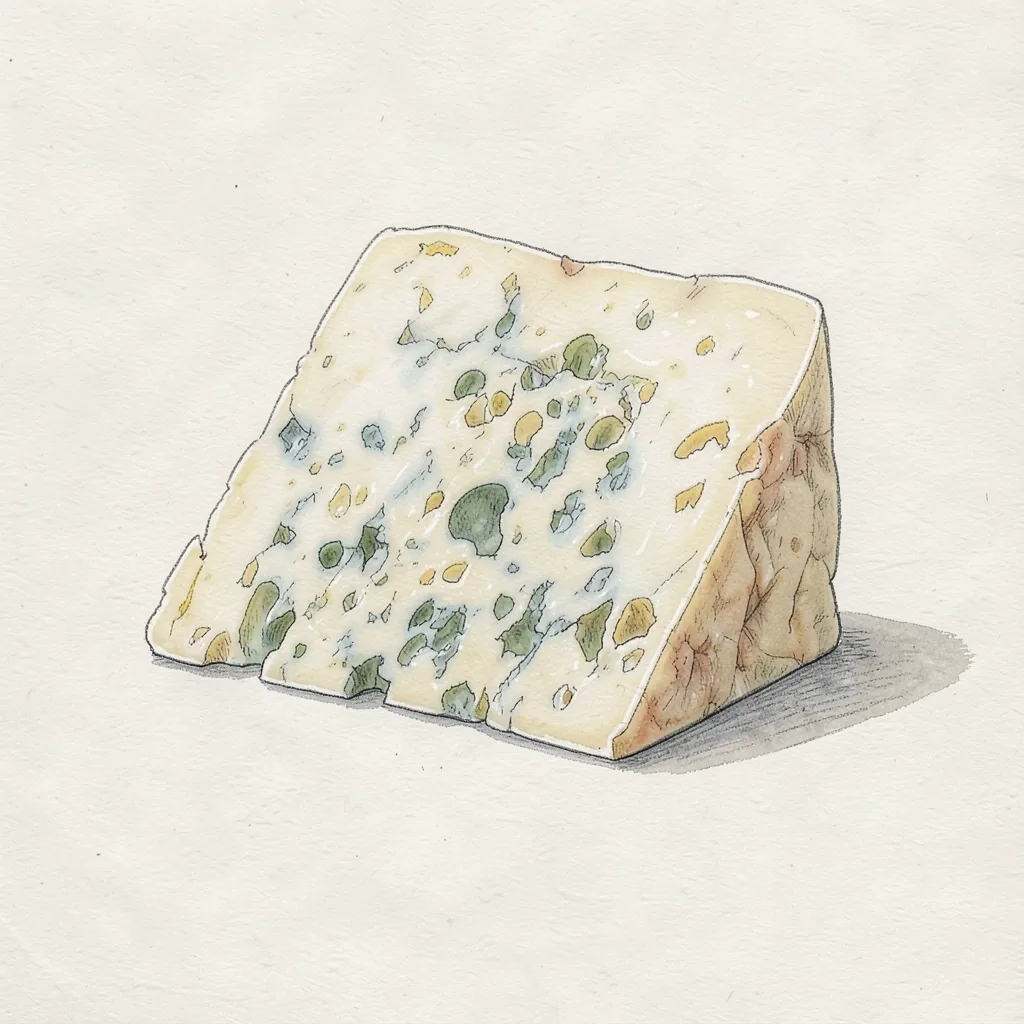
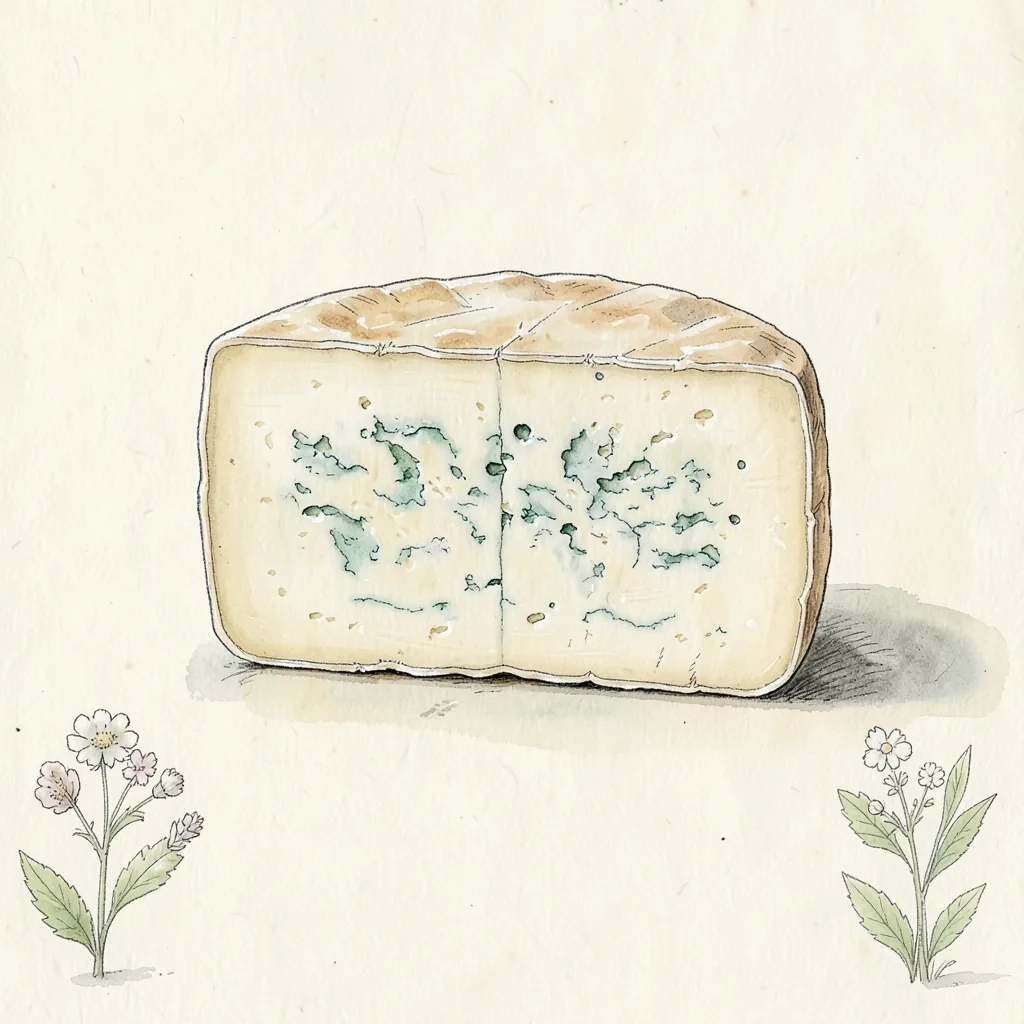
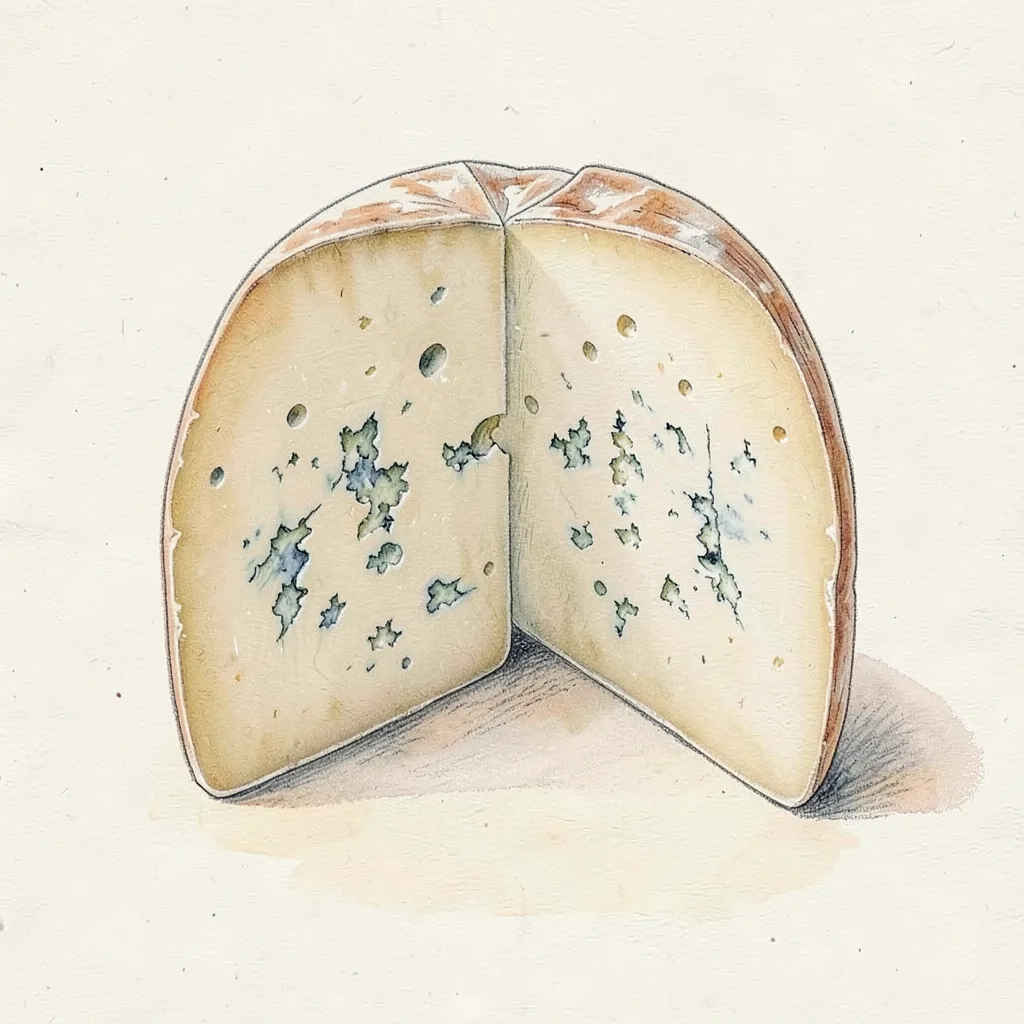
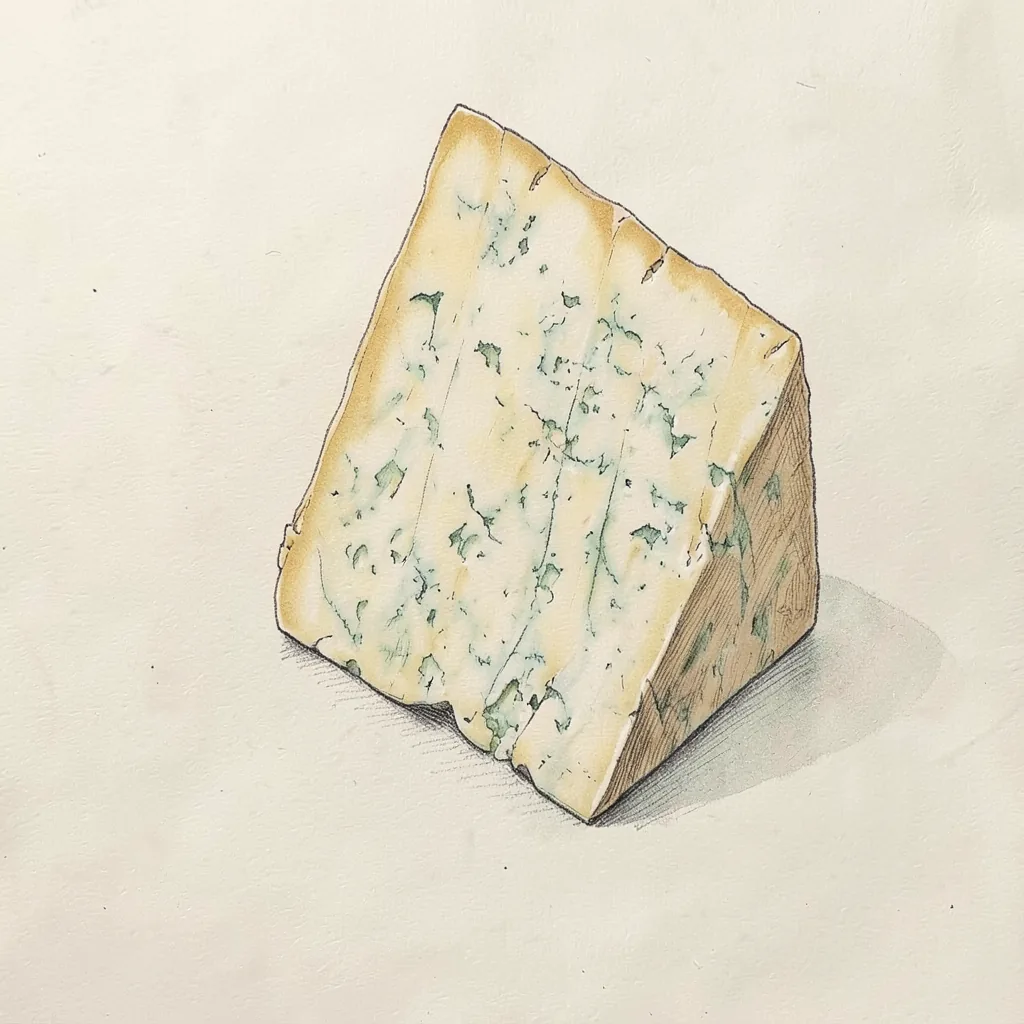
It is often set beside Roquefort in style, because both are sheep's milk cheeses with blue veins, but it is its own farmhouse wheel. The paste is creamy and ivory, with blue-green lines through it. A natural rind may show white, blue, and gray mold before the cheese is wrapped for sale. The taste is salty, rich, and tangy, and it changes with the season and the length of aging.
Sheep's milk gives the cheese a fullness that cow's milk blues do not copy exactly. Younger pieces are milder and more saline, with a fresh dairy sweetness under the mold. Older pieces turn stronger, earthier, and more pungent. The body is moist enough to crumble, and it can also be sliced if the piece is cool and firm. Vegetarian rennet is part of the usual make, and the cheese is sold through cheese shops rather than as a mass-market block.
History
Lanark Blue is a modern Scottish farmhouse cheese, made to revive sheep's milk blue cheese in Britain. Sheep dairying had largely faded, and blue cheese in the United Kingdom was better known from cow's milk. This wheel brought raw ewe's milk and blue mold back together on one farm. It was not copied from a factory recipe, and it did not become a supermarket brand. The flock and the make stayed close together, which is why batches can differ through the year.
The cheese built its reputation among British farmhouse cheeses in the years after it first appeared. Buyers who wanted a sheep's milk blue, rather than Stilton, had a domestic choice. The make uses milk from the producer's own ewes, which graze through the season. That link between flock and vat is the fact that shapes the flavor. Quality depends on the farm and the cellar, and batches are not forced to taste identical.
How it is made
Raw sheep's milk is warmed gently, and a blue mold culture is added. Vegetarian rennet sets the curd. The curd is cut and stirred so whey drains, then it is ladled or filled into molds. The cheese is not pressed hard. It is salted, often with a brine dip, and then left to rest so the mold can take hold on the surface and inside.
Piercing lets oxygen into the paste, and the blue veins grow along those paths. The cheese ages until the maker judges the texture creamy and the flavor ready. Early-season wheels are often sold milder, while wheels kept longer become stronger and more pungent. Foil may wrap the cheese late in aging to limit extra surface mold. The result is a moist blue, not a dry grating cheese.
Taste
Expect salt, cream, and a sharp tang together. The sheep's milk adds a rich, slightly sweet base that the blue mold cuts through. Ivory paste and blue-green veins look clear when the wedge is cut. The rind side can taste moldier than the center, so trim it if you want only the paste. A winter piece is often bolder than a piece from early in the milking season, but both are the same cheese at different moments.
The style is semi-hard, but the paste stays moist enough to feel creamy. Crumble it and the paste breaks moist, not dusty. The flavor can be earthy, with a clean salty finish if the cheese is in good condition. Ammonia or a dry brown edge means the piece is tired. At its best the tang is bright, not bitter, and a short rest out of the cold lets the sheep's milk richness show.
In the kitchen
Crumble Lanark Blue over salad, roasted vegetables, or a warm grain dish. The salt and tang season the food, so use a light hand with extra salt. It can melt into a sauce for steak or mushrooms, the way other blues do. On a board, pair it with honey, pear, or a plain oatcake so the sheep's milk can be tasted. A sweet wine or a sturdy red is a common match, and portions should stay small because the flavor is concentrated.
Do not grate it like a hard cheese, and do not expect it to brown on a grill the way halloumi does. Heat should be short if you cook with it. Stir a crumble into hot pasta off the flame so it softens without splitting. A little goes into butter for a steak sauce. If the wedge is very pungent, mix it with a milder cheese or with cream so the dish stays balanced.
Around the world
Lanark Blue is a British specialty, easiest to find in the United Kingdom and through cheesemongers who import raw-milk farmhouse cheese. It is not a global commodity wheel. Fans compare it with Roquefort because of the sheep's milk and the blue veins, then notice a different salt and a different sweetness. Beenleigh Blue, from England, is another sheep's milk blue that shoppers set beside it. The two are relatives in style, not the same make.
Outside Britain, availability depends on importers and on rules about raw-milk cheese. Where it cannot be sold, Roquefort is the usual sheep's milk stand-in. Where a British blue is wanted and Lanark Blue is missing, another domestic sheep or cow blue may fill the plate, with a change in richness. Read the milk on the label before you swap. Sheep's milk is the point of this cheese, and a cow's milk blue will not fully replace it.