Cow
What it is
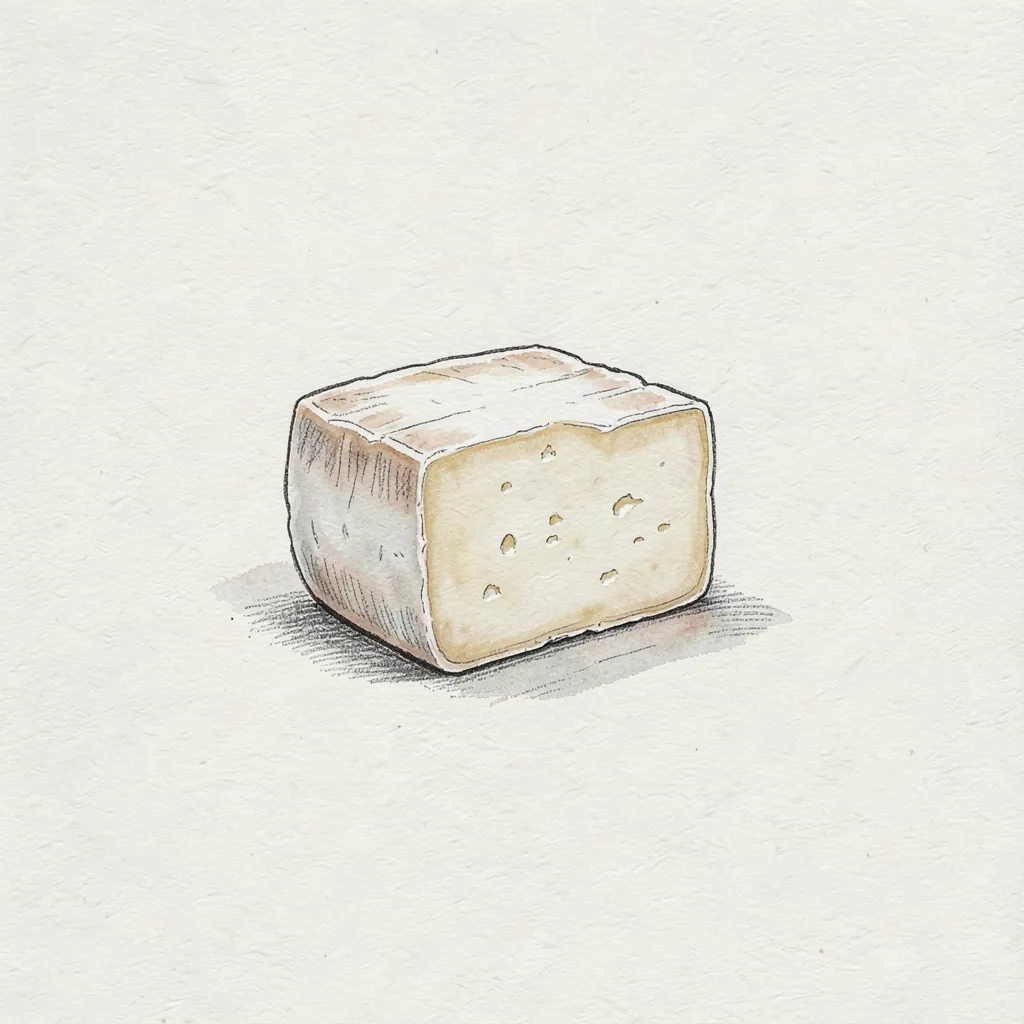
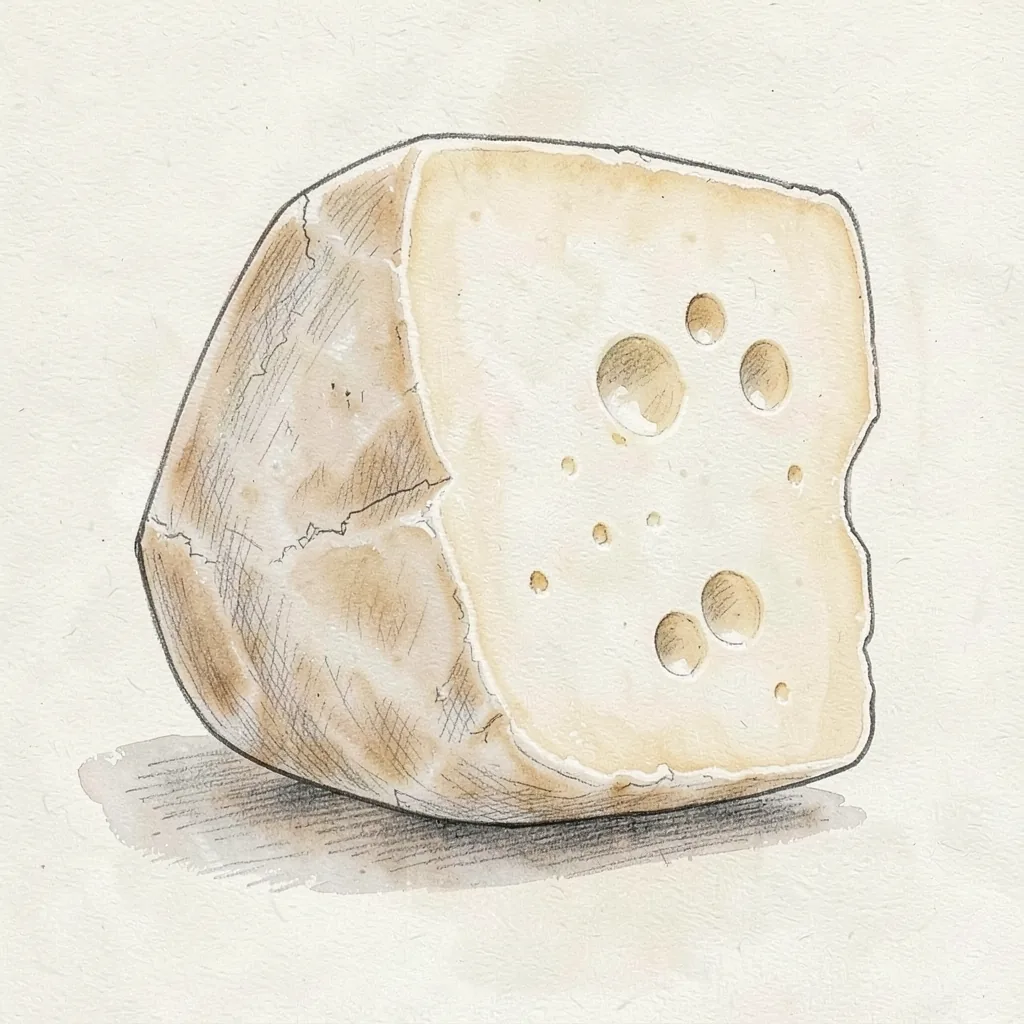
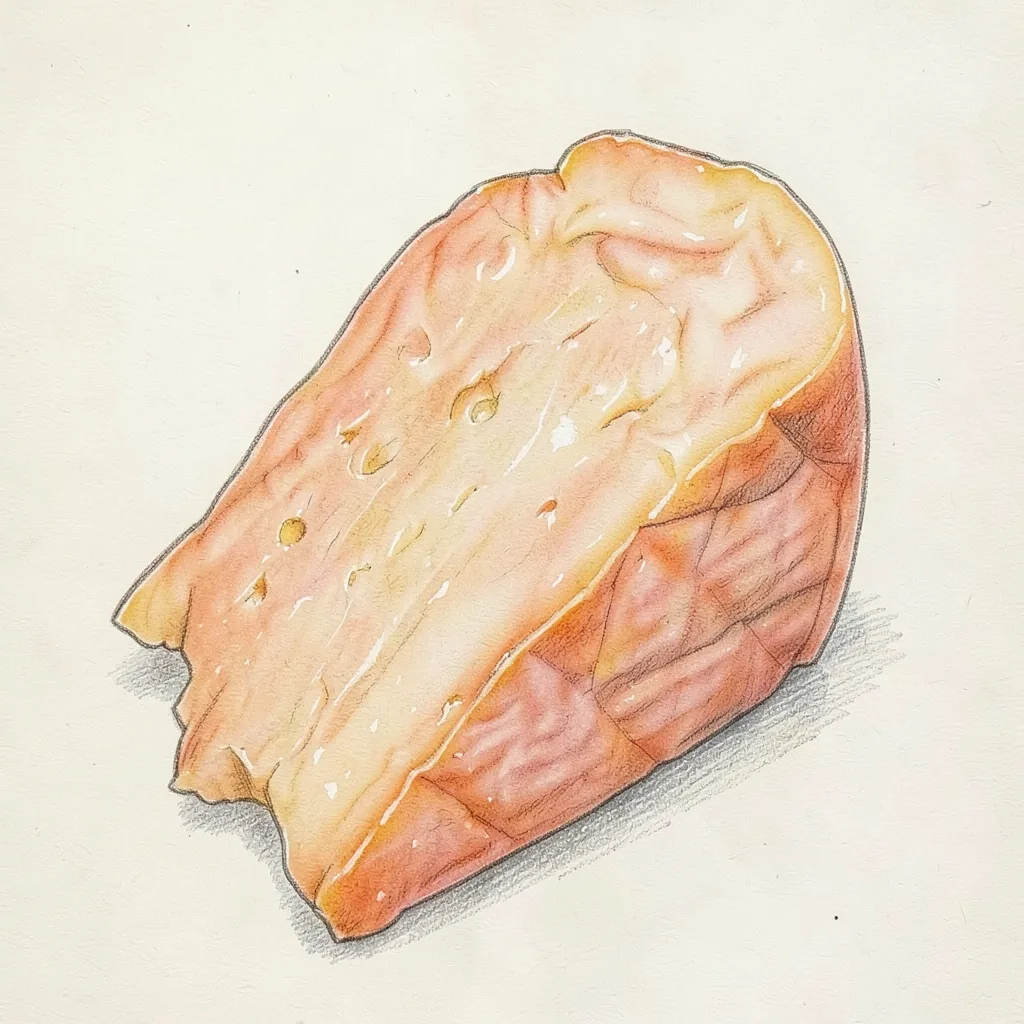
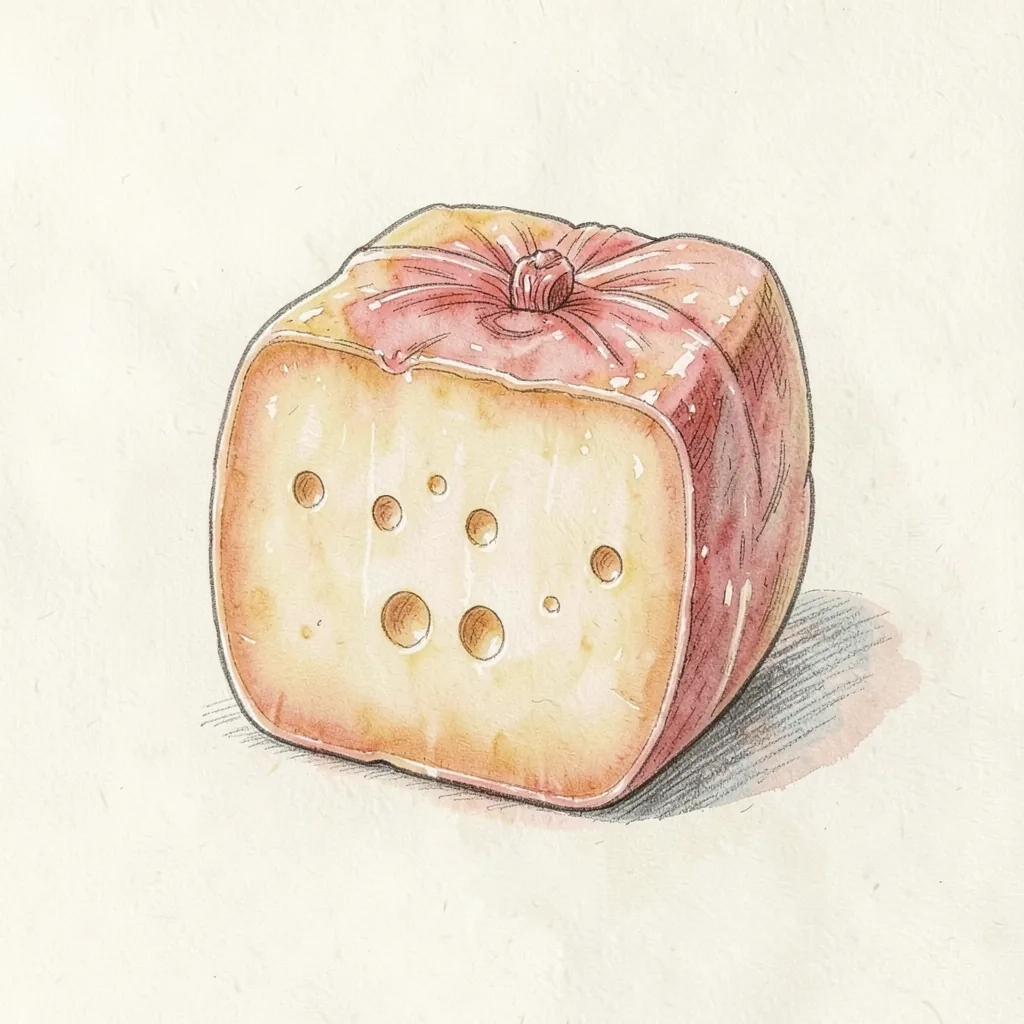
The interior is pale yellow to cream, and the outside is often orange from annatto. It slices cleanly and melts well, which made it a deli cheese rather than a long-aged wheel. The American cheese is calm in smell and taste. It should not be confused with French Munster, a washed-rind cheese with a much stronger aroma.
Blocks and deli slices are the usual forms. The paste is smooth, with small openings or none at all, and it bends rather than crumbles. Young cheese is the point, so buyers do not look for crystals or a dry edge. Sandwiches, burgers, and grilled melts are where most of it goes. A plain slice has a light tang and a buttery feel, then gets richer when warm.
History
American Muenster developed as a mild cow's-milk cheese for the deli case, inspired by European washed-rind cheeses but made in a gentler style. Dairies in the United States shaped it into blocks that slice neatly for sandwiches. The orange exterior became a visual cue on the deli counter. The name traveled, while the smell and the rind did not stay the same as in France. That split is the main fact in its history.
French Munster is an old washed-rind cheese with a sticky surface and a forceful smell. The American cheese kept a similar spelling and dropped that aging habit. Shoppers who buy by name alone can bring home the wrong one. Labels that say Muenster and show a mild orange block are the American cheese. Labels that describe a washed rind from France are the other cheese.
How it is made
Cow's milk is set, cut, and stirred, then the curd is drained and salted. The curd goes into forms and is pressed lightly, which gives a supple body rather than a hard wheel. Annatto is used to color the outside, and sometimes the paste, a warm orange. The cheese is not washed until a strong cellar smell develops. Aging is short, so the result stays mild and moist.
After the brief rest, the block is cut and wrapped for deli sale or packed in slices. There is no bloomy white rind and no blue veining. Moisture stays high, which is why the slice bends and melts. Makers aim for the same mild flavor from batch to batch. A stronger, stickier wheel sold under the French name is made by a different path.
Taste
The flavor is mild, milky, and lightly tangy, with a buttered note and very little bite. Salt is present but not sharp, and there is no bitter rind. The orange face does not taste like the color, because annatto is gentle on the tongue. Cold slices are smooth, slightly elastic, and easy to eat in a thick piece. Nothing in the aroma should be strong or sharp when you open the pack.
When warmed, the cheese tastes a little nuttier and much richer. It still will not taste like an aged alpine cheese or like French Munster. If a slice smells of ammonia or yeast, it has sat too long. A good piece smells faintly of fresh dairy and clean salt. The mildness is the feature, not a flaw, and recipes rely on that quiet flavor.
In the kitchen
Deli sandwiches are the home ground, especially with mustard, turkey, or a slice of tomato. The cheese melts across burgers, tuna melts, and grilled bread without turning oily at once. It can be cubed into a mild casserole or laid over potatoes. Because the taste is quiet, it will not hide a strong bread or a sharp pickle. It is less interesting alone on a cracker than a firmer, older cheese.
Grate or tear it into scrambled eggs, or tuck it into a quesadilla with a brighter cheese if you want more flavor. It browns softly rather than forming a hard crust. Pair it with caraway rye, apple, or a sweet onion. Do not use it where a recipe needs a salty grating cheese. For a pungent washed-rind experience, buy French Munster instead and keep this block for melting.
Around the world
In the United States, Muenster is an ordinary deli cheese, sold beside other mild sandwich slices. Travelers from Europe sometimes expect the French cheese and are surprised by the mild block. The spelling Muenster is a hint, but it is not a guarantee, because English menus mix the names. Asking whether the cheese is mild or washed-rind solves the mix-up. Outside the United States the American block is less common than the French wheel.
Where the American cheese is unavailable, Havarti or a young Monterey Jack can cover a sandwich or a melt. Brick cheese is another mild American cousin with a similar deli role. French Munster is not a fair swap in a mild recipe, because the smell will dominate the plate. Butterkäse is softer and a bit tangier, but it melts in a related way. Match the mildness first, then the melt.