Cow
What it is
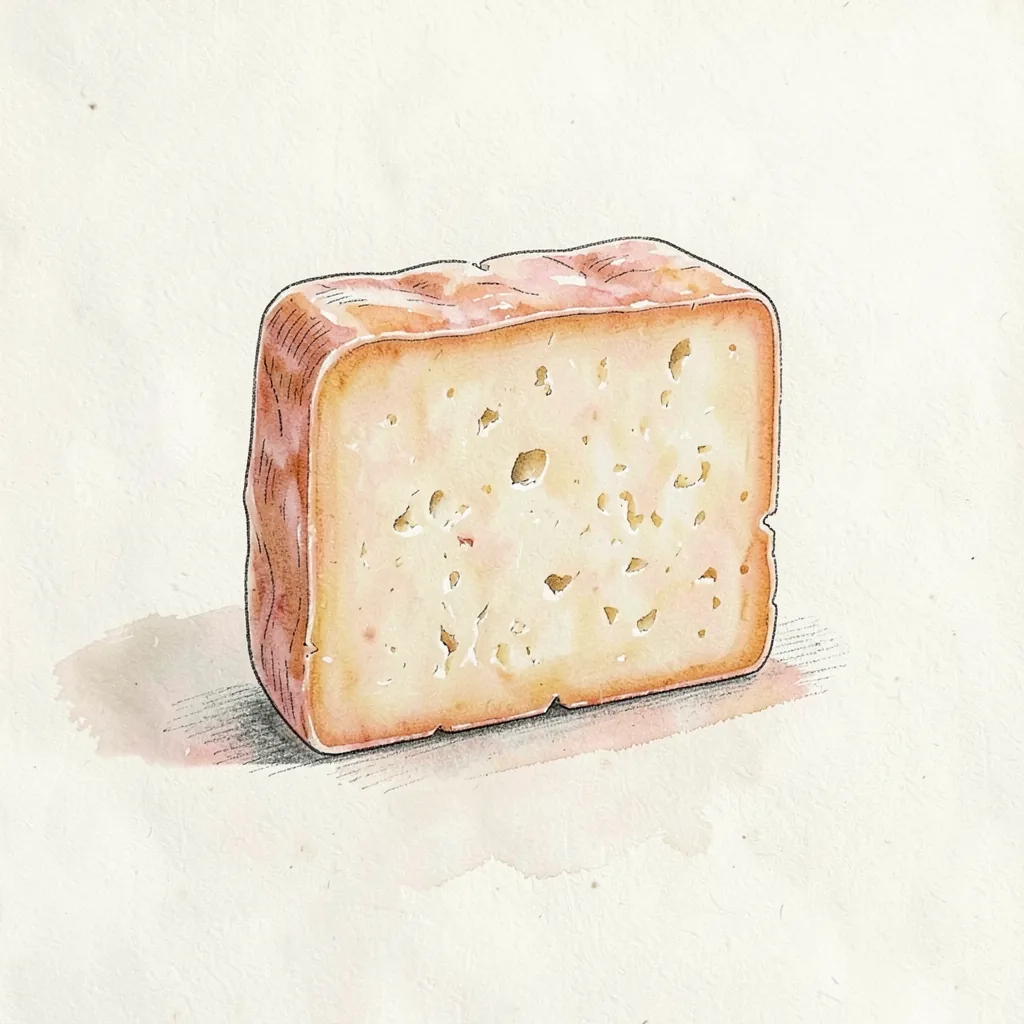
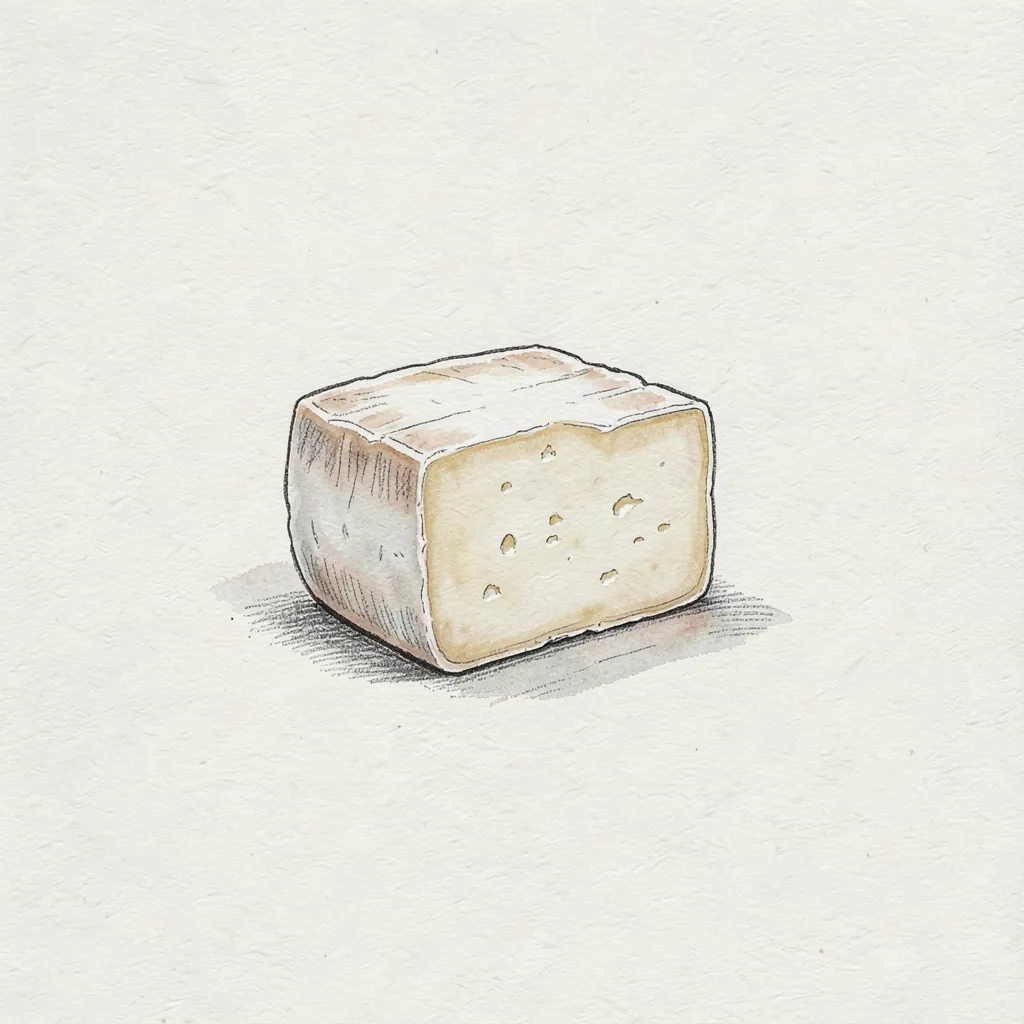
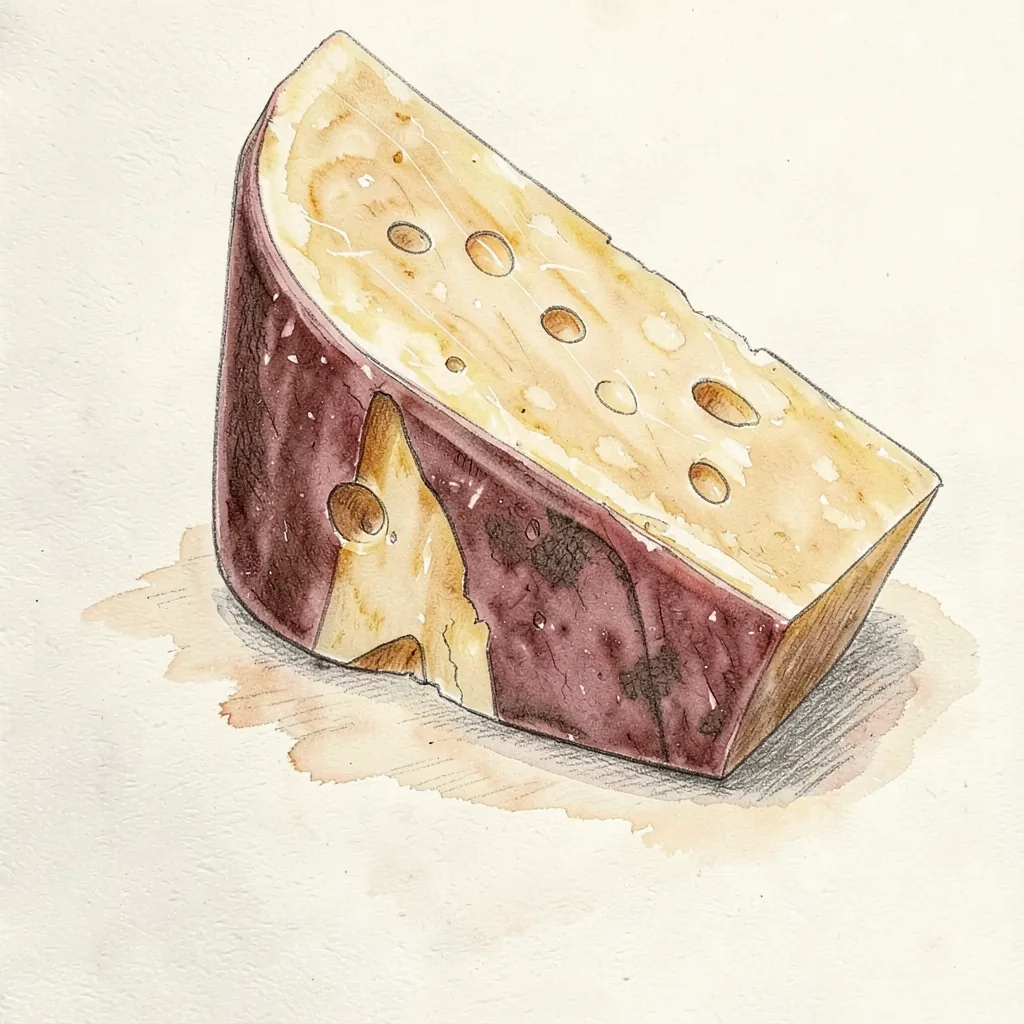
English labels use that plain name, and Russian speakers call it Rossiysky syr. Dairies across the country make it from pasteurized milk, so it is a style, not the product of one farm. The paste is pale yellow, elastic, and dotted with small irregular holes. A wax coat or a tight film usually covers the outside.
The taste is clean, milky, and a little sour, with enough salt for a sandwich. It is often compared with German Tilsit, which is the usual reference point for the style. The texture is similar, but classic Tilsit has a washed rind and a stronger smell. Russian cheese stays milder and keeps a smooth coated surface. It is an everyday table cheese and a melting cheese.
History
Russian cheese took shape as a dairy product for wide manufacture, not as a single farmhouse wheel tied to one valley. The method sits near the Tilsit family of semi-hard cheeses, which were already known in this part of Europe. Factories could make a reliable slicing cheese from pasteurized cow's milk. The name Rossiysky simply means Russian. It describes the type, and more than one producer may use it.
After the type was set, dairies in Russia and in neighboring countries kept making it for daily use. It became a standard piece in shops, next to other mild semi-hard cheeses. There is no exclusive owner of the name in ordinary trade. Quality still varies with the milk and the care in the vat. A good piece is even in color, lightly sour, and free of cracks or a bitter rind taste.
How it is made
Pasteurized cow's milk is warmed with lactic cultures and rennet. The curd is cut and stirred, and it is heated enough to make the grains supple, not cooked into a very dry hard cheese. Makers handle the grains so small gaps stay between them. Those gaps become the irregular holes you see when the cheese is cut. That open pattern is from the curd, not from a strong gas-producing culture.
The curd is salted, pressed into wheels or blocks, and left to mature until the sour note is clean and the paste is elastic. A wax coating or a sealed film takes the place of a washed rind. Some winter makes use a plant coloring so the paste stays yellow when the milk is paler. There are no added herbs in the standard cheese. The finished piece slices without crumbling.
Taste
Russian cheese tastes of fresh milk, butter, and a distinct but gentle sourness. Salt is moderate, and there is sometimes a faint nutty echo. The smell is clean and dairy-like, not pungent like a washed-rind cheese. The paste is smooth, springy, and a little moist, with small holes of uneven shape. Color runs from off-white to light yellow and should look even.
A young piece is the mildest and the most supple. Further maturation makes the sour note clearer and the paste a bit firmer, without turning it into a grating cheese. It should not taste bitter, yeasty, or of ammonia. If the smell is sharp and the rind is sticky and orange, you are likely holding a washed cheese such as Tilsit, not this style. The wax or film is packaging, not a flavor rind.
In the kitchen
Slice Russian cheese for bread, butter, and simple open sandwiches. It is mild enough for breakfast and sturdy enough for a lunch plate with cucumber or tomato. Cubes sit well on a board next to fruit that is not too sweet. In a pan it melts smoothly for a grilled sandwich, a sauce, or a casserole. It browns, but it does not form long stretchy strands.
Because the cheese is already a little sour and salty, taste the dish before you season it again. It can replace a mild melting cheese in potatoes, eggs, or a vegetable bake. Do not expect the pungent kick of a washed rind. Keep it wrapped in the refrigerator, and let a slice lose its chill before a board tasting. If the surface dries, trim that edge and use the moist paste.
Around the world
Russian cheese is common in Russia and in several neighboring countries, where shoppers treat it as ordinary dairy food. Abroad, it appears in markets that import foods from that region, sometimes under the name Rossiysky. Packaging may be a waxed wheel or a vacuum block. Either form should show small holes and a pale, even paste. A strong orange rind means a different cheese has been packed in its place.
Tilsit is the closest famous relative, and the one most likely to be offered as a substitute. Use it if you can accept a stronger washed-rind smell. Havarti is a milder stand-in for sandwiches and melts, with a similar supple bite. Gouda can fill the role when it is young and not too sweet, though its flavor is rounder. None of those copies is a perfect match for the light sour note of Russian cheese.