Cow
What it is
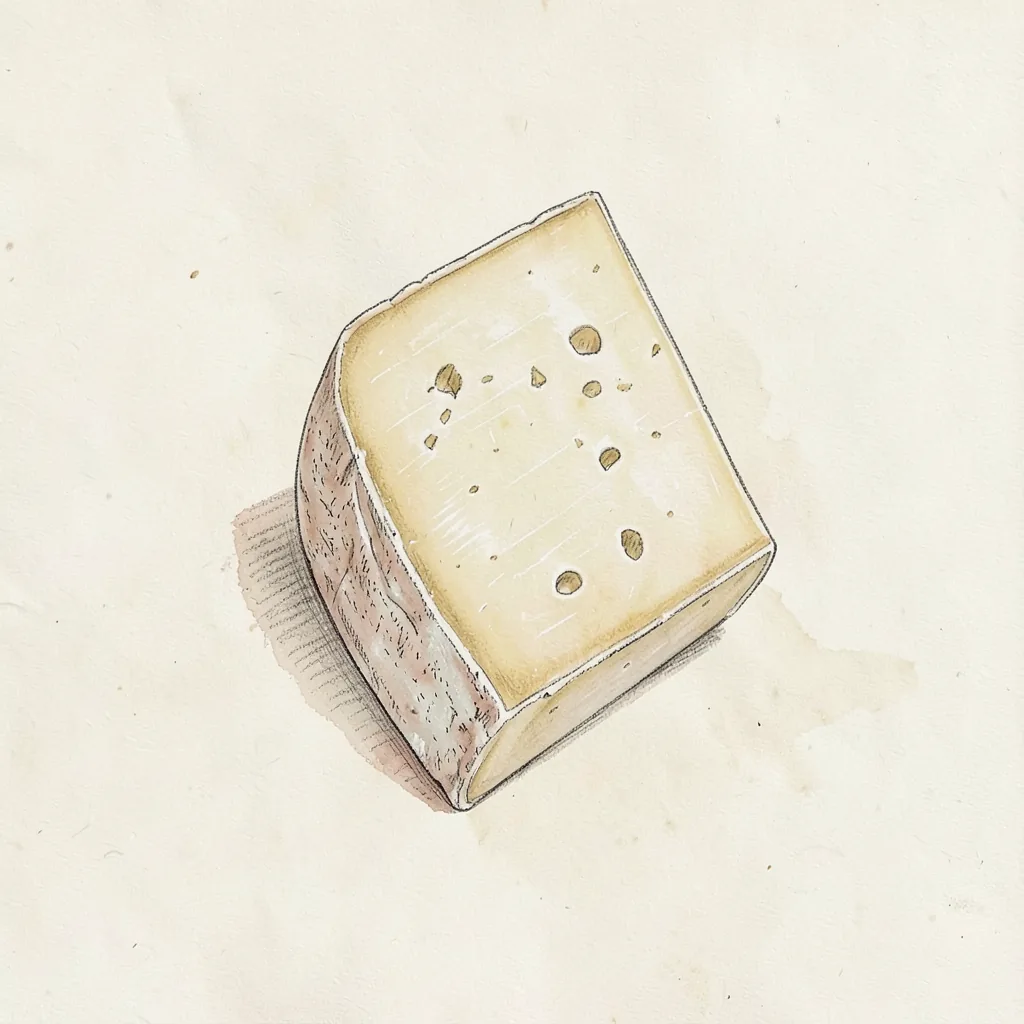
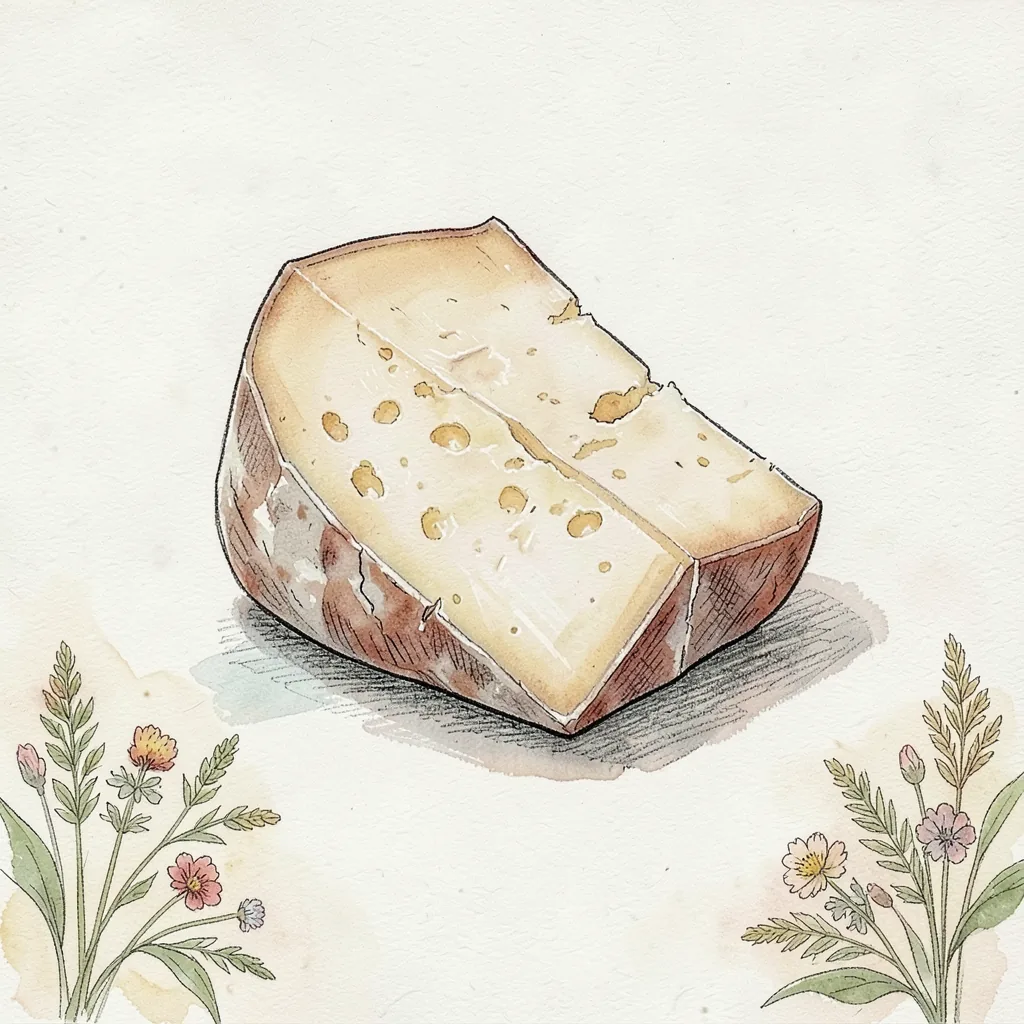
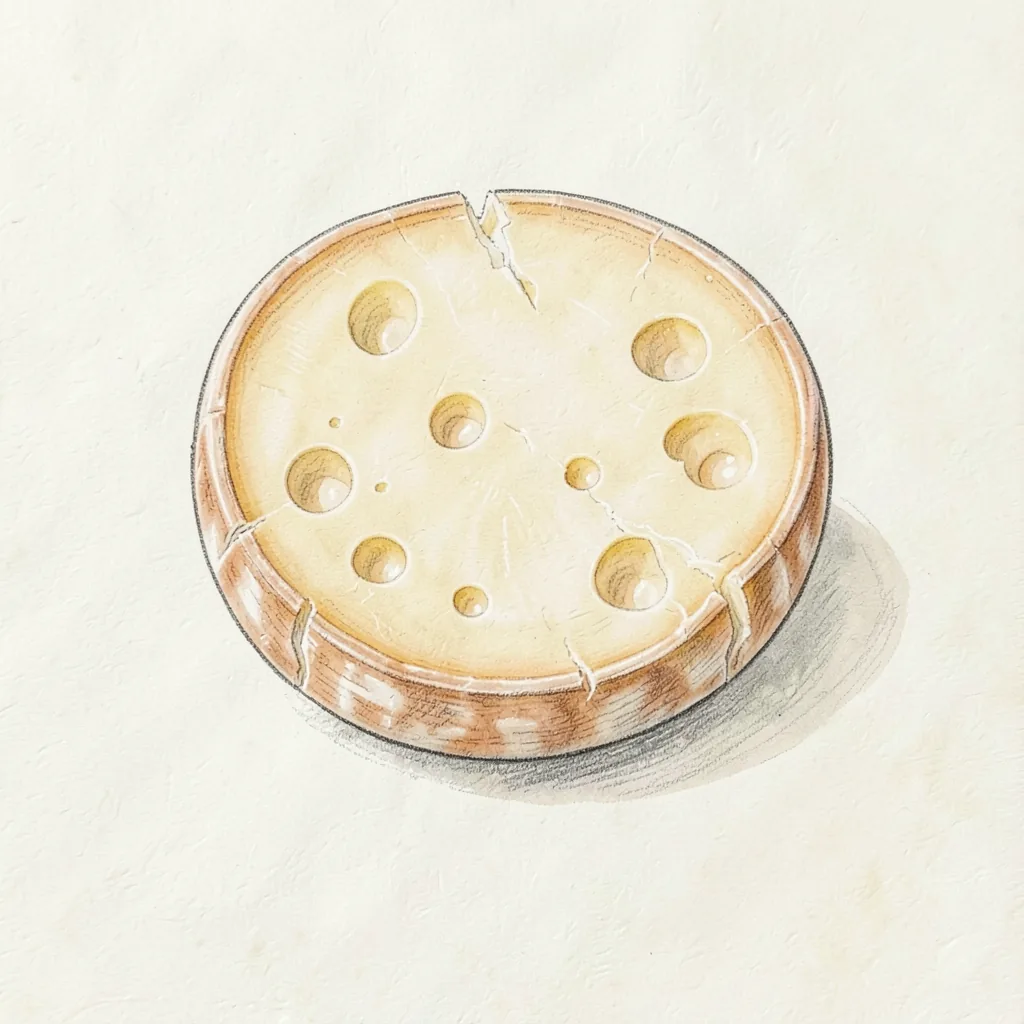
It belongs to the Aosta Valley, the mountain region named in the title, where herds feed on high grass. Makers partly skim the milk, so the wheel is leaner than many alpine cheeses. The paste is semi-hard, compact, and marked with small or medium eyes. A natural rind runs from straw color toward gray, sometimes with a reddish cast.
Fromadzo is the local word for cheese, so the name is both a place and a plain description. The valley already has a famous rich cheese in Fontina, and Fromadzo is the leaner partner. Makers offer a medium-fat wheel and a leaner wheel, and some batches include mountain herbs such as juniper or wild cumin. A younger wheel is a table cheese with a mild, milky scent. An older wheel turns more savory and can be grated or cooked.
History
Fromadzo comes from a mountain habit of skimming milk before cheesemaking, which left more cream for butter and a leaner cheese for the cellar. Herders in the Aosta Valley kept that practice because the high pastures gave a short, rich season of milk. The cheese took the local word for cheese as its name, which ties it tightly to the valley. Over time it stood beside Fontina rather than in its shadow. One is buttery and supple, and the other is firmer and less fatty.
The name is now protected, which means a wheel sold as Valle d'Aosta Fromadzo must come from that valley and follow the set method. Protection covers more than one style under that single name. There is a medium-fat cheese, a leaner cheese, and versions that add aromatic herbs. French speakers know the same cheese as Vallée d'Aoste Fromadzo. The protected name is what separates it from other lean mountain wheels made outside the valley.
How it is made
Cheesemakers collect cow's milk from at least two milkings and let it stand so cream can rise. They remove more cream for the lean style than for the medium-fat style. The milk is warmed, set with natural rennet, and may receive local lactic cultures. The curd is cut, placed in molds, and turned several times while it is lightly pressed. Salt goes on dry or in brine, and the rind is wiped during the rest.
Aging happens in humid cellar rooms, and the wheel stays there until the paste settles. A shorter rest leaves a milder cheese, and a longer rest deepens the flavor and firms the body. The rind stays natural, straw to gray, and can pick up a reddish tone. Herb versions mix in plants such as juniper or wild cumin before the cheese is formed. Summer milk, from cows on fresh mountain forage, gives the strongest herbal aroma.
Taste
Young Fromadzo tastes fragrant and gently sweet, with a clean smell of milk. The paste is white to pale straw and feels compact, not creamy in a thick way, because the milk was skimmed. Eyes are scattered and stay small or medium. With age the color deepens, the taste grows stronger, and a light salt note appears. Some older wheels add a small sharp edge that never becomes harsh.
Mountain herbs show most clearly in summer wheels and in the batches made with juniper or wild cumin. Those versions smell greener and taste a little more resinous or seed-like. The lean style tastes drier and more direct than the medium-fat style. Neither style is bitter as a rule, and both stay milder than a long-aged grating cheese. The rind can taste saltier than the paste, so many people trim it before serving.
In the kitchen
Use a young wedge on a board with bread, apples, and nuts, or cube it into a salad. It also melts gently into polenta, soup, or a vegetable bake without flooding the dish with fat. An older piece can be grated over pasta, risotto, or roasted roots. Because the cheese is lean, it browns rather than oiling out when you heat it. Pair it with a light mountain red or a dry white from the same valley.
Do not treat Fromadzo as a swap for Fontina in every recipe. Fontina is richer and stretches more, while Fromadzo keeps a firmer, cleaner bite. Choose Fromadzo when you want mountain flavor without a heavy cream note. Herb wheels are best eaten plain, so the juniper or cumin stays easy to taste. A plain wheel is the better choice for cooking, where extra spices can clash.
Around the world
Valle d'Aosta Fromadzo is a regional Italian cheese, and outside the valley it is far less known than Fontina. Specialist shops in Europe and North America sometimes carry a wedge, usually the medium-fat wheel. The protected name should appear on the label in Italian or French. If the label only says mountain cheese, it is not this product. Ask for the valley name when you want the real wheel.
Cooks abroad can use Raschera or a young Asiago when Fromadzo is missing. Raschera is another lean pressed cheese from the western Alps, and Asiago brings a similar nutty board presence. Neither carries the Aosta name, and neither will taste of the valley's herbs in the same way. If you do find a true wheel, keep it cold and let it lose its chill before serving. A herb-flecked piece is a conversation cheese, while a plain aged piece earns a place at the stove.