Cow
What it is
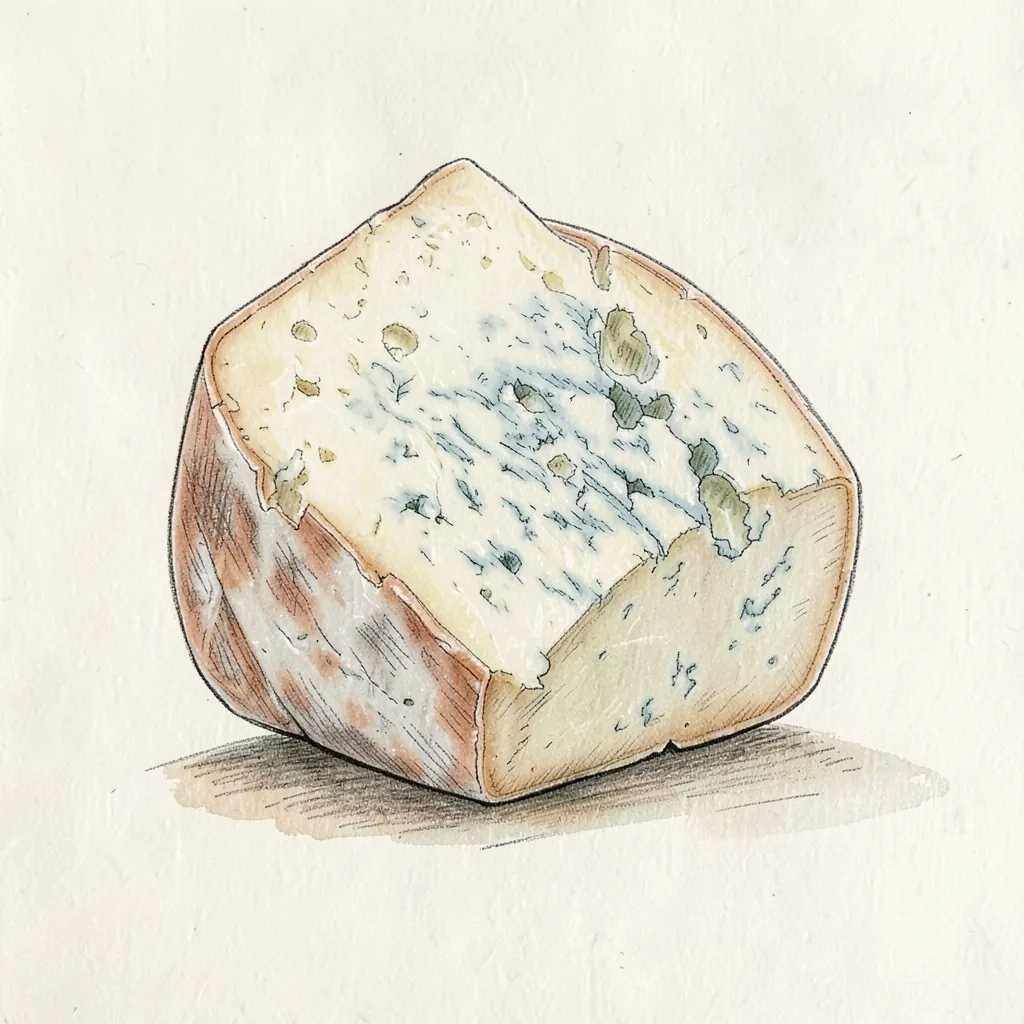
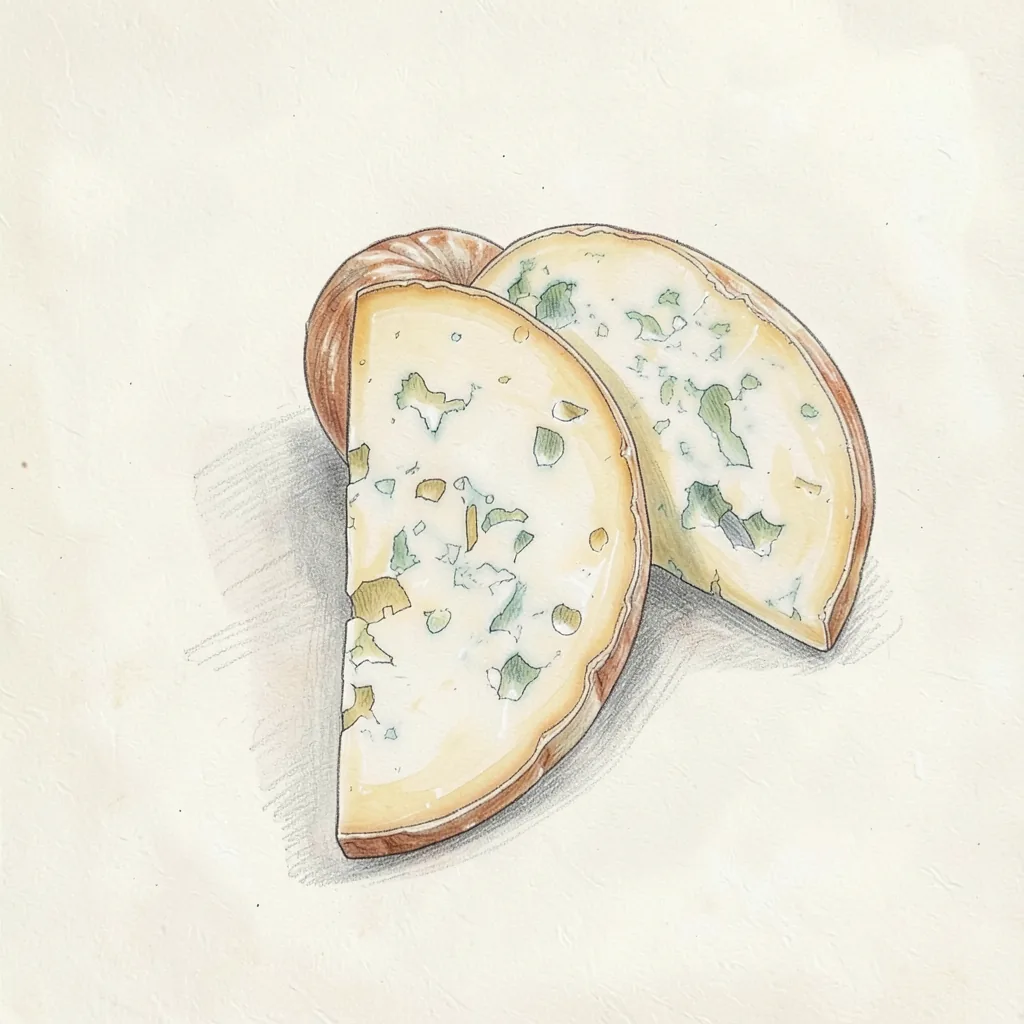
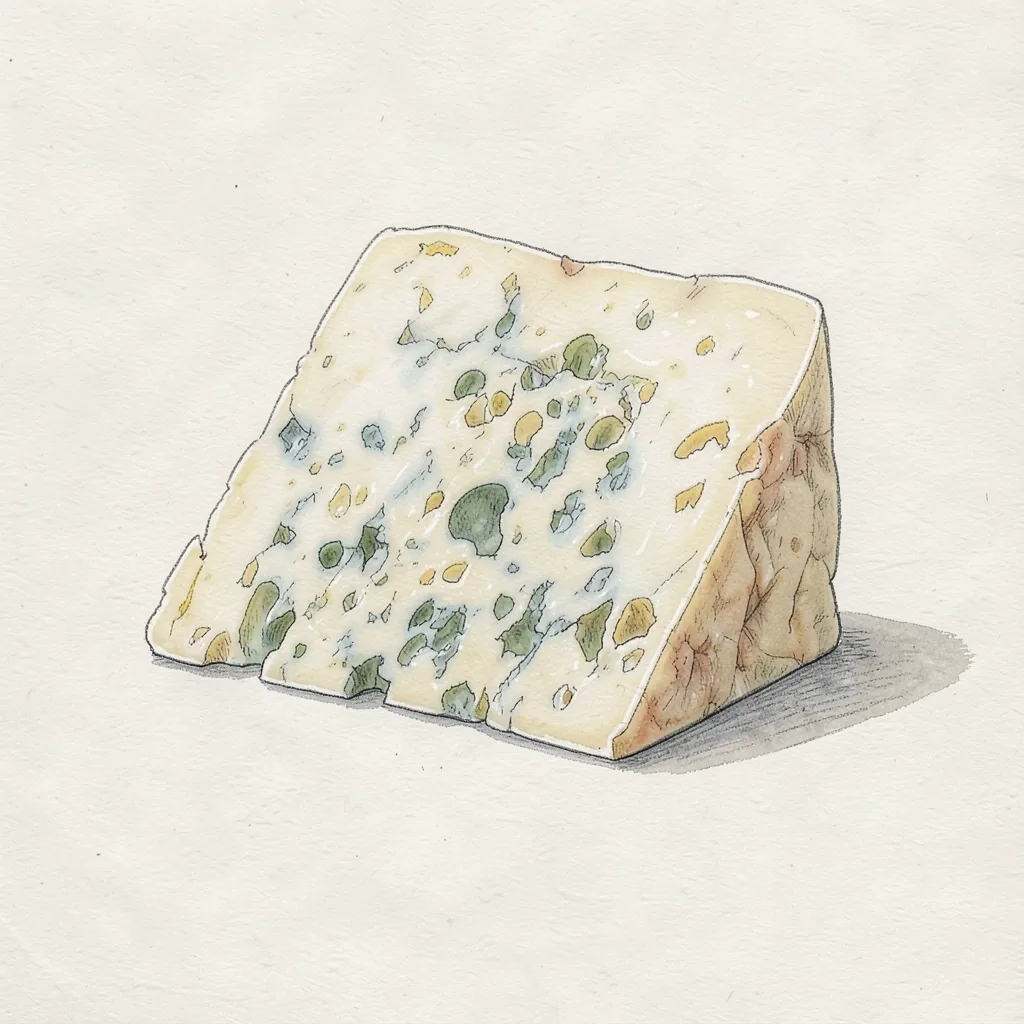
The paste is ivory to pale yellow, moist, and threaded with blue green veins. A natural rind covers a flat cylinder that shops cut into wedges. The flavor is savory and clearly blue, and many people find it gentler than a very sharp sheep's milk blue. It is ripened in the natural caves of the limestone causses, and those caves are part of its identity.
People often set this cheese beside Roquefort, because both ripen in the cave country of southern France. The milk is the clear difference. Bleu des Causses uses cow's milk, while Roquefort uses sheep's milk, and the cow's milk cheese is often milder and a little sweeter. The texture leans creamy and melting rather than dry and crumbly. It is sold in ordinary French cheese shops, and it works on a board and in the kitchen.
History
Blue cheese has a long place on the limestone causses of southern France, where natural caves stay cool and damp. Bleu des Causses is the cow's milk blue that grew from that cave practice in Midi-Pyrénées. Sheep's milk blues and cow's milk blues once shared cellars more freely, and the styles later became easier to tell apart. The name points to the causses, the limestone plateaus, rather than to one farm. The region given for the cheese is Midi-Pyrénées.
The wheels stay tied to caves in the fallen limestone, where cracks in the rock let moist air move through. That air helps the blue mold spread inside the paste. Makers pierce the cheeses so the mold can breathe, then later wrap them so the mold slows and the paste turns softer. The result is a blue with a rustic name and a creamy body. It is less widely known than Roquefort, and production stays smaller.
How it is made
Whole cow's milk is set with rennet, and spores of Penicillium roqueforti go in so the blue can grow later. The curd is cut and stirred until the grains round off and let whey out. Those grains are drained in molds to form flat cylinders. Salt is worked in, and the young cheeses are pierced with needles. The holes let air reach the interior, which is what the blue mold needs to develop veins.
The wheels then go into natural caves in the limestone causses of the region. Cool, moist air moves through fissures in the rock, and the blue develops in that draft. Once the veins are set, the cheeses are wrapped in foil so the mold slows and the paste can turn creamy. The rind stays natural. The milk may be raw or heat treated, depending on the maker, and the cave work shapes the flavor either way.
Taste
The taste is frank, salty, and blue, with a creamy feel on the tongue. A light bitterness can show, but a good wheel is not harshly sharp or burning. The smell suggests a damp cave, mushrooms, and sweet cow's milk rather than a fierce barnyard punch. The veins taste stronger than the ivory paste around them. Together they make a savory bite that still feels rich and full.
Texture is a large part of the pleasure, and the paste is moist and supple. It can soften further at room temperature, and it is less crumbly than a dry blue. Salt is easy to notice, so thin slices go further than thick slabs. The paste may look whiter in one season and a deeper ivory in another, while the veins stay blue green. The finish is long, clean, and a little tangy.
In the kitchen
Crumble Bleu des Causses over a green salad, or set wedges on a board with pear, walnuts, and bread. It melts into a sauce for steak or vegetables, and a little goes a long way because the blue is salty. It can fill an omelette or top a baked potato. Do not try to grate it like a hard cheese. Let it soften before serving so the creamy body has time to show.
On a cheese plate, put it beside a mild pressed cheese so the blue does not cover every other flavor. Sweet fruit, honey, and a slice of pear balance the salt. In cooking, add it near the end of the heat so it melts without turning grainy. It is sturdy enough for a packed lunch if you keep it cold. People who avoid very strong blues often accept this one, because the cow's milk paste stays rich rather than fierce.
Around the world
Outside France, Bleu des Causses is less common than Roquefort, Gorgonzola, or Stilton, but specialist shops do carry it. The name is sometimes confused with other French blues. Look for cow's milk and for a creamy, veined paste from Midi-Pyrénées. It is not a processed cheese, and it is not a fresh cheese. If a wedge smells only of ammonia and the paste is dry and brown, it is past its best.
Bleu d'Auvergne is the closest everyday substitute, another French cow's milk blue with a moist paste. Roquefort is the cheese people mix this one up with, but Roquefort is sheep's milk and usually sharper. Fourme d'Ambert is taller and often milder, with a more even blue. Gorgonzola can stand in when you need a creamy melt and cannot find this wedge. For a salad or a sauce, choose another natural blue rather than a mild block of cheddar.