Cow
What it is
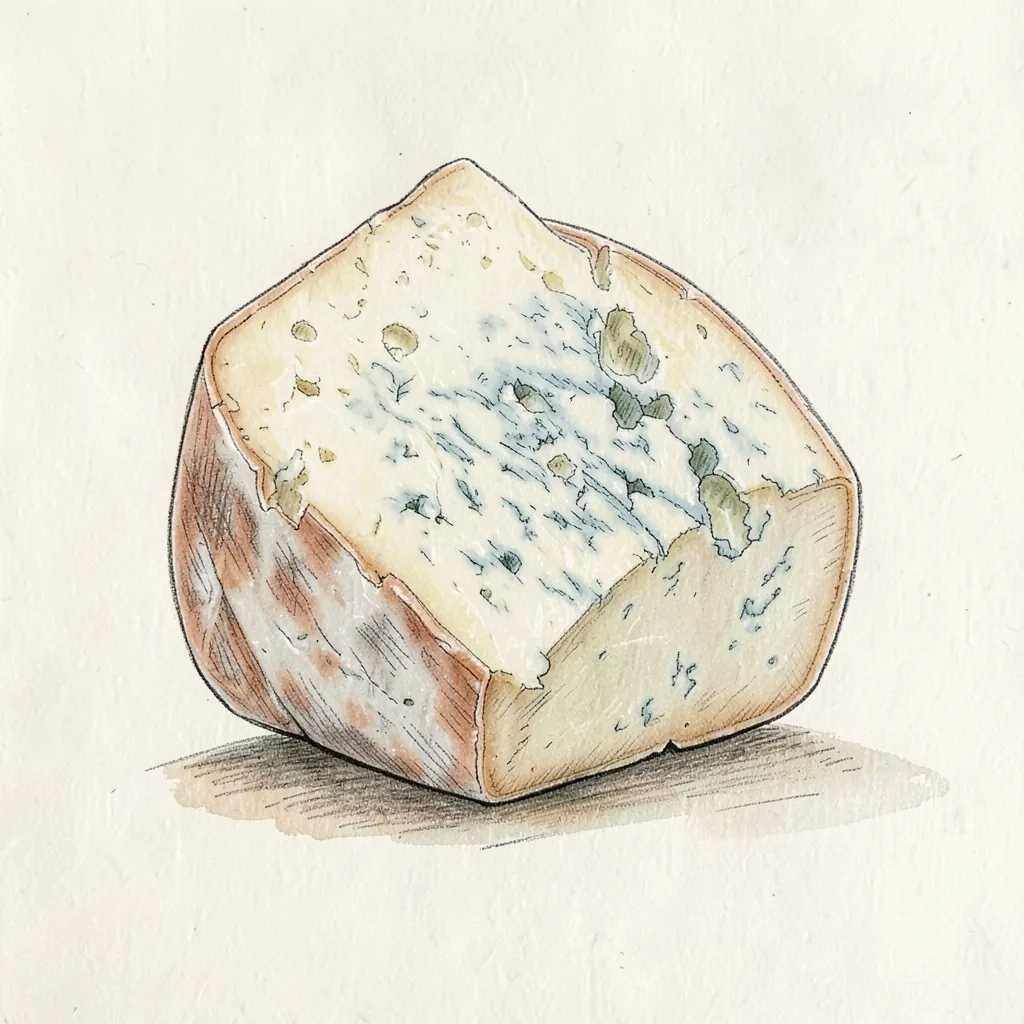
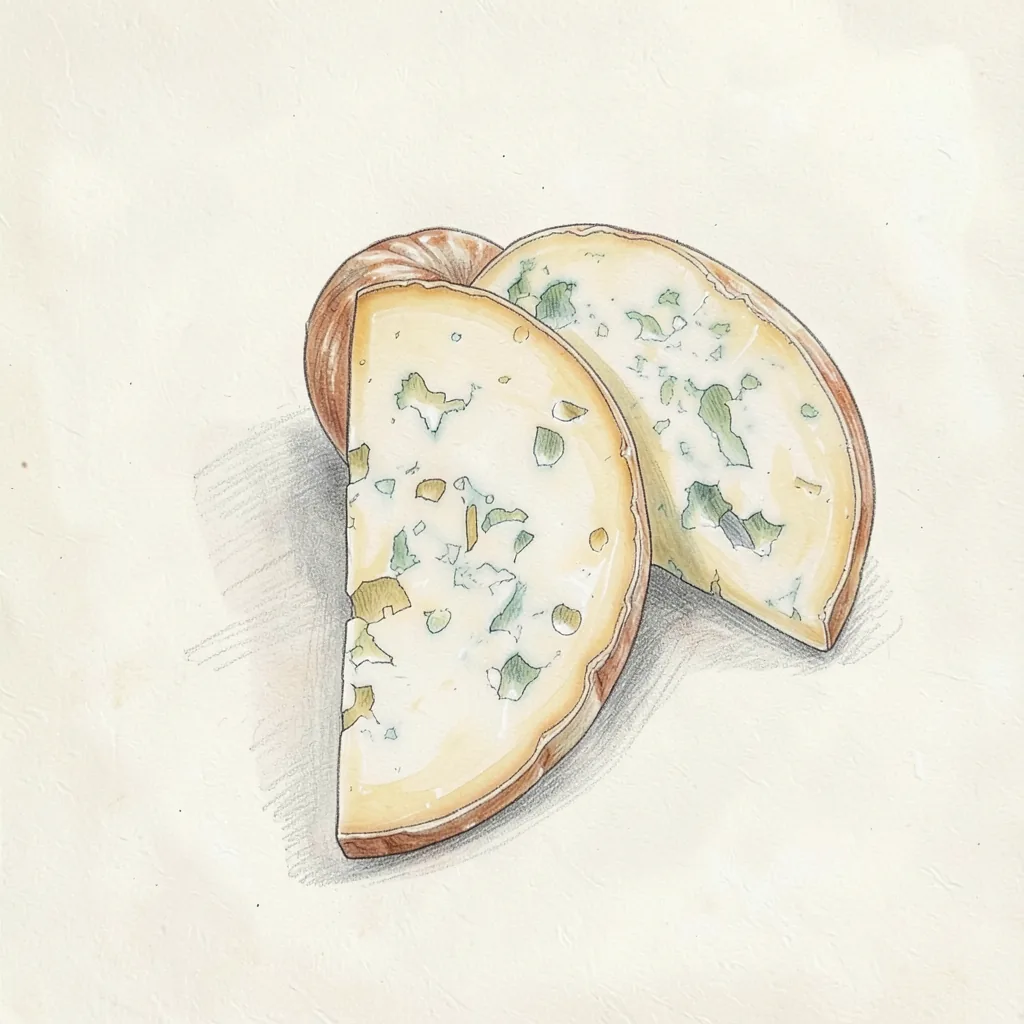
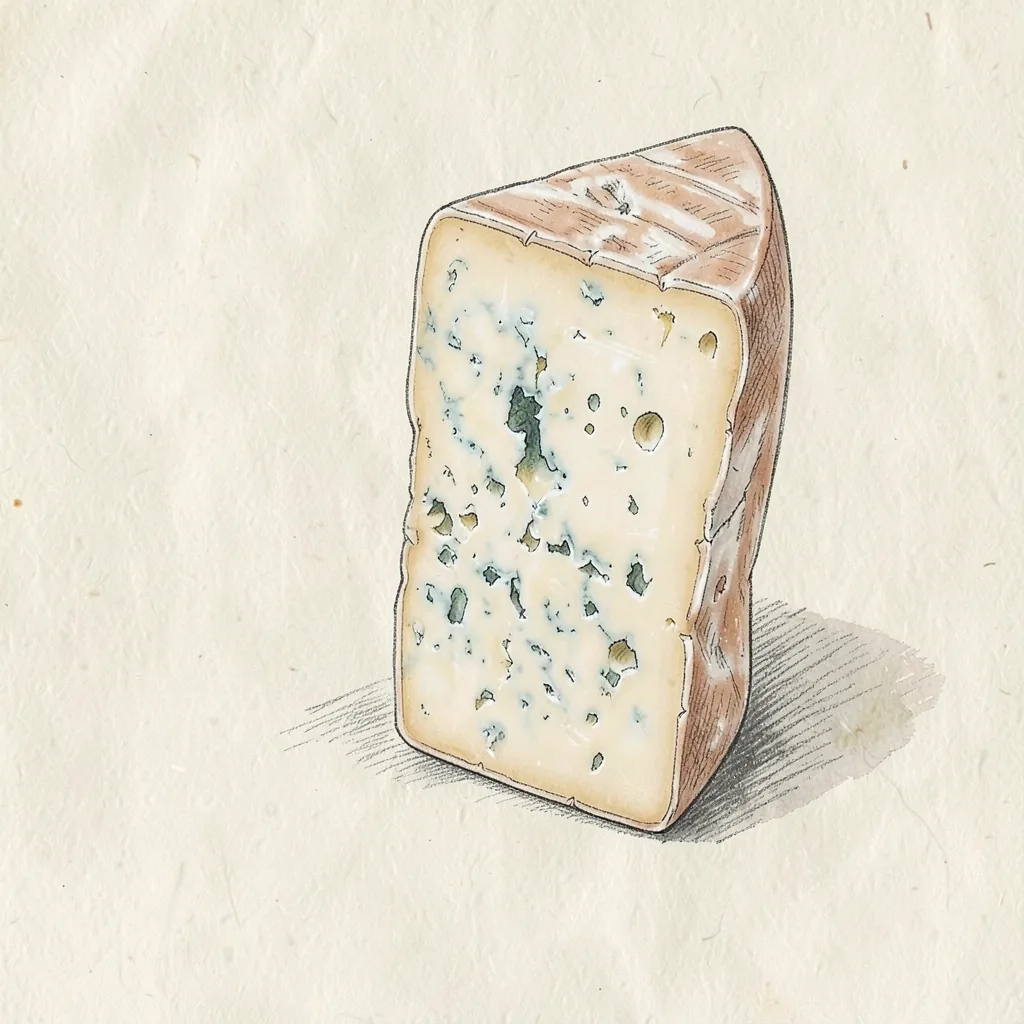
It is also called Bleu de Septmoncel or Bleu du Haut-Jura. The wheels are made from raw milk, and the word Gex is molded into one face. The paste is ivory, with pale blue-green veins rather than dark heavy marbling. A thin, dry rind runs from off-white to a light yellow.
The style is mild for a blue, not fierce. The taste is milky, a little salty, and lightly bitter, with mushroom and a faint sweet or spicy note. The body is supple and only slightly crumbly. It belongs on a board, in a salad, or melted over potatoes. People who avoid strong blues often find this wheel easier to enjoy at the table.
History
Bleu de Gex belongs to the mountain dairies of Franche-Comté, in the high country of the Jura. Herds of Montbéliarde cows, and sometimes French Simmental cows, supply the raw milk. The cheese took the name of Gex, and a second name, Bleu de Septmoncel, is still used. Makers mark a wheel by molding the word Gex into the rind. That stamp is the simple way to recognize a true wheel.
The make stayed a local blue while other French blues traveled farther. Production remains in the hands of a small group of dairies in Franche-Comté. The milk comes from cows fed on grass and hay in that mountain country. Wheels are still salted and turned by hand in the traditional way. The result is a blue with a quieter voice than many other French blues.
How it is made
The milk is raw cow's milk, and it is not cooked before the make begins. Makers add lactic cultures and the mold that will become the blue, then set the milk with rennet. The curd is cut into fairly large pieces and stirred so some whey drains. It is then ladled or filled into molds. The word Gex is pressed into the cheese while it is still soft.
Each wheel is dry-salted on the surface and turned until the salt moves inward. After salting, it goes to a cool, humid cellar, often on spruce boards. The cheese is pierced so air can reach the interior and the blue mold can grow in fine veins. A short ripening is enough for the pale marbling and the mild taste to appear. The rind stays thin and dry, not sticky and washed.
Taste
Bleu de Gex tastes milder than a shopper may expect from a blue. Fresh milk, cream, and a clean saltiness come first. A gentle bitterness and a mushroom note follow, sometimes with a hint of hazelnut or vanilla. The veins are pale, so the mold flavor stays soft rather than metallic. The paste is moist, supple, and only a little crumbly on the tongue.
A younger wheel is the gentlest, with a lactic taste and faint blue. More time in the cellar brings a fuller mushroom aroma and a slightly firmer bite. Even then, it should not burn or taste harshly of ammonia. The rind is edible but dry, and most people leave the toughest edge. Let a slice warm a little so the mild sweetness shows.
In the kitchen
Serve Bleu de Gex on a board with bread, butter, and a not too sweet fruit. Pears, grapes, and walnuts fit the mild blue better than a heavy chutney. It also works in a green salad, where the salt and mushroom note season the leaves. Crumble it while it is cool, because a warm piece turns soft. A few chunks are enough, since the flavor carries.
In the pan, the cheese melts into sauces, omelets, and potato dishes without dominating them. It can top a baked potato or a tart in place of a sharper blue. Heat softens the bitterness, so taste before you add more salt. Do not cook it for a long time or the mushroom note can turn flat. Keep the wedge wrapped and cold, and use the cut face before it dries.
Around the world
Bleu de Gex is less widely exported than Roquefort or many creamy blues, so it is a find in shops outside France. Look in French cheese counters and ask for the wheel with Gex stamped in the rind. If the veins are very dark and the smell is strong, you may have a different blue. The Franche-Comté cheese should look pale inside, with a dry rind. A mild smell of milk and mushrooms is a good sign.
Bleu d'Auvergne is the usual substitute, and it is often easier to find. It is a cow's milk blue as well, though it is usually stronger and more fully veined. Fourme d'Ambert is another French option when you want a gentle blue for a board or a sauce. Bleu des Causses is firmer and sharper, so it will change a mild recipe. Say that you want a quiet blue, not the saltiest one in the case.