Cow
What it is
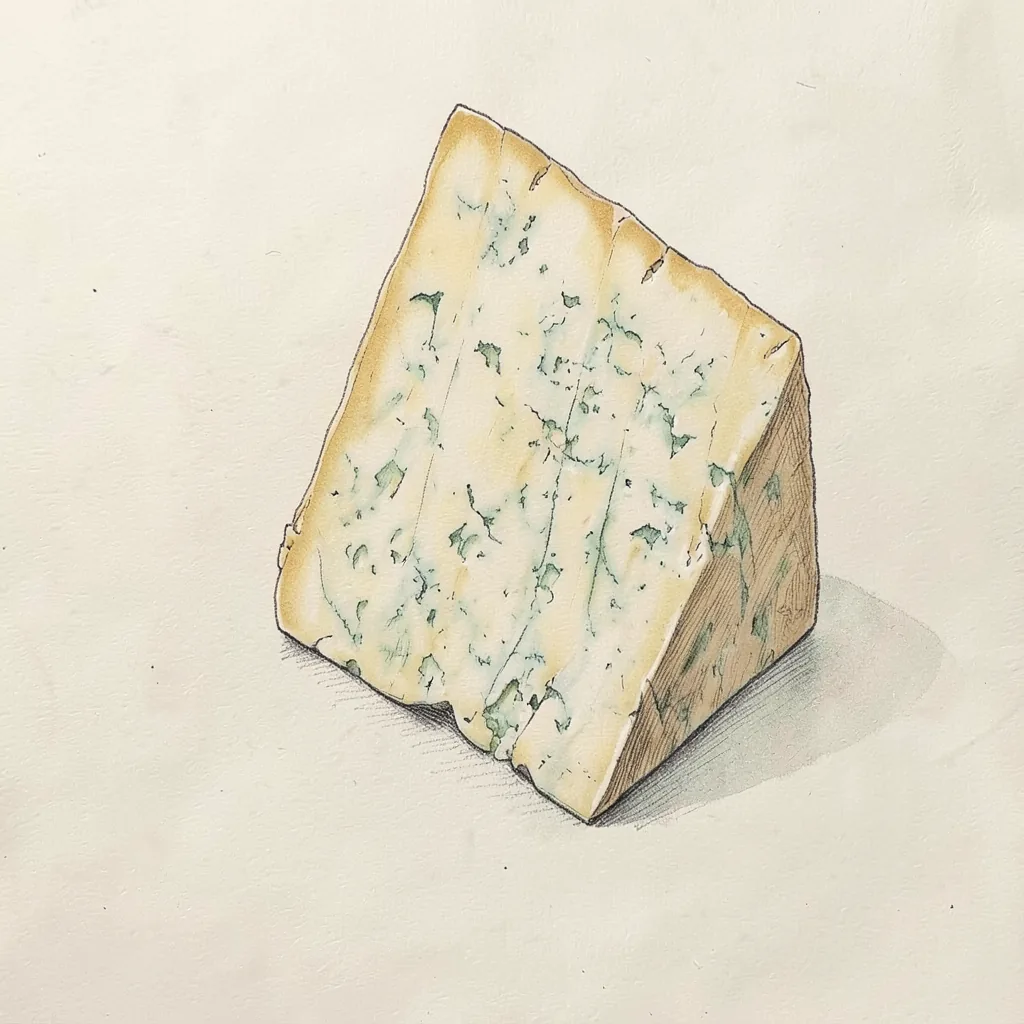
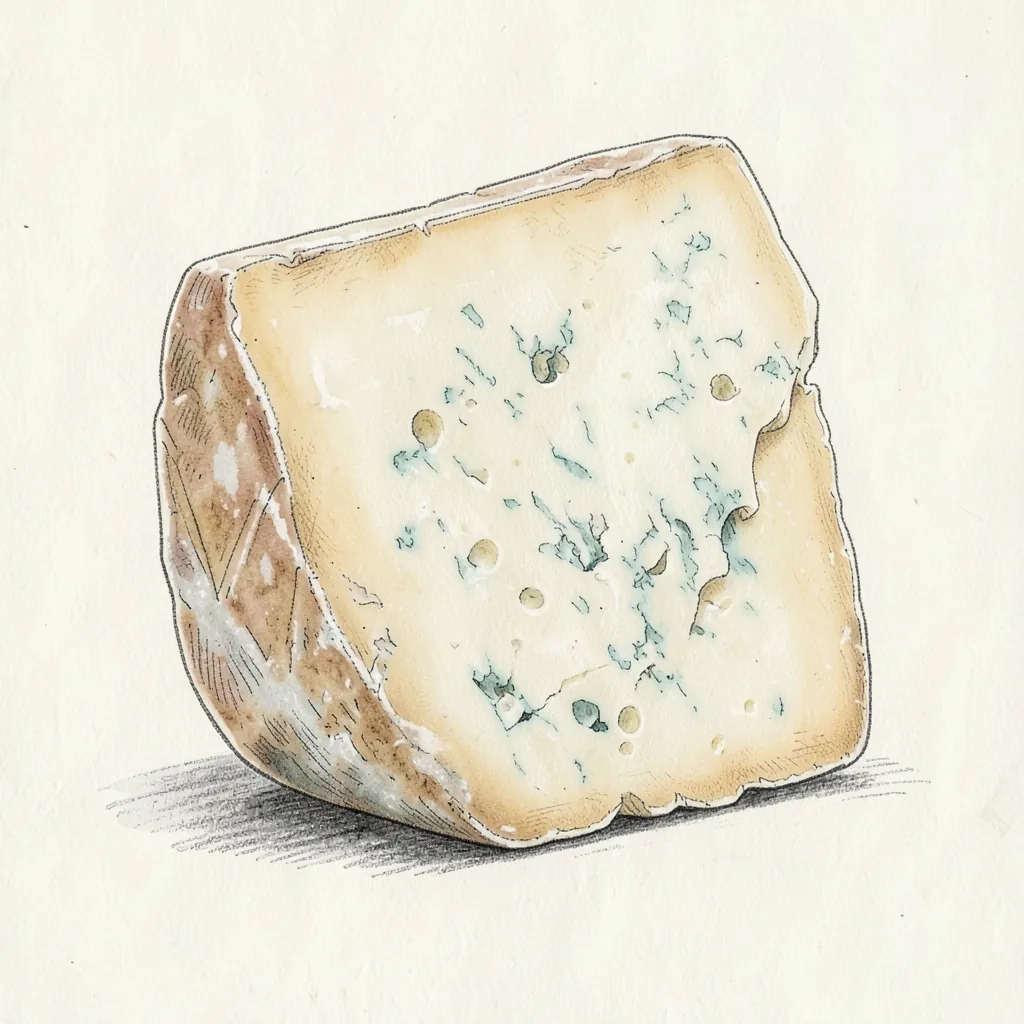
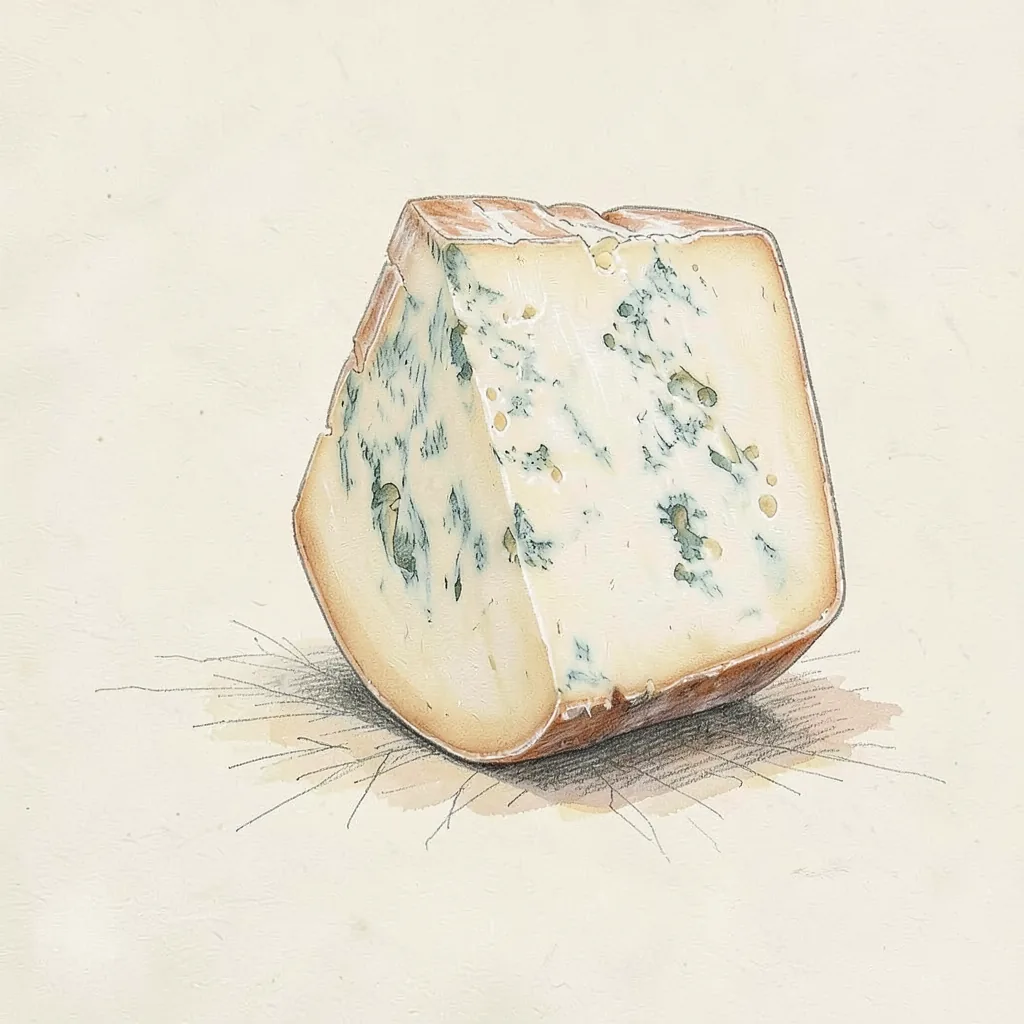
The name points to Dorset, and vinney is an old local word for the blue mold that runs through the paste. The cheese is hard and crumbly, with a pale body and clear blue veins. It is leaner than many famous British blues because the milk was historically skimmed for butter first. A slice breaks rather than bends.
Wheels are usually modest in size, with a natural rind and a dry cut face. The mold is part of the make, not a surface accident. Young pieces are milder, while a longer kept wheel smells stronger and tastes saltier. It remains a cheese for the board or the grater more than for a melting sandwich. Buyers should look for the Dorset name, because other English blues are made in a richer style.
History
In Dorset, butter was long the valuable dairy product, and cheese used what the churn left behind. Skimmed cow's milk made a firm curd that could take a blue mold. The result was a farmhouse cheese known for a hard crumb and a direct flavor. Stories even joked that old wheels were tough enough to be mistaken for shoe leather. That joke shows how dry the early style could be.
The style was once common on Dorset farms and then became rare, until makers revived it for a modern market. The revived cheese is still crumbly, but it is less extreme than the old stories suggest. Hand skimming, rather than taking every trace of cream, leaves a little richness in the milk. The blue is encouraged through the wheel so the veins are fine and well spread. Today it is sold as a regional British blue, not as a lost farm oddity.
How it is made
Cheesemakers start with cow's milk, often raw, and remove part of the cream in the old hand skimming way. The milk is set with rennet, the curd is cut, and the whey drains until the mass is firm. Salt is worked in, and the curd is packed into forms. There is no washing of the rind and no creamy bloomy coat. The wheel is a pressed, dry blue in character, even when the press is gentle.
Blue mold is introduced so that veins can grow inside the paste as the wheel rests. Makers pierce the cheese to let air reach the interior, which is how the blue spreads in lines. The rind stays natural and dry. A short maturation already shows color, and a longer rest deepens the smell. The finished wheel should be firm enough to crumble under a knife without turning to dust.
Taste
Expect a salty, savory blue with a clean herbal edge rather than a harsh bite. The paste is pale, slightly moist in the crumbs, and clearly veined. Because the milk is skimmed, the flavor feels direct and less buttery than Stilton. Nutty notes sit under the mold, and a good piece is tangy without being bitter. The smell is definite but not overpowering when the cheese is in condition.
Texture is the other half of the taste, so a dry crumb that will not slump is the first clue. A good piece breaks on the board and still has some give between the veins. If the wheel was kept too dry, the paste can taste chalky, so look for blue lines in a body that is firm rather than dusty. Very young cheese may show little flavor beyond salt. A well finished piece balances mold, salt, and a mild sweetness from the milk.
In the kitchen
Crumble Dorset Blue Vinney over a green salad, a baked pear, or a bowl of warm new potatoes. The dry texture means it scatters well and does not grease the leaves. It also grates over a soup or a steak when you want blue flavor without a creamy sauce. On a board, pair it with plain crackers, celery, or a firm pear. Sweet chutney works if it is not so strong that it hides the cheese.
Cooking is possible, but this is not a smooth melting blue. Fold crumbs into a burger mixture, a scone dough, or a butter for grilled meat, and add them late so the veins stay visible. A little goes further than the same volume of a rich creamy blue. Avoid long boiling, which can turn the salt harsh. Let the cheese come out of the cold before a board so the crumb smells of mold and milk, not of the fridge.
Around the world
Dorset Blue Vinney is known mainly in Britain, where it sits beside Stilton, Stichelton, and other regional blues. Stilton is the one most shoppers already know, and it is creamier, moister, and usually made from whole milk. Stichelton is a raw milk cheese in the Stilton tradition, again richer than a skimmed Dorset wheel. Shropshire Blue is orange from annatto and tastes different again. Knowing those neighbors keeps the Dorset cheese from being treated as a generic blue.
Exports are limited, and the cheese is not a supermarket staple outside Britain. Specialists abroad may carry it when the counter takes British cheese seriously. If it is missing, Stilton is the practical substitute, though the dish will taste richer. Seek the Dorset original when a recipe needs a lean, salty blue. Check the label for cow's milk and a Dorset make, and pass over vague names with no origin.