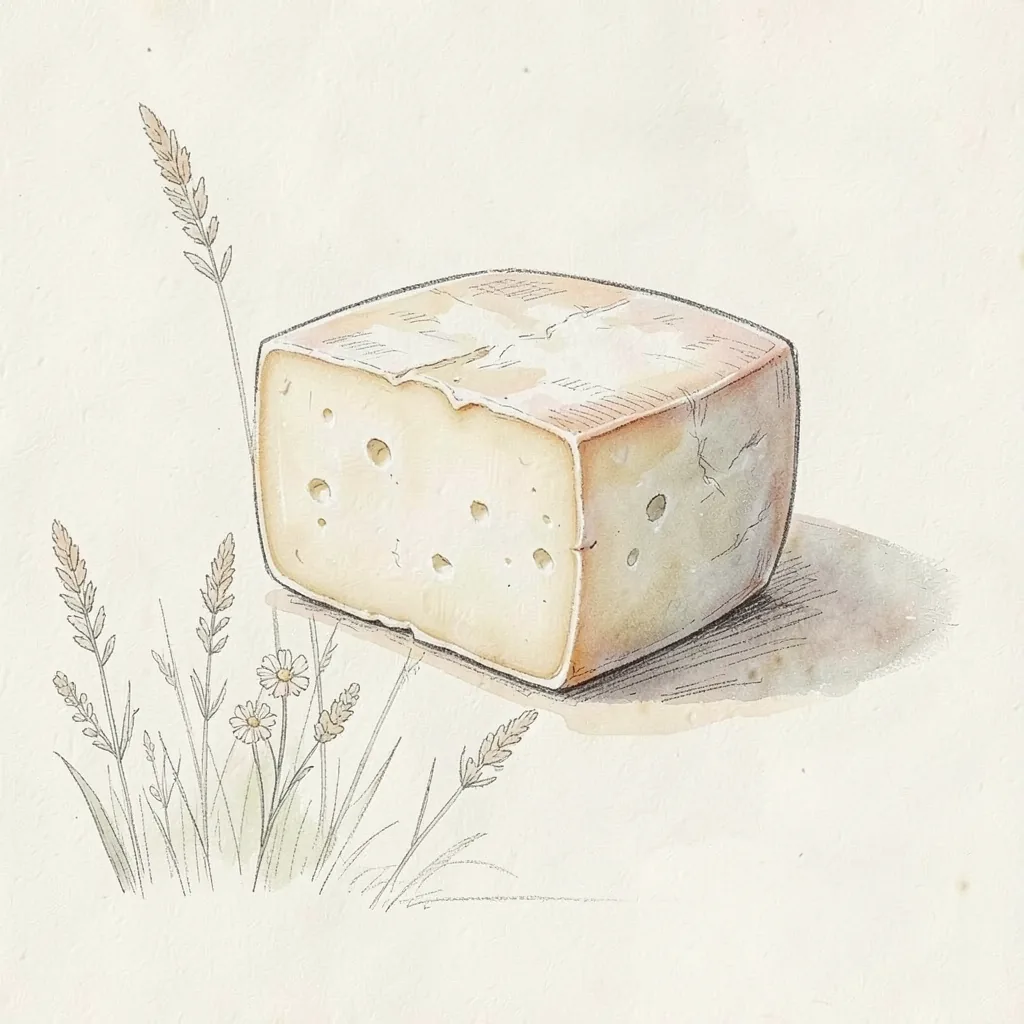
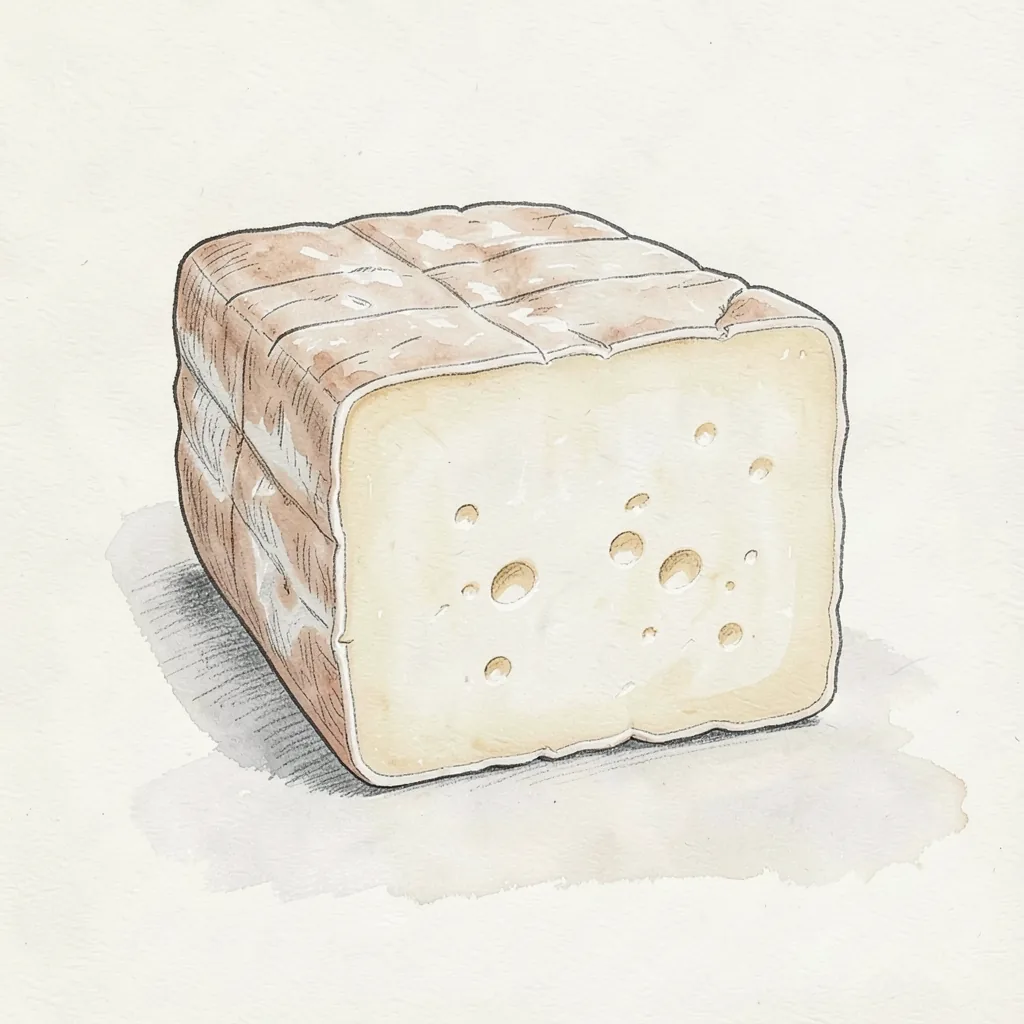
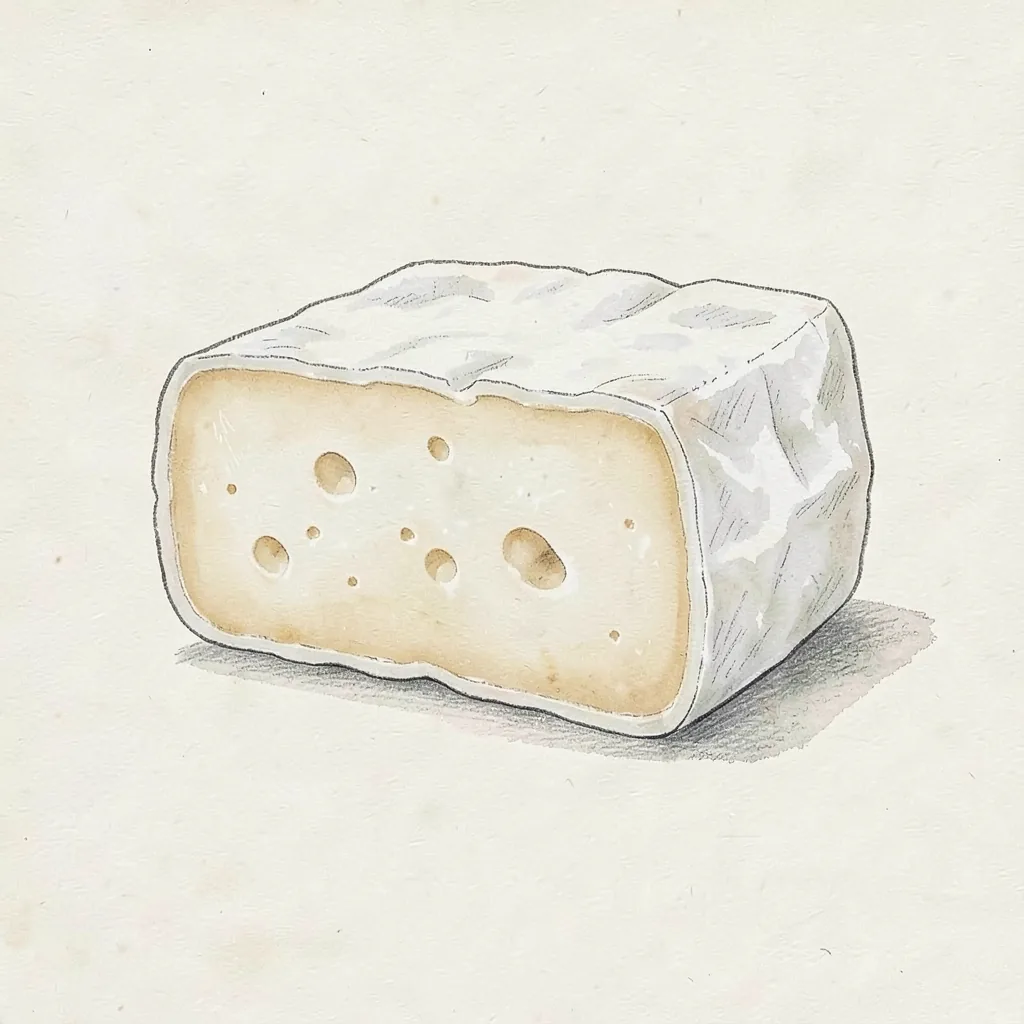
Cow
What it is
The paste is so moist that a serving slumps and spreads instead of standing as a neat wedge. Makers sell it young, with no rind and almost no firm body. The flavor is mild, milky, and lightly tangy, closer to fresh cream than to an aged wheel. In local meals it is a spreading cheese, not a cheese for the grater.
The name comes from a Romagnol word for something that squashes flat, which suits a cheese that collapses on the plate. A spoon does the job, and a tidy slice is not the aim. People in Romagna spread it on piadina, the local flatbread, often with greens or cured ham. It is meant to be eaten fresh. A pot that has dried at the edge or turned sharply sour has gone too far.
History
Squacquerone grew as a farm cheese in Romagna, where cow's milk was turned into a soft fresh cheese for quick eating. Households did not need a long aging room, because the cheese was ready while it was still delicate. The pairing with piadina is an old habit in local meals, and the two foods still appear together. Writers treat it as a Romagna cheese rather than the product of one famous dairy. The longer name Squacquerone di Romagna keeps that place in view.
For a long time the cheese stayed a regional habit, and it reached more Italian tables as cold transport became ordinary. It is still a fresh cheese, not a factory block with a long life on a shelf. You will see it in tubs more often than as a tall wheel, because the paste cannot hold much height. No single founder stands behind the method. The identity is the soft cow's milk curd of Romagna, packed before a rind can form.
How it is made
Makers start with cow's milk and set a soft curd, then drain it only enough to leave a creamy mass. Pressing is light or absent, so moisture stays high and the paste stays spoonable. Salt is kept modest. The cheese is packed while it is still young, often in a shallow container that matches its weak shape. No wash, no white bloom, and no wax belong to the usual path.
A short rest lets the flavor settle, but the cheese is not aged into a firm body. If it sits too long, it grows more sour and can leak whey. Creameries that sell it beyond the farm keep it cold and move it quickly. The result sits nearer to stracchino than to a pressed mountain cheese from the same broad part of Italy. What you buy should look glossy and soft, not cracked or dry along the edge.
Taste
The flavor is sweet milk, light cream, and a gentle tang, with salt kept in the background. There is no sharp bite, no blue note, and no washed rind smell. The aroma is fresh and milky, and it should not smell harsh. A good portion feels cool and smooth on a spoon, then softens on the tongue. If the taste is sharply sour, the cheese is past its best.
Texture does as much as flavor to define the cheese. Because the paste is so wet, the taste seems milder than a drier cheese would at the same stage. It does not crumble, and it does not cut into tidy slices. Some people liken the mouthfeel to thick yogurt or to soft cream cheese, but the flavor is more plainly milky. That soft body is what you spread, not a hidden sharp core.
In the kitchen
The usual plate in Romagna is piadina with a generous spread of squacquerone, plus rocket or other greens and a few slices of cured ham. Plain bread works the same way when flatbread is not at hand. The cheese can sit beside ripe fruit or a simple salad, where its mildness balances bitter leaves. It belongs on a board and on bread. It will not hold a cube in a hot pan, and it is useless on a grater.
You can stir a spoonful into warm pasta or a soft risotto when you want extra creaminess. Add it away from a hard boil so the paste stays smooth. It does not brown the way a firm melting cheese does. Because the salt is light, the rest of the dish can take more seasoning. Keep the container cold until you serve it, since warmth makes the cheese spread even more.
Around the world
Outside Italy, squacquerone is a specialty food, and many shops never stock it. Italian grocers in larger cities are the usual place to look, and the tub should stay cold. Travelers meet it more easily in Emilia-Romagna than in a general market abroad. When it is missing, a young stracchino is the closest everyday stand-in. Robiola can also fill a mild spreading role on bread.
The cheese travels less easily than a waxed or hard wheel, because the paste is fragile and the flavor can fade or sour. Packs that leave Italy stay small for that reason. Cooks abroad sometimes confuse it with cream cheese, but cream cheese is richer and more tart in a different way. A label that reads Squacquerone di Romagna is the one to choose when you want this cheese and not a generic soft tub. Serve it fresh, and do not expect it to act like mozzarella on a pizza.