Cow
What it is
Saffron goes into the milk, which tints the paste yellow and adds a faint spice note. The body is semi-hard, with many irregular eyes, and the rind is salted, rubbed, and washed as it matures. Ripe cheese sits between a nutty cheese with eyes and a stronger washed-rind cheese. The saffron is the mark that sets it apart from a plain Alpine wheel.
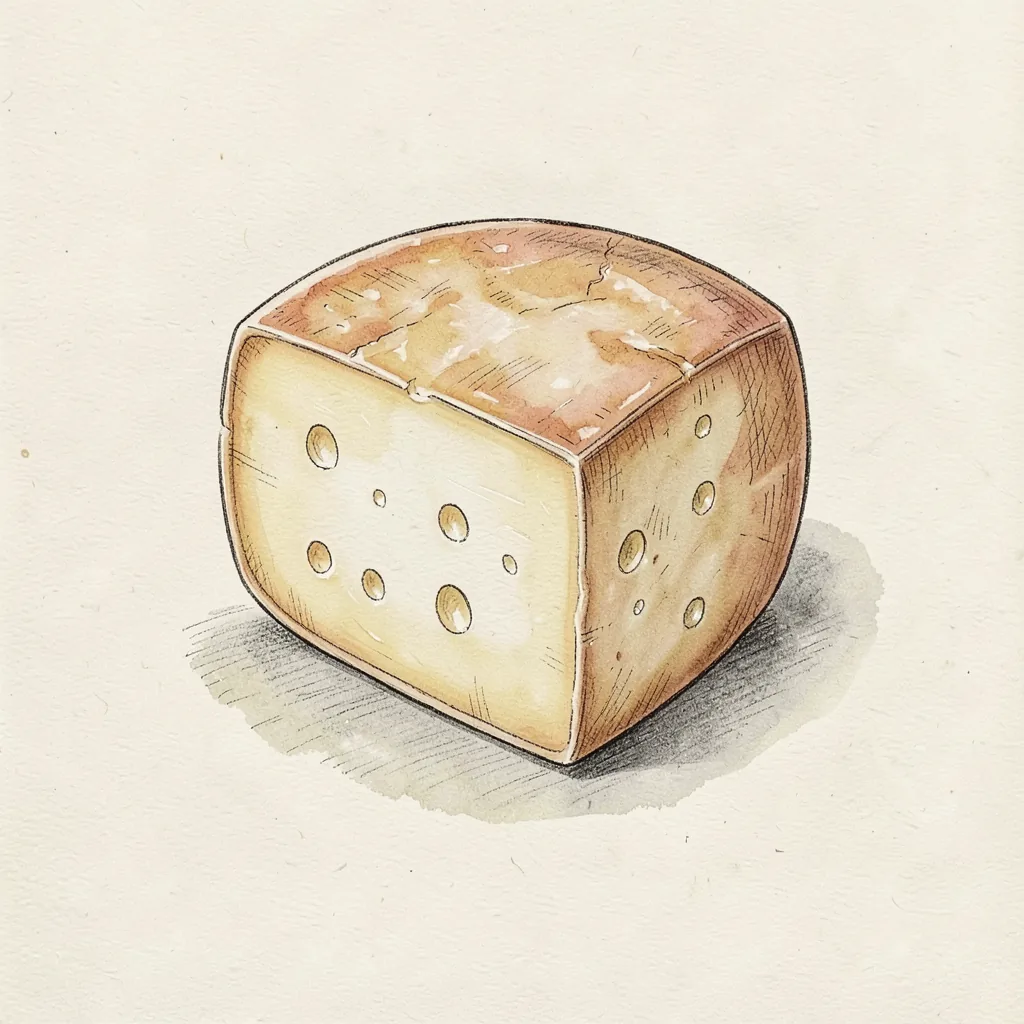
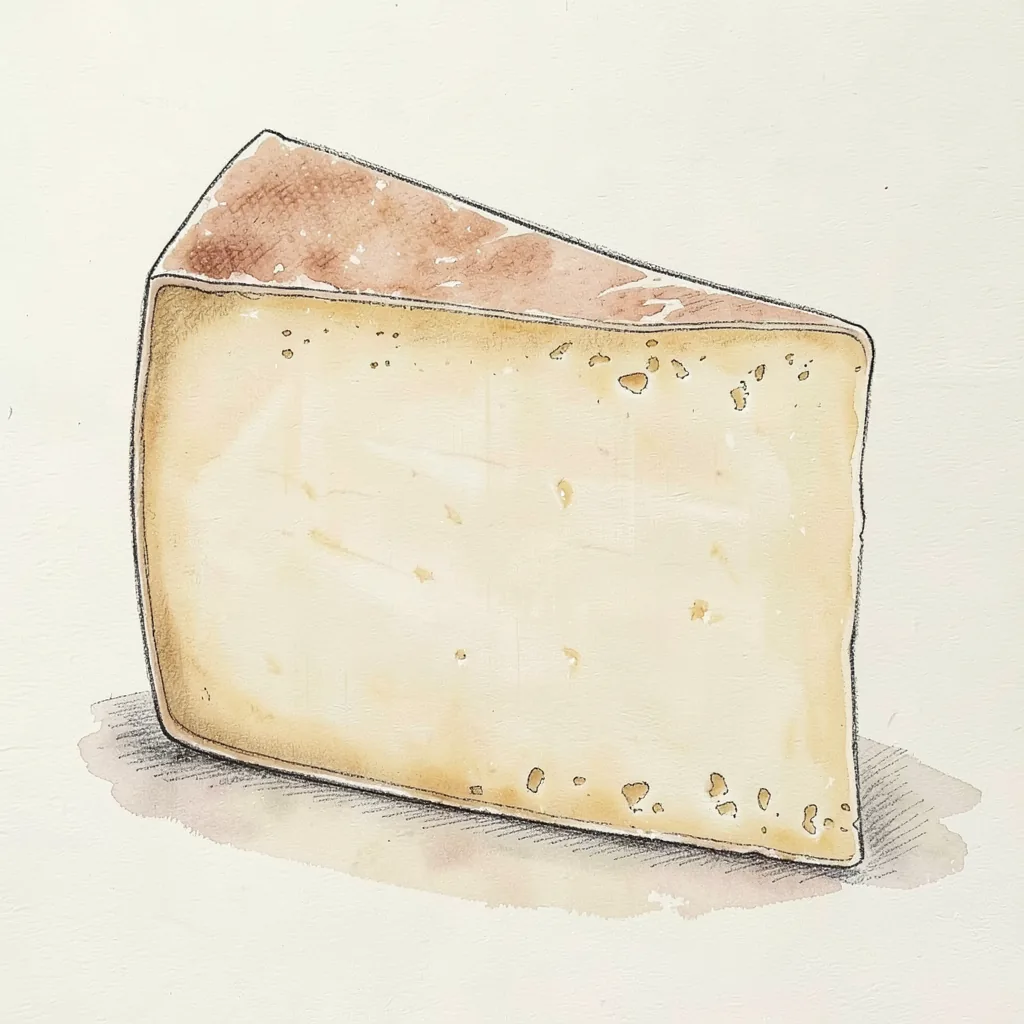
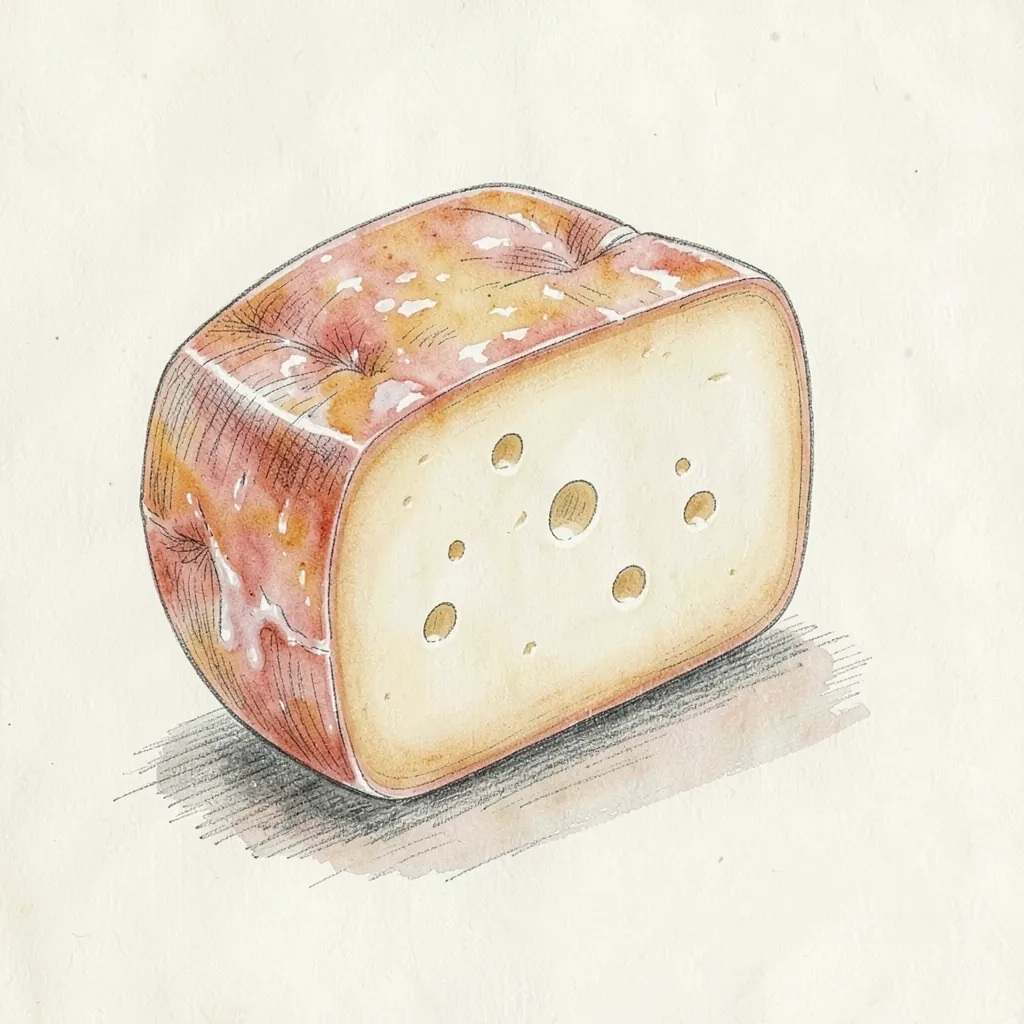
Cut open, the paste is yellow and open, with eyes of uneven size rather than a few perfect rounds. The washed rind can smell stronger than the inside. A younger wheel is milder and more supple. A riper wheel is more aromatic, saltier at the rind, and fuller in the middle. Both are Lüneberg cheese, and the saffron note should still be gentle, not like a spice rub on the surface.
History
Lüneberg cheese belongs to the Alpine cow's milk tradition of Austria. Cheesemakers in the mountain districts used methods also seen in neighboring Switzerland, including warm curd work and pressing. Saffron in the milk became the distinctive extra, a color and a flavor that plain mountain cheeses do not have. The washed rind places the cheese near stronger aromas than a simple nutty wheel. The style is regional to Austria, and it is not a brand tied to one firm.
Older descriptions already call the ripe cheese a middle point between Emmental and Limburger. That comparison stuck because the eyes recall a Swiss-type cheese, while the washed rind recalls a stronger aromatic cheese. Saffron kept the cheese from being only a copy of either one. The country of record is Austria, and the cheese is a mountain style rather than a city brand. Today the name still signals that saffron-tinted, eye-filled cow's milk cheese rather than a fresh curd or a blue.
How it is made
Cow's milk is colored with saffron, warmed, and set with rennet. The curd is cut small and heated while it is stirred, then gathered into cloth and pressed in forms. The wheels are turned during pressing so the shape stays even. Afterward they go to a cellar, where the surface is salted and, from time to time, rubbed and washed. That wash builds the rind, while the pressed curd keeps the eyes inside.
Eyes form as the cheese matures, and they are irregular rather than uniform. The paste stays semi-hard, yellow from the saffron as well as from the milk. Washing keeps the rind moist and aromatic, so the outside can smell stronger than a dry natural rind. Salt from the surface rub works inward. When the wheel is ripe, it is ready to cut, and the contrast between rind and center is part of the style.
Taste
The flavor is savory and mildly spicy from the saffron, with a nutty middle and a fuller aroma near the rind. Eyes make the paste look open and make each slice a little uneven. The body is supple, not hard, and not runny. A washed-rind smell is present but should not be as fierce as a very strong Limburger. Salt is clear, and the finish is warm rather than sweet like a very young mild cheese.
If the saffron is missing, the cheese will taste like a generic Alpine wheel and the yellow may look dull. If the rind smell is harsh, ammoniated, or bitter, the wheel was kept too long or washed badly. The center should still be pleasant to eat, not only a vehicle for rind aroma. Small eyes are normal, and large cracks are not. At its best the taste is a gentle spice, a nutty paste, and a clean salty rind note in one bite.
In the kitchen
Serve Lüneberg cheese on a board, where the eyes and the yellow paste are easy to see. Cut away any rind that smells too strong for the guest, and eat the center in slices. It can also melt in a sandwich or over potatoes, though it will not behave like a very mild melting block. The saffron note is delicate, so do not bury it under chili or smoke. Bread, butter, and a firm apple are enough.
For cooking, grate or slice it into potatoes, eggs, or a simple bake, and add it late so the spice stays. A stronger washed rind can stand in for aroma, but you will lose the saffron and the eyes. Emmental can replace it when you want melt and holes without that spice. Do not grate it like a dry hard cheese, because the paste is too moist for that job. Keep the cut face wrapped so the washed rind does not dry and the paste stays clean.
Around the world
Lüneberg cheese is a niche Austrian cheese, and many cheese cases abroad will not have it. Shoppers may look for a German city of a similar spelling and come away with the wrong idea. The cheese to find is the Austrian cow's milk wheel with saffron, eyes, and a washed rind. Emmental is more famous and more widely sold, and Limburger is the familiar strong washed rind. Lüneberg sits between those ideas, with the saffron as the extra clue.
Use Emmental when you need eyes, melt, and a nutty cow's milk taste and you cannot find this cheese. Use Limburger or another washed-rind cheese when the rind aroma is the point and saffron does not matter. Vorarlberger Bergkäse is another Austrian mountain cheese, firmer and without the saffron habit, and it can stand in on a board. None of those three is a perfect copy. If a label mentions saffron and Austria together, you are likely in the right place.