Cow
What it is
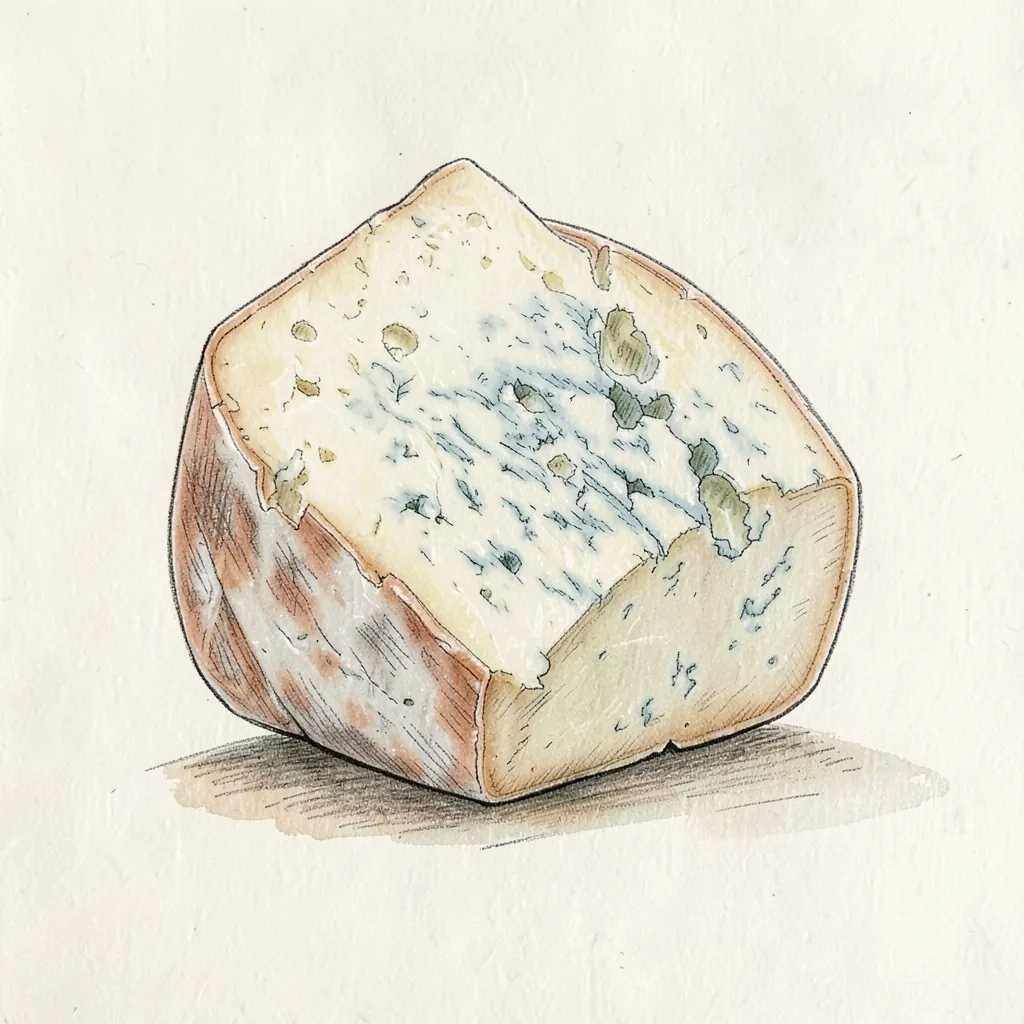
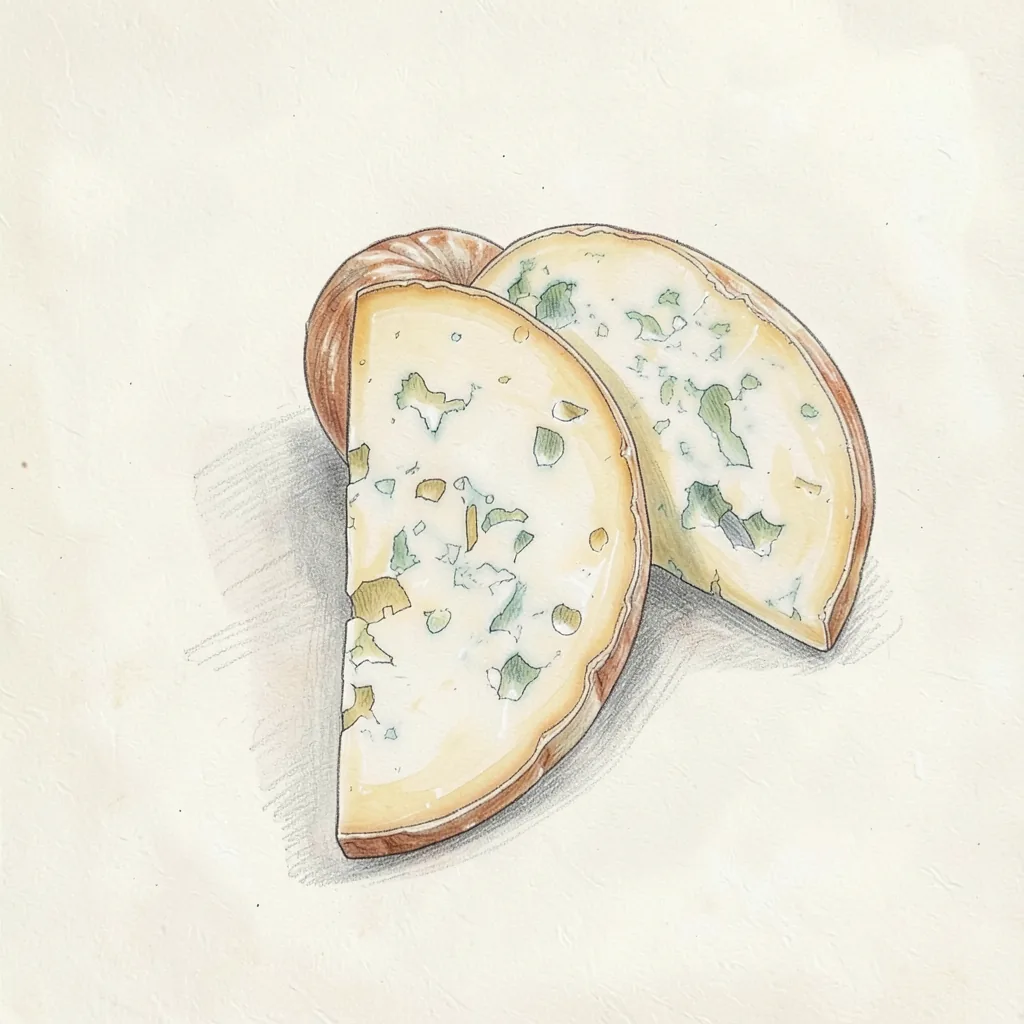
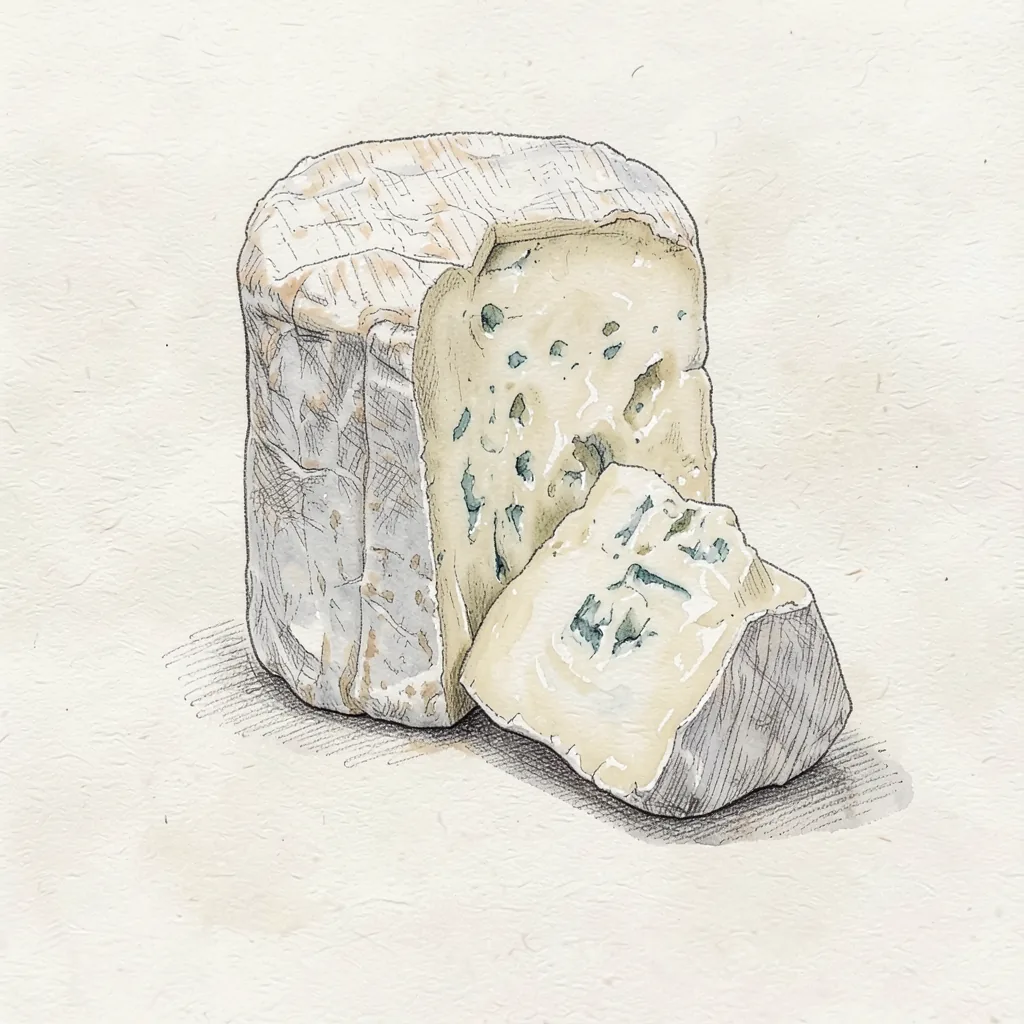
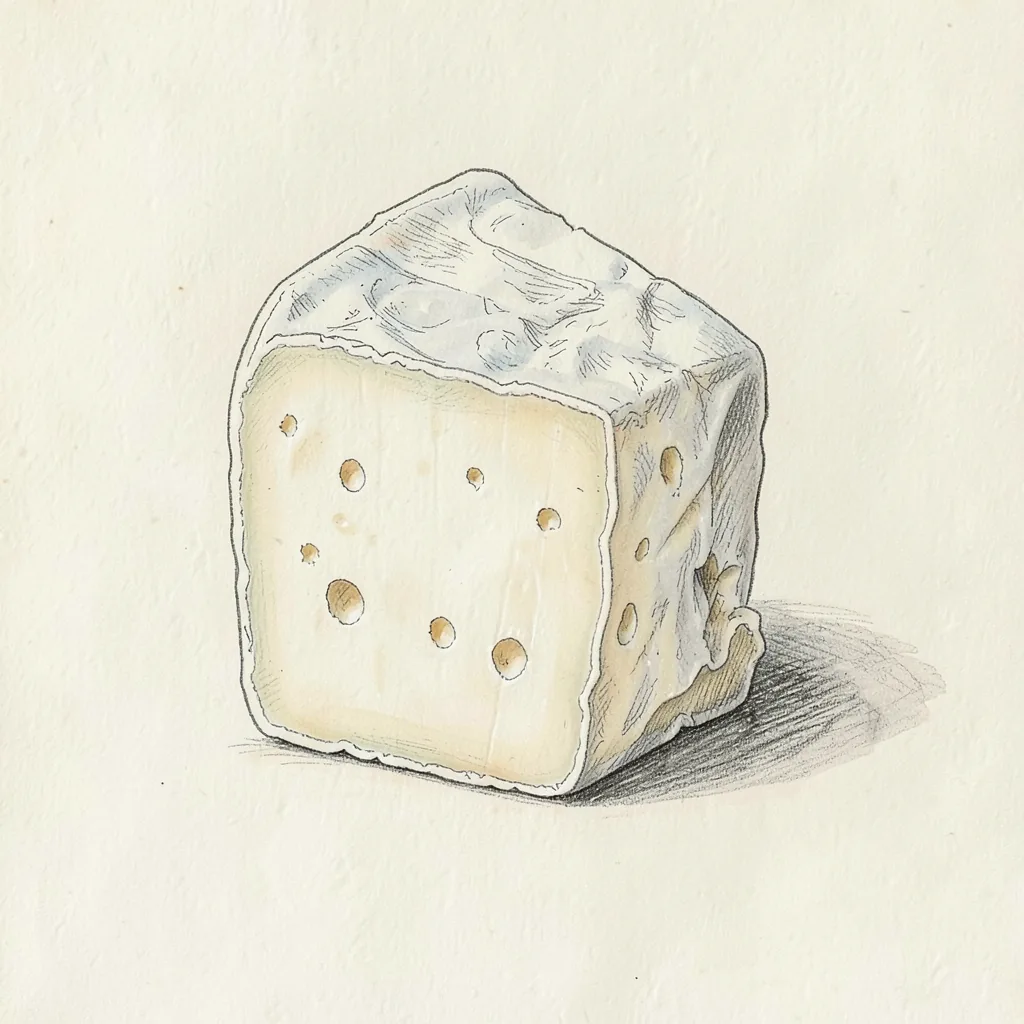
It is made from pasteurized cow's milk, and the paste is pale, creamy, and marked with blue-green veins. A coat of edible ash turns the rind a matte grey, often with a light white bloom. The wheel is a low cylinder. The blue taste stays mild for a veined cheese, which is why people eat it on a board and also warm it in simple cooking.
A ripe piece can soften until the paste is almost spoonable near the rind, while the center stays a little firmer. The smell is mushroomy and dairy-like rather than sharply ammoniated. Salt is present, but the cheese is not a harsh blue. Fruit, bread, and a light red wine are common partners. It is sold as a whole small wheel or in wedges, and dairies make it so shops can offer it through the year.
History
Rochebaron is a blue cheese from Beauzac, in the Auvergne region of central France. It is made in a dairy, with pasteurized cow's milk, rather than as a single-farm wheel. Ash on the rind and blue veins in the paste are both familiar ideas in this part of France, and this cheese brings them together in a mild form. The grey coat is the easy way to spot it in a case. Buyers who want a dense salty blue from another region should look at other names.
Montbriac is a brand name used for the same style of ash-coated blue from Beauzac. The cheese became known beyond Auvergne as a gentle blue that still looks striking on a board. Production stayed linked to that town, and the format stayed a modest cylinder rather than a huge wheel. No famous founder has to be attached to the recipe. The constant parts are cow's milk, blue veins, and the dark coat of ash.
How it is made
Pasteurized cow's milk is set with rennet, and the curd is drained and placed in molds. The young cheese is pierced so air can enter and blue mold can grow in veins through the pale paste. It then rests in a cool, airy room until those veins develop and the body softens. A fine layer of vegetable ash covers the outside, which gives the grey rind. The ash also tempers the acidity near the surface, and a light bloom may appear on that coat.
The cheese is not pressed into a hard block, and it is not washed like a sticky orange rind. The blue mold does the interior work, while the ash and a light surface bloom form the coat. A good wheel shows veins that are scattered, not a single dark streak. The paste stays rich because the make favors a creamy body over a dry crumb. Once the veins and the soft texture are in place, the cheese is ready to sell.
Taste
The flavor is mild, salty, and lightly mushroomy, with a creamy cow's milk base under the blue. The bite is gentler than a sharp cave blue, and the finish is more butter than spice. Near the ash rind the paste can taste a little earthier, while the center is sweeter and milder. Texture is a large part of the pleasure, because a ripe piece softens on the tongue. A cold wedge hides that softness, so it is better after a short rest out of the fridge.
The smell is noticeable but not aggressive if the cheese is in good condition. An overripe piece can turn ammoniated and runny, and that is past the mild character people expect. At the right point the veins taste clean, and the ash does not taste like charcoal. Fruitiness and salt show together, with no hot pepper and no smoked note. It is a blue for people who want the look and the mushroom aroma without a fierce tang.
In the kitchen
Put Rochebaron on a board with bread, pear, or walnuts, and spread the soft paste rather than grate it. It also melts into a sauce, a burger, or a baked potato, where the blue flavor stays gentle. Crumble a firmer piece over a warm salad or a steak. High heat can make the fat separate, so warm it gently. The rind is edible, though some people trim the ash if they want only the creamy interior.
A wedge at room temperature is easier to cut and tastes fuller. On a mixed board, set it apart from very sharp blues so guests can taste the mild style. It does not belong on a grater for pasta in the way a hard cheese does. Leftovers should be wrapped and kept cold, because the cut face dries and the smell can fill a fridge. A ripe wheel can be soft enough to serve with a spoon.
Around the world
Rochebaron is a French blue that travels to specialty shops and supermarket cases outside Auvergne. The grey ash rind makes it easy to spot next to white-rinded cheeses and orange washed rinds. Shoppers sometimes group every blue together, but this one is softer and milder than many famous cave cheeses. It is pasteurized, which helps it move through ordinary retail. It still needs the cold, and a warm display will make a ripe wheel slump.
Bleu d'Auvergne is the regional blue people compare it with, and that cheese is usually firmer and more robust. Fourme d'Ambert is taller, milder in the paste, and less creamy at the edge. If Rochebaron is missing, either of those can stand in for a blue sauce or a board, with a change in strength. Bleu de Bresse and Cambozola are other soft mild blues, though they do not wear this ash coat. Choose a creamy blue, not a dry salty crumb, when you need a close match.